Tag
Austria
Belgio
Belgium
Bulgaria
Cechia
Croatia
Croazia
Czech
Czechia
Czech Republic
Danimarca
Denmark
Estonia
Europa
Europe
France
Francia
Germania
Germany
Grecia
Greece
Hungary
Ireland
Irlanda
Polonia
Polska
Portogallo
Portugal
Regno Unito
Repubblica Ceca
Repubblica di Turchia
Romania
Serbia
Slovacchia
Slovakia
Slovenia
Svezia
Sweden
Turchia
Turkey
Ucraina
Ucraino
Ukraine
Ungheria
United Kingdom

3 commenti
Deepl translation
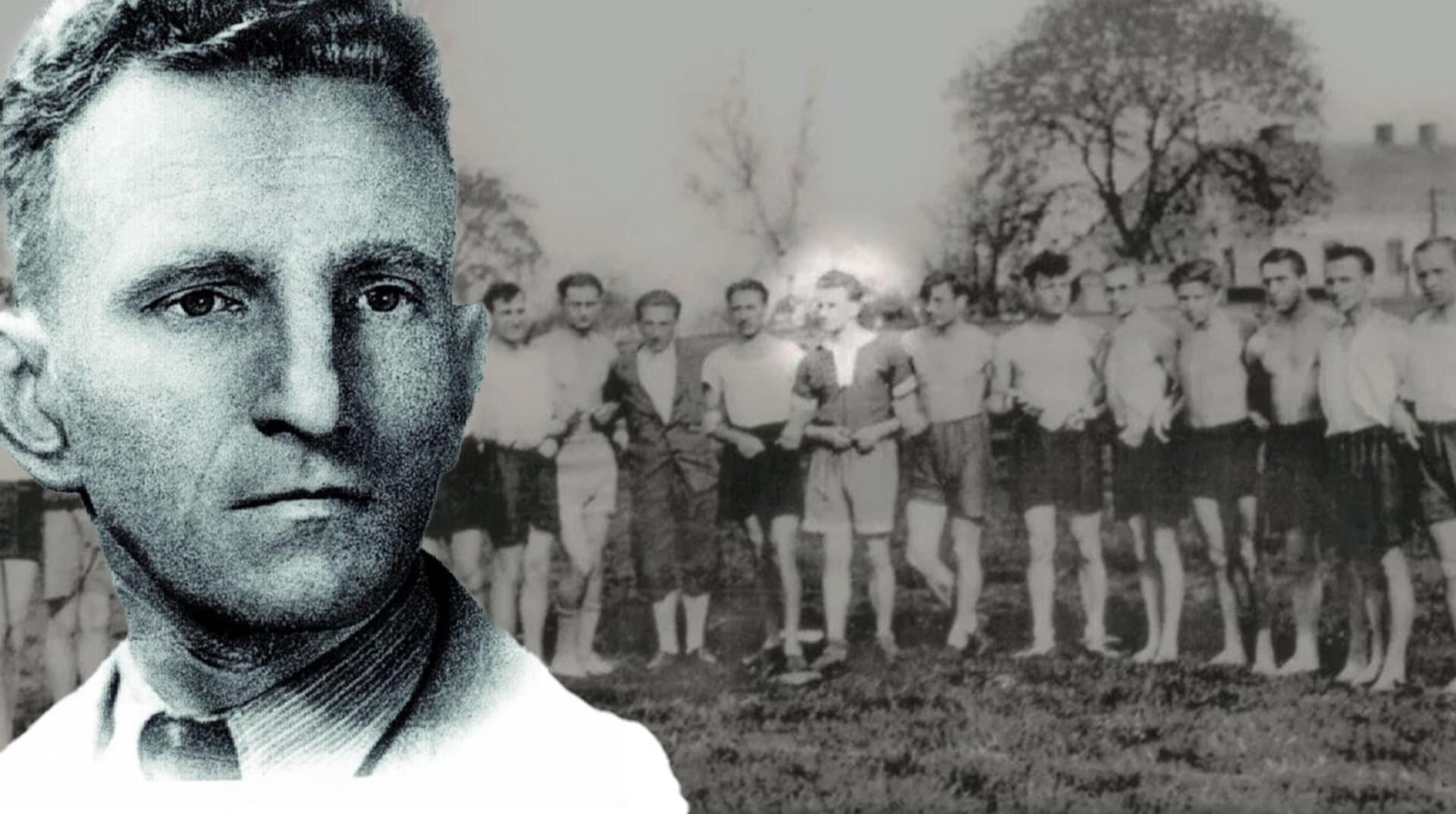
Roman Shukhevych and sports: he played soccer, set a swimming record, and refereed competitions
In December 1945, the world was recovering from the end of World War II, and the Nuremberg trials were just beginning a series of court proceedings concerning Nazi crimes against humanity. At the same time, fierce battles continued on Ukrainian territory between UPA soldiers and Soviet punitive detachments.
The Ukrainian liberation movement was led by Roman Shukhevych, who was known not only in domestic circles. His name is shrouded in various stories, tales, myths, and propaganda. In December 2025, Champion will reveal some of the forgotten sporting pages of Shukhevych’s biography. And there are quite a few of them.
He cultivated his sporting spirit from childhood
From childhood, Shukhevych showed himself to be a talented boy. Having good conditions for development, Roman actively took advantage of them. He got excellent grades, and his aptitude for various sports was revealed thanks to his participation in the national-patriotic club “Plast” — the oldest Ukrainian scout organization, which is engaged in the patriotic education of children based on Christian morality.
It is important to note that Roman’s childhood coincided with the Ukrainian Revolution of 1917-21. He witnessed those events and had many acquaintances and relatives involved in the functioning of the Western Ukrainian People’s Republic (ZUNR). In particular, he often communicated with Yevhen Konovalets, which is why he had a patriotic outlook from an early age.
He sought himself in sports
It is well known that Shukhevych loved sports. He did not limit himself to team or individual sports. Over time, Roman became a member and founder of sports clubs and tried his hand at various competitions.
At his educational institution, Shukhevych founded the Rusalkha club, where members played soccer, basketball, and volleyball. In 1924, together with his brother Yuriy, he was one of the founders of the Carpathian Ski Club.
These are just some of the societies Roman was involved in. Such a variety of clubs confirms Shukhevych’s broad and diverse interests in sports.
The legendary Ukrainian military man’s sporting peak came in the 1920s and 1930s. At that time, Shukhevych was actively involved in athletics and rock climbing, was skilled in fencing with swords and shooting, and was proficient with weapons. He was physically fit.
“He repeatedly participated in sports competitions and set records in swimming and athletics among Ukrainian ‘athletes’ in Galicia,” according to research by historian A. Sova.
For example, in 1923, the “Zaporizhzhia Games” were held in Lviv. Incidentally, Ivan Bobersky was the founder of these games. Shukhevych performed excellently in swimming and obstacle running among juniors: he set records in the 400-meter run and 100-meter swim.
It is important to note that these competitions were among residents of Lviv and the surrounding area, which, considering Shukhevych’s age of 16, is a significant achievement.
He defeated Bayern Munich and refused to play for Dynamo because of the Russian language: Ukrainian Pele Oleksandr Skotsen
It is difficult to critically or professionally assess Roman’s success in all of the above-mentioned sports. It is also difficult to determine his favorite game or type of competition. But it is known for certain that Shukhevych was involved in sports throughout his life and contributed to its development in western Ukraine.
This is confirmed by historical research, the memories of acquaintances, contemporary newspapers, and archival photographs. Incidentally, the aforementioned Leschetarsky Club still exists today.
As he gained experience, Roman Shukhevych gradually became a prominent figure in Galician sporting circles. He supported younger athletes and, in particular, served as a judge at competitions.
Over time, Shukhevych’s public sporting activities diminished. He focused on the underground liberation struggle. With the onset of World War II, sport finally took a back seat.
Legacy
Today, Roman Shukhevych’s name is inscribed not only in history, but also on the map of modern Ukraine—dozens of streets, avenues, and squares are named after him. In the sports world, the most tangible sign of remembrance is the football stadium in Ternopil.
I would like to conclude this story by returning to its beginning. On October 1, 1946, the Nuremberg trials came to an end. Despite the myths spread by Soviet/Russian propaganda, there are no separate accusations against Shukhevych, the OUN, or the UPA of complicity with the Nazi regime in the trial materials.
Roman Shukhevych passed away on March 5, 1950. This happened in the village of Bilohorshcha (now part of Lviv) during an operation by the Bolshevik secret services.
Note on the “Champion”: https://en.wikipedia.org/wiki/Roman_Shukhevych
Roman-Taras Osypovych Shukhevych (Ukrainian: Роман-Тарас Осипович Шухевич, also known by his pseudonym, Tur and Taras Chuprynka; 30 June 1907 – 5 March 1950) was a Ukrainian nationalist and a military leader of the nationalist Ukrainian Insurgent Army (UPA), which during the Second World War fought against the Soviet Union and to a lesser extent against Nazi Germany for Ukrainian independence.[1] He collaborated with the Nazis from February 1941 to December 1942 as commanding officer of the Nachtigall Battalion in early 1941, and as a Hauptmann of the German Schutzmannschaft 201 auxiliary police battalion in late 1941 and 1942.[2][3]
Shukhevych led some of the Galicia-Volhynia massacres, where tens of thousands of Polish civilians were killed. It is unclear to what extent Shukhevych was responsible for the massacres of Poles in Volhynia, but he condoned them afterwards, and directed the murders of Poles in Eastern Galicia.[4] Historian Per Anders Rudling has accused the Ukrainian diaspora and Ukrainian academics of “ignoring, glossing over, or outright denying” OUN’s role in the massacres.[3]
The article is published in dedicated “Champion” site, run by Ukrainska Pravda, according to Wikipedia:
In 2025, based on Similarweb data, Ukrainska Pravda was the most popular online news media in Ukraine.[3]