
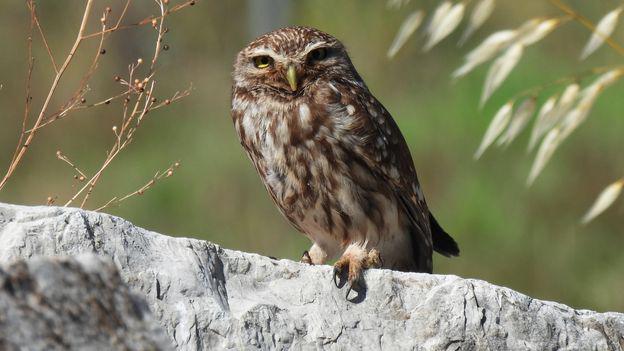
Gli animali salvati nelle antiche “arche” accidentali della Grecia • Protetti dallo sviluppo e dall’agricoltura, molti siti archeologici dell’antica Grecia sono ora diventati involontari porti sicuri per piante e animali.
https://www.bbc.com/future/article/20260107-the-ancient-greek-ruins-harbouring-rare-animals
di Naurgul
2 commenti
>In the ancient Greek religious centre of Delphi, researchers found what they believe [is a new species of snail](https://www.researchgate.net/publication/386538528_WILDLIFE_IN_THE_RUINS_BIODIVERSITY_SURVEYS_IN_ARCHAEOLOGICAL_SITES) – just 2mm long – suspected to live only in that area.
>In some cases, these plants and animals have been confirmed to be thriving near sites of ancient myths and legends – stories which placed them in these very locations, from Odysseus’ oak tree to Socrates’ hemlock, suggesting an extraordinary connection over the millennia.
>Around the world, archaeological sites have often been protected for decades, even centuries, to preserve their cultural value. Shielded from development and agriculture, many have now become inadvertent safe harbours for plants and animals. Now, as [biodiversity declines around the globe](https://www.un.org/sustainabledevelopment/blog/2019/05/nature-decline-unprecedented-report/), new research is showing just how deeply nature is integrated in cultural sites – and how preserving these extraordinary historical places can help protect rare species too.
>In Greece, where [more than 21% of species](https://redlist.necca.gov.gr/en/home-copy/#anafora1) are under threat, changes in land use are among the biggest pressures on wildlife, according to Panagiota Maragou, conservation director for WWF Greece. Habitat is increasingly fragmented. Climate change is an additional threat, [increasing the intensity of wildfires, floods and other phenomena](https://www.ipcc.ch/report/ar6/wg1/chapter/chapter-11/).
>Archaeological sites, though, have often stayed relatively unaltered as landscapes changed around them. Site managers tend to seek to maintain a natural setting, making them hospitable for many kinds of wildlife. And many Greek archaeological sites have been preserved since the 19th Century.
>They were designed to protect antiquities, of course, not biodiversity. But for almost two centuries, it’s a well-protected place. It’s a more or less stable environment.
Αυτο ειναι καλη ειδηση, κριμα ομως που τα σκουπιδια σε αυτη τη χωρα θελουν να καταστρεψουν την φυση που εχει απομεινει.