Tag
Austria
Belgio
Belgium
Bulgaria
Cechia
Croatia
Croazia
Czech
Czechia
Czech Republic
Danimarca
Denmark
Estonia
Europa
Europe
France
Francia
Germania
Germany
Grecia
Greece
Hungary
Ireland
Irlanda
Polonia
Polska
Portogallo
Portugal
Regno Unito
Repubblica Ceca
Repubblica di Turchia
Romania
Serbia
Slovacchia
Slovakia
Slovenia
Svezia
Sweden
Turchia
Turkey
Ucraina
Ucraino
Ukraine
Ungheria
United Kingdom

2 commenti
>A Russian ship has been chased out of British waters by a Royal Navy attack helicopter after anchoring over transatlantic data cables.
>The cargo vessel Sinegorsk sailed into the Bristol Channel on Tuesday night and appeared to have anchored about two miles off Minehead, on the north coast of Somerset.
>Sinegorsk’s mooring location was less than a mile from undersea telecoms cables connecting Britain to the US, Canada, Spain and Portugal. Officials ordered the ship to leave British waters after the Russians claimed they were making essential safety repairs.
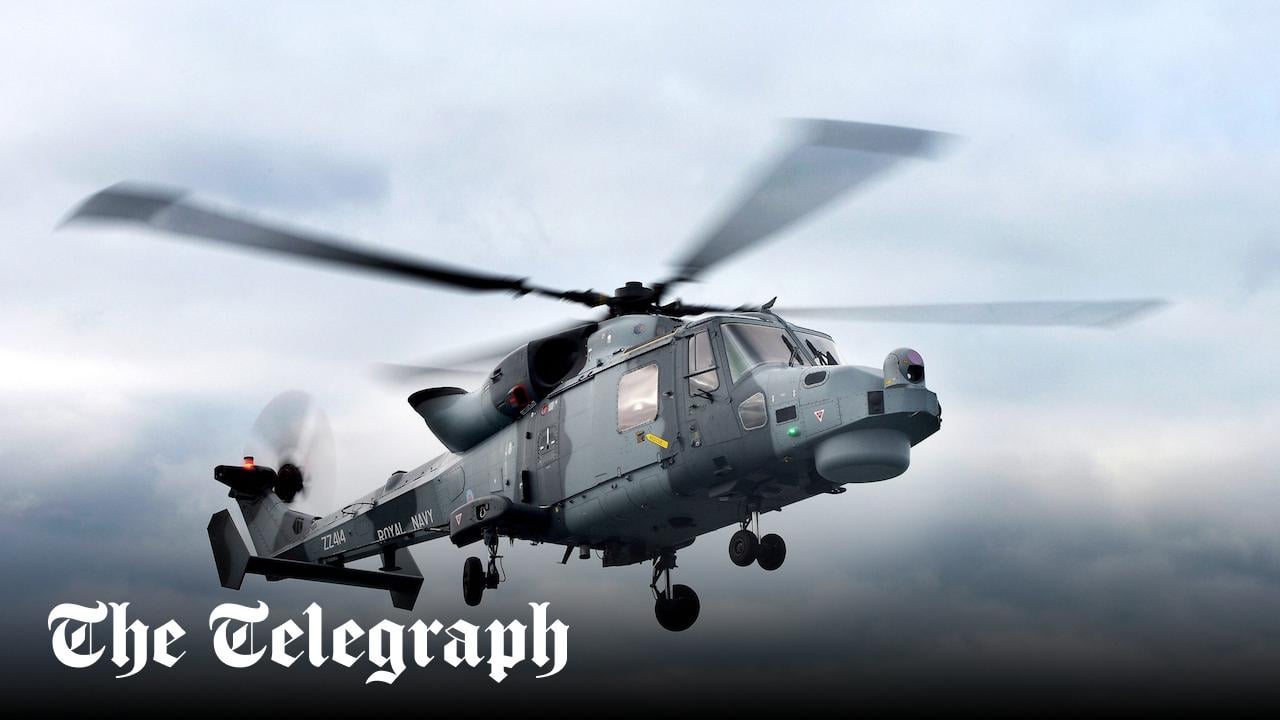
>After 14 hours, an RN Wildcat helicopter was dispatched from the naval air station at Yeovilton, Somerset – prompting the Russian crew to raise anchor and sail back out to sea.
>Alicia Kearns, the shadow security minister, said: “The movements of this Russian ship are deeply suspicious. [It is a] reminder of the persistent and pernicious threats our country faces from Putin and his allies.”
>Sinegorsk’s last recorded call at a port was three weeks ago at Arkhangelsk – a major trading hub that is also the headquarters of the Russian navy’s Northern Fleet.
>Data from MarineTraffic showed the cargo ship sailing up the Bristol Channel on Tuesday night and coming to a halt about two nautical miles off Minehead at about 11pm. It remained stationary, suggesting it was anchored, until about 2pm on Wednesday.
>Within three quarters of a mile of Sinegorsk’s location were five undersea data cables. Two of those form the TGN Atlantic cable system, connecting Britain to New York.
>Another, EXA Express, links the UK to Nova Scotia in Canada, a global telecoms meeting point. The remaining two, forming the VSNL Western Europe cable network, connect Spain and Portugal to the UK.
>Aircraft-tracking websites showed that a Coastguard surveillance aeroplane, registered G-HMGC, spent about half an hour circling the Sinegorsk on Wednesday morning.
>A Wildcat helicopter, flying under the call sign Talon 1, took off from Royal Naval Air Station Yeovilton at about 1.30pm on Wednesday, about half an hour before the Sinegorsk’s departure.
>Wildcats can be armed with up to four Sea Venom anti-ship missiles or Sting Ray torpedoes. It is not known whether the helicopter used in this operation was armed.
>Sinegorsk is not specifically sanctioned by the UK, nor is it believed to be part of the Russian shadow fleet used for evading sanctions.
>Around 500 Russia-related shadow fleet oil and gas tankers have been sanctioned by Britain in efforts to degrade Vladimir Putin’s ability to continue fighting the war against Ukraine. Officials estimate that around 200 ships have been forced off seas – around half of Russia’s tanker capacity.
>Russian ships have previously been linked to attempts to interfere with undersea infrastructure.
>The crew of a Russian tanker, Fitburg, were arrested by Finnish authorities in December after undersea cables between Helsinki and Tallinn were damaged as their ship passed over them.
>Earlier in the year, Yantar, a Russian cable-tapping vessel, entered British waters and prompted a surveillance operation at sea by the Royal Navy. John Healey, the Defence Secretary, told Parliament: “Let me be clear, this is a spy ship.”
>A Department for Transport spokesman said: “We issued a clear warning as a first step to the Sinegorsk vessel to leave UK waters after it entered to undertake essential safety repairs. This directive has been complied with, and the vessel is leaving UK waters.
>“We continue to take strong action against Russian-flagged ships, as well as to deter, disrupt and degrade the shadow fleet by stepping up our response through tough sanctions.”
>A Ministry of Defence spokesman said: “We are acutely aware of the threat posed by Russia, which includes attempts to map undersea cables, networks, and pipelines belonging to both the UK and our allies, and we are tackling these threats head on.
>“The Royal Navy constantly monitors our seas, including safeguarding critical infrastructure such as underwater cables and offshore structures.”
Why is this allowed to happen? How do we not have tracking on every ship for every business transaction and literally block with warships anyone who is not on the list?