In 2016, Dmytro voluntarily signed a contract and went to serve. According to him, many people then believed the war would end quickly.
“I signed the contract and I’m still serving to this day. Back then, we thought it would all be over in two weeks, but it’s been going on for years now,” he said.
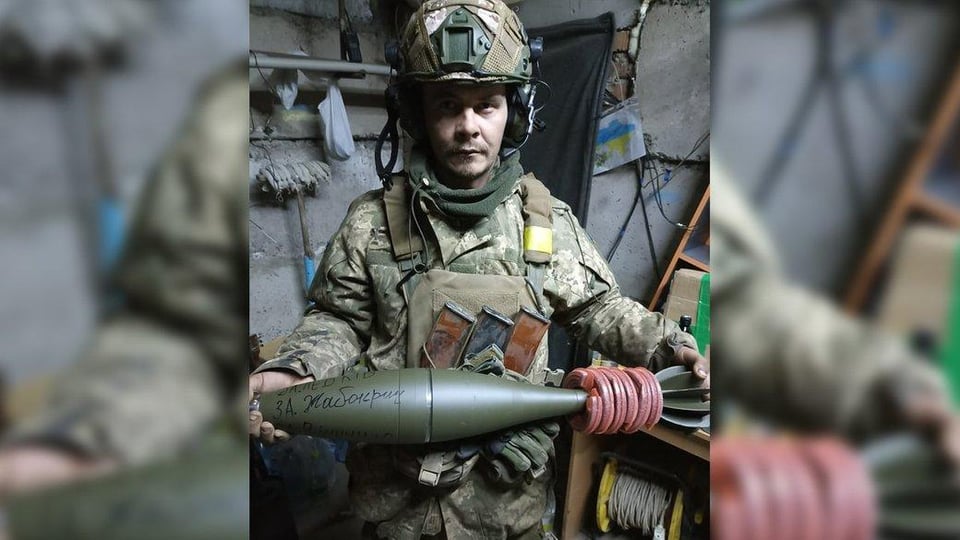
Over the years of the full-scale war, he has fought on multiple fronts: Zaporizhzhia, near Huliaipole, and in Donetsk and Dnipropetrovsk regions. For the past three years, his unit has been holding the line on the Pokrovsk axis.
>“The most important thing is support. Adrenaline and fear are always there, but 60–70% of your strength comes from the support of loved ones, especially women whose husbands are fighting,” he said.
>Support among soldiers themselves is no less important.
“We try to pull out everyone who gets wounded. Even when they’re bleeding out and you can’t just reach them because of drones, we still try to get them out.
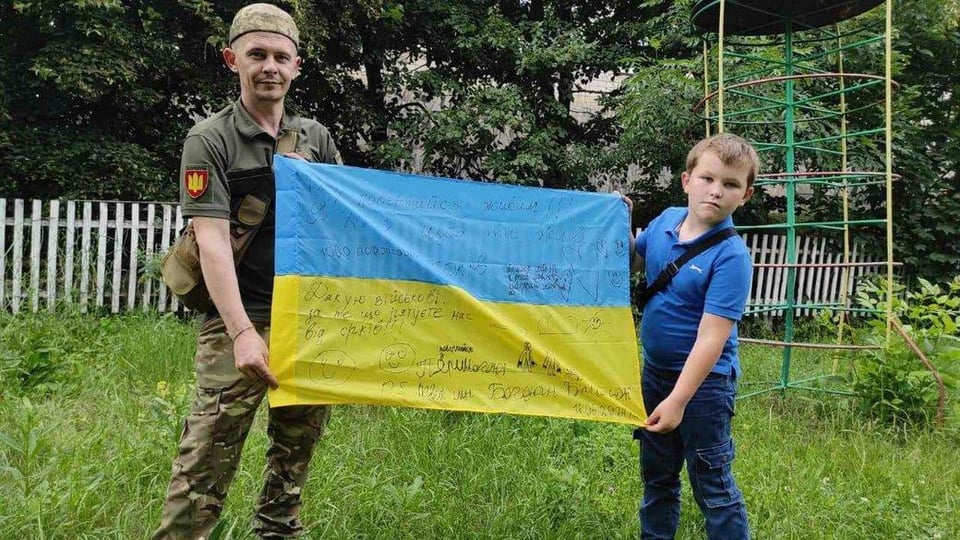
Despite years of war, Dmytro says some of his warmest memories are tied to simple things, especially children’s drawings once sent by schoolkids from Kryzhopil.
>“There were drawings from children. Written in a childlike way, barely legible. But it meant so much that they hadn’t forgotten us,” he said.
“Children are the most important for us. We stand for those we love, for our land. We really want this generation of children not to have to fight, that they live to see victory,” he said.
Over the years, Dmytro has not suffered severe physical injuries, but he has endured multiple concussions. The hardest part of war, he says, is losing comrades.
Two of Dmytro’s brothers are also serving on the front. At home, his family and his son are waiting for his return with victory. All of them, he says, share one dream: peace.

2 commenti
In 2016, Dmytro voluntarily signed a contract and went to serve. According to him, many people then believed the war would end quickly.
“I signed the contract and I’m still serving to this day. Back then, we thought it would all be over in two weeks, but it’s been going on for years now,” he said.
Over the years of the full-scale war, he has fought on multiple fronts: Zaporizhzhia, near Huliaipole, and in Donetsk and Dnipropetrovsk regions. For the past three years, his unit has been holding the line on the Pokrovsk axis.
>“The most important thing is support. Adrenaline and fear are always there, but 60–70% of your strength comes from the support of loved ones, especially women whose husbands are fighting,” he said.
>Support among soldiers themselves is no less important.
“We try to pull out everyone who gets wounded. Even when they’re bleeding out and you can’t just reach them because of drones, we still try to get them out.
Despite years of war, Dmytro says some of his warmest memories are tied to simple things, especially children’s drawings once sent by schoolkids from Kryzhopil.
>“There were drawings from children. Written in a childlike way, barely legible. But it meant so much that they hadn’t forgotten us,” he said.
“Children are the most important for us. We stand for those we love, for our land. We really want this generation of children not to have to fight, that they live to see victory,” he said.
Over the years, Dmytro has not suffered severe physical injuries, but he has endured multiple concussions. The hardest part of war, he says, is losing comrades.
Two of Dmytro’s brothers are also serving on the front. At home, his family and his son are waiting for his return with victory. All of them, he says, share one dream: peace.
[**https://suspilne.media/vinnytsia/1261140-mi-stoimo-za-tih-kogo-lubimo-istoria-oficera-z-vinniccini/**](https://suspilne.media/vinnytsia/1261140-mi-stoimo-za-tih-kogo-lubimo-istoria-oficera-z-vinniccini/)
💙💛