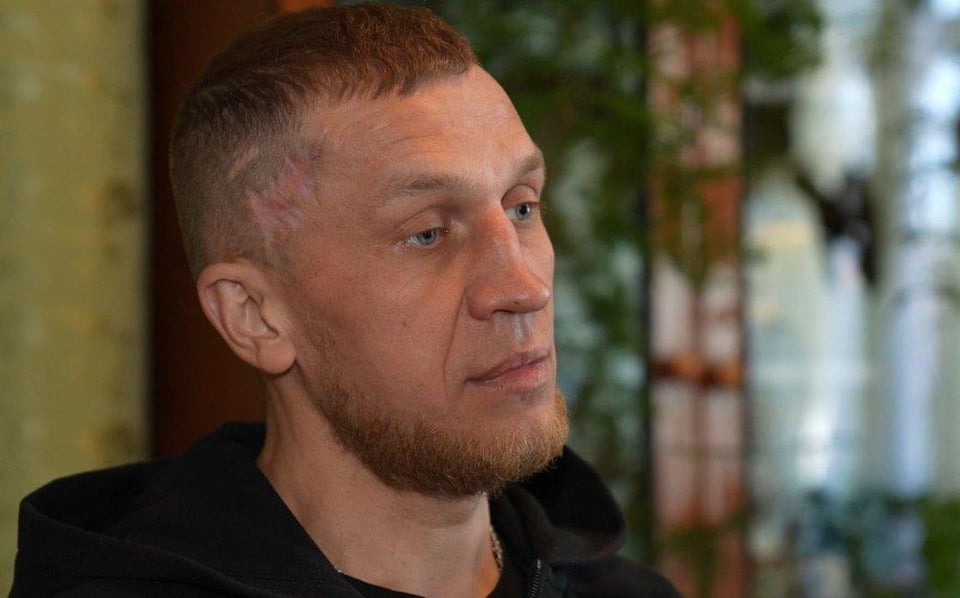
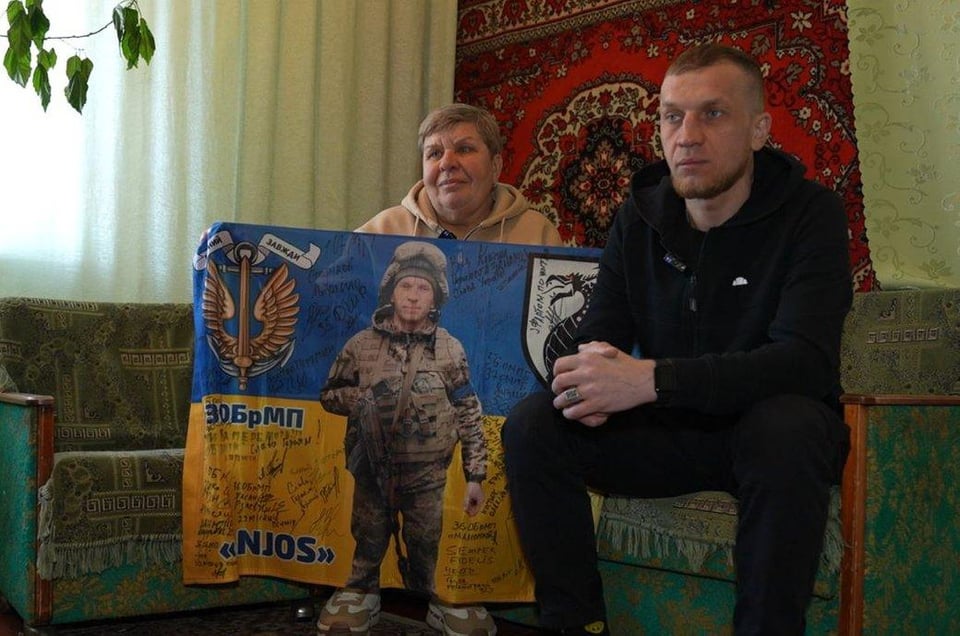
Yevhenii Hanzhala is a marine. He joined the military in 2015 and continued serving after the start of the full-scale war: he defended Mariupol, where he was captured on April 12, 2022. Last year, on Independence Day, Yevhenii was returned to Ukraine.
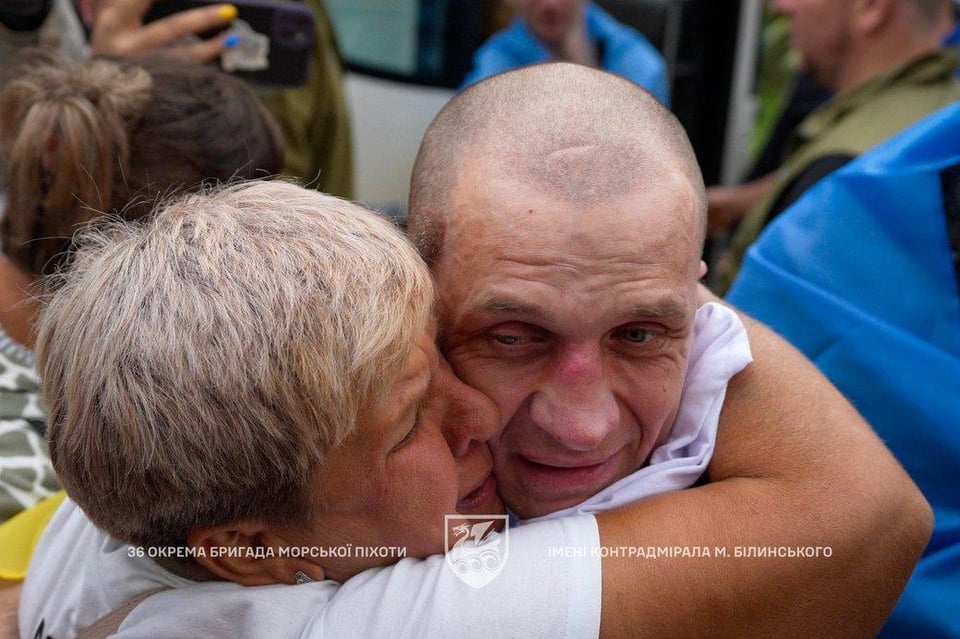
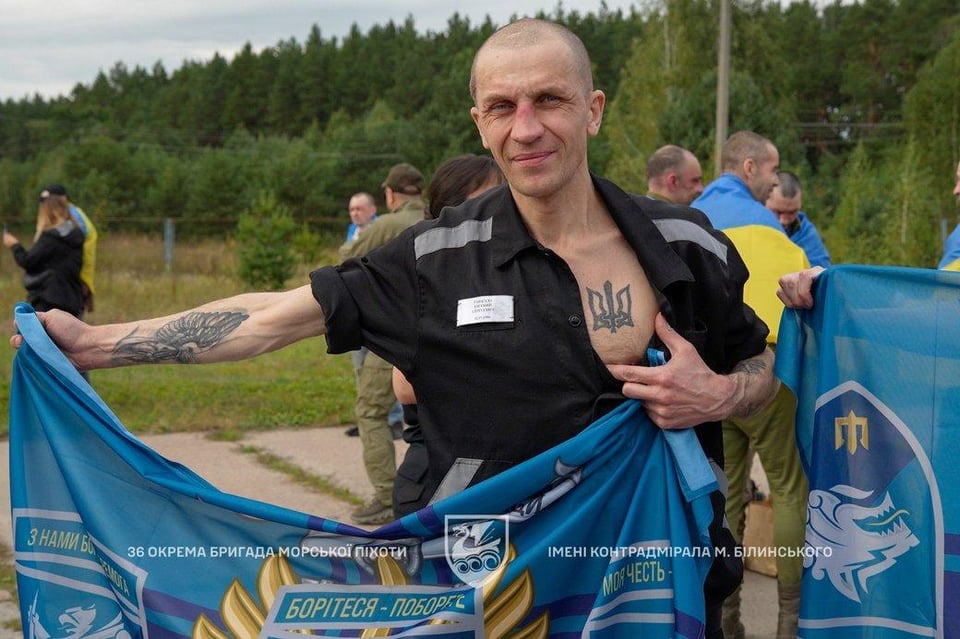
He returned home after three and a half years in captivity on August 24, 2025, and immediately put on a vyshyvanka that his mother had brought to every prisoner exchange.
>“It’s preserved, but I won’t be able to wear it because I’ve gained a bit of weight. When I returned, I weighed 58 kilograms, and now I’m already 76. I don’t quite fit into it anymore”
Yevhenii said he was taken into Russian captivity in April 2022 during the defense of Mariupol:
>“We were already surrounded. No weapons, no food, no water, no medicine, nothing. The last time I contacted my family was on March 30 or 31. The connection was still good then. I told them: I’m wearing a hat, I’m not hungry, I’ve eaten. Of course, that was a lie.”
In captivity, he said, he was immediately placed on a separate list because of Ukrainian symbols on his body.
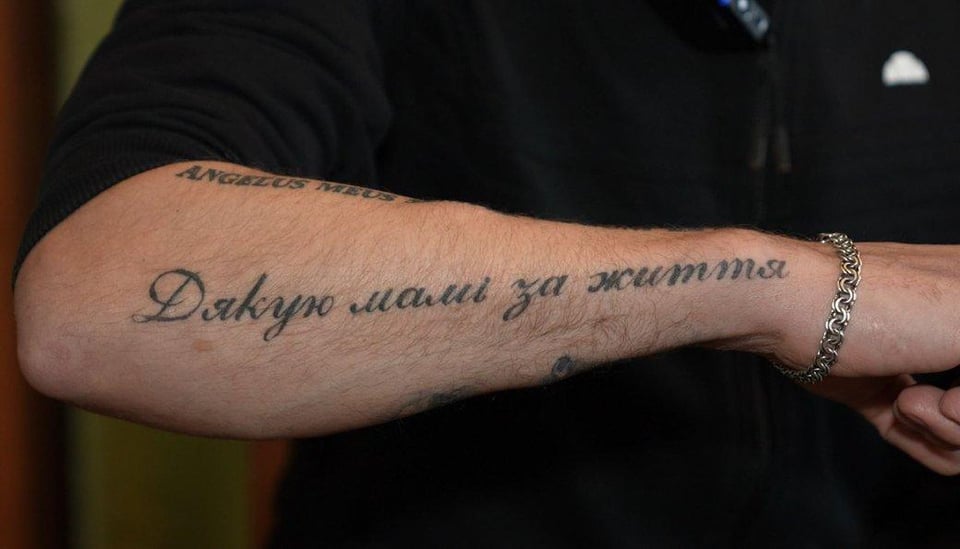
>“There was severe torture. As you know, I have tattoos. One is the Ukrainian coat of arms, trident, and a vyshyvanka. They have this phobia. If you have these tattoos, that’s it: a Nazi, a fascist. They told us it had to be gone by evening. My fellow soldier and I tried to erase them off with stones.”
At first, Yevhenii said, he was held in a colony in the Luhansk region, where some of the staff were Ukrainians who had sided with Russia:
>“One guard even told us: guys, I know what you’ve been through, because I used to serve too, even though I switched to Russia’s side. My thought was: why did you switch? What made you go to Russia? Looking for a better life? You didn’t find one. And now you won’t return. And no one will accept you back.”
Then he was transferred to a colony in Siberia. There, he said, besides torture, the cold was exhausting:
>“Not even the moral exhaustion, the cold and hunger were the hardest. Porridge without salt, without oil, just boiled grain. The same with soup: just water, a couple of potatoes, and that’s it. They could give you a full bowl of porridge, but only a minute to eat it. You simply can’t manage in that time. And they gave us boiling water.”
In captivity, Yevhenii said he thought about Ukraine every day:
>“They told us every day: Ukraine doesn’t exist, you’ve been forgotten, nobody needs you, you’ll never get home. But we held on. We thought more about our future, about what we would do after returning. Even though we told these stories to each other a hundred times, we kept telling and listening to one another.”
Now Yevhenii continues rehabilitation. Together with his mother, they attend rallies in support of prisoners of war and travel to exchanges.
He plans to volunteer and, he added, wants to restore his tattoo with Ukrainian embroidery.

2 commenti
Yevhenii Hanzhala is a marine. He joined the military in 2015 and continued serving after the start of the full-scale war: he defended Mariupol, where he was captured on April 12, 2022. Last year, on Independence Day, Yevhenii was returned to Ukraine.
He returned home after three and a half years in captivity on August 24, 2025, and immediately put on a vyshyvanka that his mother had brought to every prisoner exchange.
>“It’s preserved, but I won’t be able to wear it because I’ve gained a bit of weight. When I returned, I weighed 58 kilograms, and now I’m already 76. I don’t quite fit into it anymore”
Yevhenii said he was taken into Russian captivity in April 2022 during the defense of Mariupol:
>“We were already surrounded. No weapons, no food, no water, no medicine, nothing. The last time I contacted my family was on March 30 or 31. The connection was still good then. I told them: I’m wearing a hat, I’m not hungry, I’ve eaten. Of course, that was a lie.”
In captivity, he said, he was immediately placed on a separate list because of Ukrainian symbols on his body.
>“There was severe torture. As you know, I have tattoos. One is the Ukrainian coat of arms, trident, and a vyshyvanka. They have this phobia. If you have these tattoos, that’s it: a Nazi, a fascist. They told us it had to be gone by evening. My fellow soldier and I tried to erase them off with stones.”
At first, Yevhenii said, he was held in a colony in the Luhansk region, where some of the staff were Ukrainians who had sided with Russia:
>“One guard even told us: guys, I know what you’ve been through, because I used to serve too, even though I switched to Russia’s side. My thought was: why did you switch? What made you go to Russia? Looking for a better life? You didn’t find one. And now you won’t return. And no one will accept you back.”
Then he was transferred to a colony in Siberia. There, he said, besides torture, the cold was exhausting:
>“Not even the moral exhaustion, the cold and hunger were the hardest. Porridge without salt, without oil, just boiled grain. The same with soup: just water, a couple of potatoes, and that’s it. They could give you a full bowl of porridge, but only a minute to eat it. You simply can’t manage in that time. And they gave us boiling water.”
In captivity, Yevhenii said he thought about Ukraine every day:
>“They told us every day: Ukraine doesn’t exist, you’ve been forgotten, nobody needs you, you’ll never get home. But we held on. We thought more about our future, about what we would do after returning. Even though we told these stories to each other a hundred times, we kept telling and listening to one another.”
Now Yevhenii continues rehabilitation. Together with his mother, they attend rallies in support of prisoners of war and travel to exchanges.
He plans to volunteer and, he added, wants to restore his tattoo with Ukrainian embroidery.
[**https://suspilne.media/cherkasy/1262658-vi-dumali-a-zdamsa-morpih-z-cerkasini-rozpoviv-pro-rosijskij-polon/**](https://suspilne.media/cherkasy/1262658-vi-dumali-a-zdamsa-morpih-z-cerkasini-rozpoviv-pro-rosijskij-polon/)
Wow, thank you