Tag
Austria
Belgio
Belgium
Bulgaria
Cechia
Croatia
Croazia
Czech
Czechia
Czech Republic
Danimarca
Denmark
Estonia
Europa
Europe
France
Francia
Germania
Germany
Grecia
Greece
Hungary
Ireland
Irlanda
Polonia
Polska
Portogallo
Portugal
Regno Unito
Repubblica Ceca
Repubblica di Turchia
Romania
Serbia
Slovacchia
Slovakia
Slovenia
Svezia
Sweden
Turchia
Turkey
Ucraina
Ucraino
Ukraine
Ungheria
United Kingdom

7 commenti
Yep it’s not cheap.
But would you rather depend on Trump or another US President to keep us under their nuclear umbrella?
Would you want to rely on another nation being willing to press the button. And would our enemies be confident that our ally would be willing to launch nukes in our defence?
Giving up our nukes with Russia behaving the way it is atm would be incredibly risky, imo.
And they’re not something you can build overnight as needed.
It seems having a nuclear deterrent is the only real guarantee that your country won’t be invaded. So probably worth it
An interesting discussion from the UK Public Accounts Committee hearings on the topic of the budget consumed by the Defence Nuclear Enterprise – the umbrella under which the UK handles everything involving magic rocks – which is currently eating up 18-20% of the MoD budget and is expecting to rise to somewhere between 20-25%. A high level of spend at the moment is not itself a surprise – the UK is after all currently running a large number of nuclear-related programs including:
1. New SSBNs
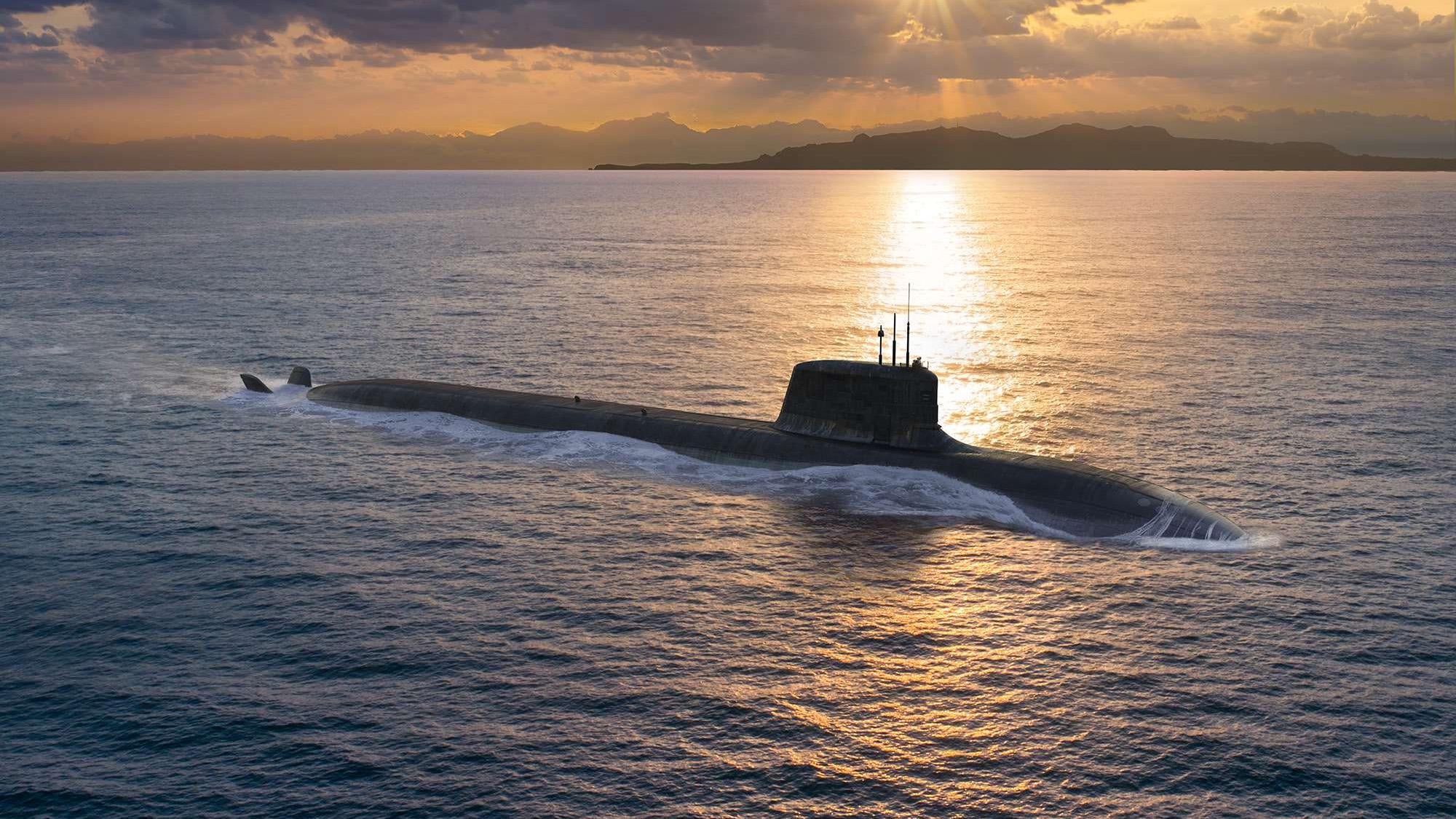
2. New SSNs (Astute and SSN-A)
3. R&D of new nuclear warheads
4. New infrastructure at the Atomic Weapons Establishment’s sites to build those new warheads
5. Dockyard upgrades for the nuclear submarine fleet
And so a large part of that spending is anticipated – it should be stressed that this is an anomalous situation; the average yearly spend is dramatically less than this and the UK’s nuclear program is actually done really very cheaply – much more cheaply than our contemporaries. The previous iterations of the infrastructure projects particularly are now decades old – one of them is to replace [Gravel Gerties](https://en.wikipedia.org/wiki/Gravel_Gertie) built in the 60s. When ammortised over the service life, things look much less expensive. The extent of the high level is something of a surprise however, and when the committee asked why the costs were higher than anticipated [they were told](https://committees.parliament.uk/oralevidence/17383/html/):
> the Department is re-establishing the capability to produce nuclear fuel, which was not in older forecasts around the programme, and there have been changes in scope, for example due to the AUKUS programme. Inflation is also a factor. There are a range of causes for that.
And the idea that it’s the program to [re-establish the capability to produce nuclear fuels](https://ukdefencejournal.org.uk/britain-to-revive-nuclear-fuel-production-for-defence/) driving the cost really is – to me – a surprise. There are basically two kinds of “special nuclear materials” that need to be procured on an ongoing basis for the UK nuclear program; Tritium and Uranium. Tritium is a component of the nuclear warheads but decays in an annoyingly short timescale and needs to be replenished. Uranium for weapons does not decay on a meaningful timescale, but is burned up in the reactors of nuclear submarines and thus needs to be replenished.
Tritium has not been produced in the UK since 2005. I doubt that the nuclear fuels program relates to Tritium, as the word “fuel” does not really apply – its purpose is to eke more yield out of a small amount of plutonium by fissioning it more efficiently. Usually tritium is produced in a reactor through irradiation of lithium targets, and in ~1995 there was a plan for a new tritium production reactor at Winfrith, however this never went ahead. We probably rely on stockpiles currently that are topped up by purchases from the US, who does make it. If I had to guess, my guess would be that the government is hoping that industry will just solve the problem in the long term for them by coming up with a way to produce kilograms of the stuff as fuel for fusion reactors, to which end they are [funding experimental facilities](https://www.ukaea.org/work/librti/) that will help companies developing such production methods test their systems.
The capability to produce nuclear fuel is much more likely to refer to highly-enriched uranium, which is needed for UK naval reactors. Historically the UK ran a gas-diffusion plant at Capenhurst and traded for Uranium with the US; giving them Plutonium and getting Uranium in return. Some time in the 70s we started simply paying the Americans to enrich natural uranium which we supplied to them. The Americans refused to sign a long-term agreement to do that however, which the governments of the time found uncomfortable, and so there was a project to build a new centrifuge plant at Capenhurst using URENCO’s technology to produce HEU domestically. When Reagan came to power he offered 10-year treaties authorising us to purchase Uranium from them, and on the basis of those arrangements (which have been renewed every decade since then until Biden) the situation was thought secure enough that the UK dropped the domestic production project and simply enriches natural uranium some extent and then ships it to the US, who finish it off to ~97.5% HEU. That arrangement was thought to strike the best balance between maintaining the UK capability to do enrichment itself whilst keeping costs as low as possible (for reference that means that the UK does ~60% of the enrichment work).
Biden agreed to remove the time-limits on the treaty authorising the UK to purchase nuclear fuels from the US entirely – something the UK had been asking them to do for 65 years. Based on historic attitudes, that step ought to have made HMG _very very happy_, yet instead of a reduction in the UK participation in enrichment, we find that we are running a program to bring the production of nuclear fuels back to the UK, despite this being pretty much the worst possible time to drop a bunch of capital on a project that should be totally unecessary. The suggestion usually given is that the capital expenditure makes sense because of AUKUS – but that doesn’t really compute. It seems very unlikely that the profits available from supplying Australia with 5 submarines worth of HEU could offset the capital costs of construction a new enrichment facility here for defence purposes.
My suspicion is that this decision reflects quite a serious degredation in the level of trust that HMG places in the security of supply from the Americans. I may just be reading too much into it though. I could just be flat wrong and the fact that we’re planning to make ~17 SSNs makes it worth bringing it all back in-house. It could be that the Americans are no longer as cheap as they used to be for some reason. It could be that the Americans say they **can’t** meet our needs because they need all their enrichment capacity themselves. It could be a mixture of all of those things.
Am I alone in hating the word Nuclear being used on it’s own like that. It was ok as a Trumpism he used but I guess he’s made it stick now.
Nuclear what?..
I don’t think we’ll ever have a Nuclear war and ultimately that means that Nuclear warheads and ICBMs are pointless except obviously for the arbitrary Mexican standoff deterrent HOWEVER I’m all for the British Space Program and the real funding and job creation for our rocket engineers has always been this Armed Forces spending. Lots of taxpayers money going into rocketry without building up resentment from people who think it would be better spent giving them a free ride.
Just rambling at this point but it goes back the other way just the same in the US. The Space Shuttle only had solid state boosters to keep solid state rocket scientists sharp for when the US needed to build Nukes again.
I view it as since we have it, our military can get away with being much smaller, and cheaper as a result.
Sure we could save 25% off our budget by getting rid of it, at the cost of greatly increaseing overall military spending to compensate for the deterrent that it once provided.
It probably saves us money in the long run.
Thanks to the tory accounting shenanigans during Cameron’s years, they hid the largest cut to defence spending since the end of ww2. Moving nuclear into the defence budget was one such trick.
If we go off pre-Cameron measurements, we are still spending well under 2% of GDP on defence.
We have had more than a decade of very obvious warning, that the world was going in a bad direction. Yet here we are…
It’s kinda the only defence you actually need so that’s reasonable