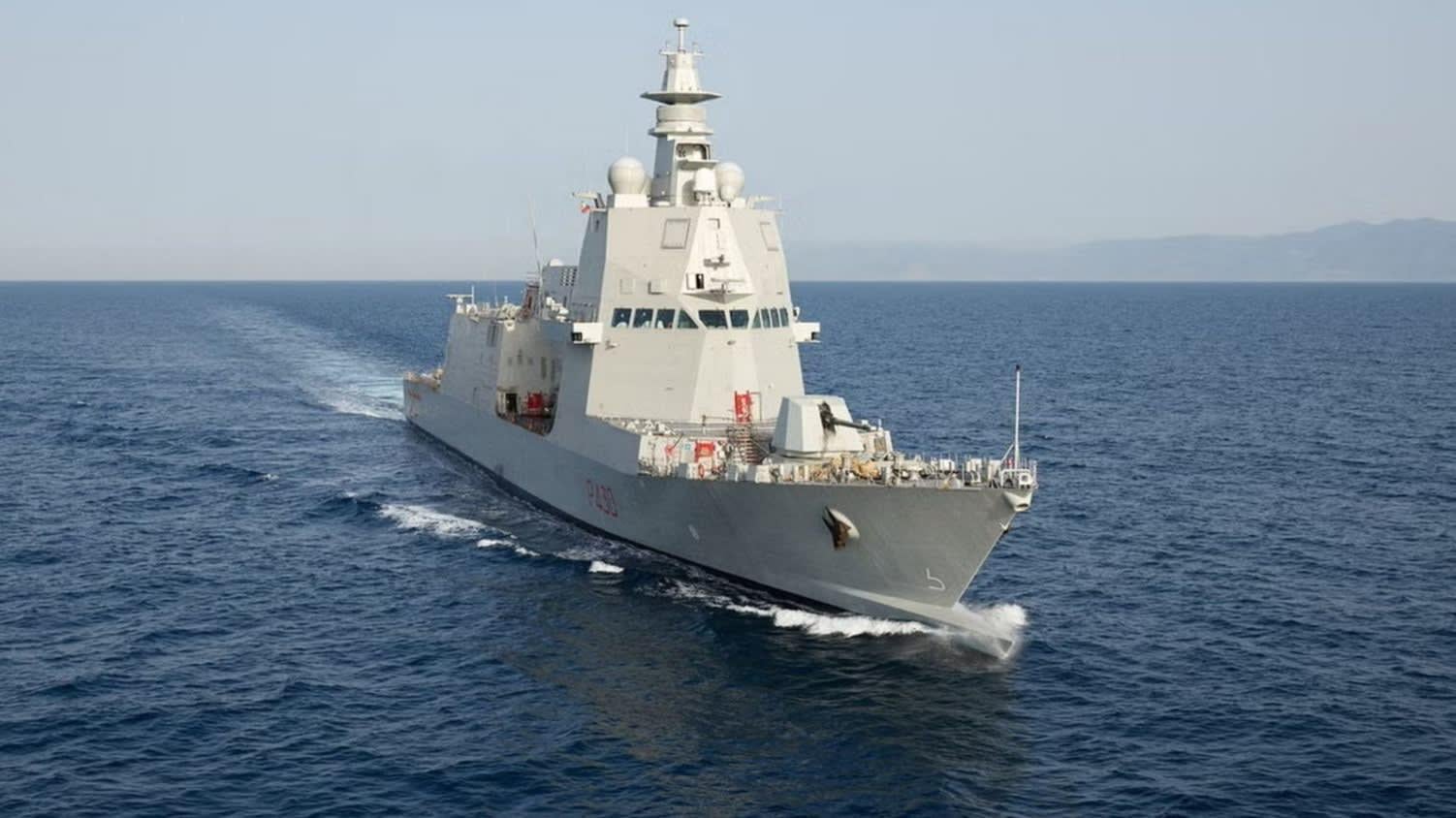
Il più grande costruttore navale europeo chiede la standardizzazione delle specifiche delle navi
https://www.ft.com/content/6e1d1c92-0faf-4ea9-b185-b87da6d7bf44
di tree_boom

Il più grande costruttore navale europeo chiede la standardizzazione delle specifiche delle navi
https://www.ft.com/content/6e1d1c92-0faf-4ea9-b185-b87da6d7bf44
di tree_boom
12 commenti
Europe must harmonise design specifications for vessels if its shipbuilding industry is to remain in the global race, the bloc’s industry leader has warned.
Fincantieri’s Pierroberto Folgiero ruled out consolidation in Europe’s defence industry as governments were focused on building their own national defence champions. However, a common set of specifications within Europe would “be a starting point” in boosting competitiveness by lowering costs and increasing efficiency, he told the Financial Times.
Each country in Europe has different design requirements and specifications for warships and military vessels such as frigates and submarines.
This forces shipbuilders to invest in multiple specifications for each country. However, standardising those across the bloc will enable shipbuilders to create scale while also subcontracting lower value-added parts to third parties, according to the Italian state-owned shipbuilder.
It was “necessary for European countries to move towards an alignment” of design specifications or the bloc’s shipbuilders would have less capital to spend compared with their competitors because of the cost inefficiencies, said Folgiero.
Although there has been a radical shift in the bloc’s defence strategy since Russia’s invasion of Ukraine and a dramatic increase in defence spending, Folgiero says cross-border mergers in the industry among the bloc’s shipbuilders seeking economies of scale and profitability are unlikely to be successful due to national interests.
The European Commission’s competition rules have also proven to be a stumbling block for cross-border deals over the past decades.
Fincantieri’s own discussions over a strategic partnership with Thyssenkrupp Marine Systems have gone nowhere. It also tried to buy France’s Chantiers de l’Atlantique in 2021, which faced the French government’s opposition.
“Alignment [of standards] could lead to different forms of collaboration” without any of the individual national champions losing out, said Folgiero.
The Italian group this week forecast more than €50bn in new orders. The company is targeting a 40 per cent rise in revenues with core profit almost doubling by 2030.
Folgiero said the EU’s financing initiatives, such as the Security Action For Europe facility line and the grants under the EDIP regulation — the bloc’s first long-term legal framework, which includes joint defence procurement and supply chain security — were steps in the right direction. The initiatives aim to strengthen the EU’s defence industry and technological upgrades while also encouraging much-needed collaboration in the space among member states.
“These are facilities that support the European industry but which require imposing European nations to work together, including on closing the technology gap which in defence is becoming increasingly crucial,” said Folgiero.
“We are living through a time where the question marks on the EU’s ability to be decisive [on policy and strategy] are more than the answers,” said the chief executive.
“But we are talking about shaping history here, not the next six months, and this is a huge theme because we really don’t have any alternatives,” he added.
Governments want efficiency and competitiveness, but still cling to national control when it comes to defence industries. If mergers are politically impossible, then harmonised standards are probably the only realistic lever left. Otherwise, EU money risks being wasted on parallel projects that solve the same problems repeatedly instead of building real industrial depth across the bloc.
Honestly sounds like “NATO standardisation for ships” 30 years late. Even just agreeing common interfaces for sensors and weapons would help a ton without forcing identical hull designs.
But then all warships are not built for the same conditions and uses. For example Finnish warships are being built for particular Finnish specifications, because they will mostly be operated in the Baltic Sea, which has very specific conditions, especially in winter. The new Pohjanmaa class corvettes are for example built with a high ice class, something ships for, say, the Mediterranian will not need.
While there are benefits in standardization, there are also limits to those benefits.
This only works when countries have aligned needs, and considering naval technologies are some of the most sensitive secrets a country has, this will go nowhere.
You won’t, for example, see UK Sonar sets on Italian or French subs.
I think that should already be a common topic… we’re in a union for a reason, standardizing to make everything easier and faster would be best.
See the Naval Ship Code or ANEP77.
Standardisation to make poorest more poor to not be able to win public tenders?
Or just to make life easier…
Which one is this?
I don’t see the point of standardisation on military craft: the point is to be better than the others, you’re not chasing economies of scale there.
No need to mention specific differences here, they are trying to say that do it as much as possible, especially for general parts that present in every ship. Aiming 100% kills the collaboration.
I can see the news headlines in 20 years:
“Warship stolen as EU standards allow thief to start it without keys”
It would be good if European ships could have a networkable CEC interface like Aegis CEC capability. The fact that a European fleet can’t effectively fight together in real time is going to be a big problem going forward. Not paying for actually integrating each ship into each others fleet. Even just proper IFF systems, so you know, a Tiger helicopter can land on an allied ship without that ship turning off its CIWS.
I don’t see any progress on universal standardisation of ships in Europe.