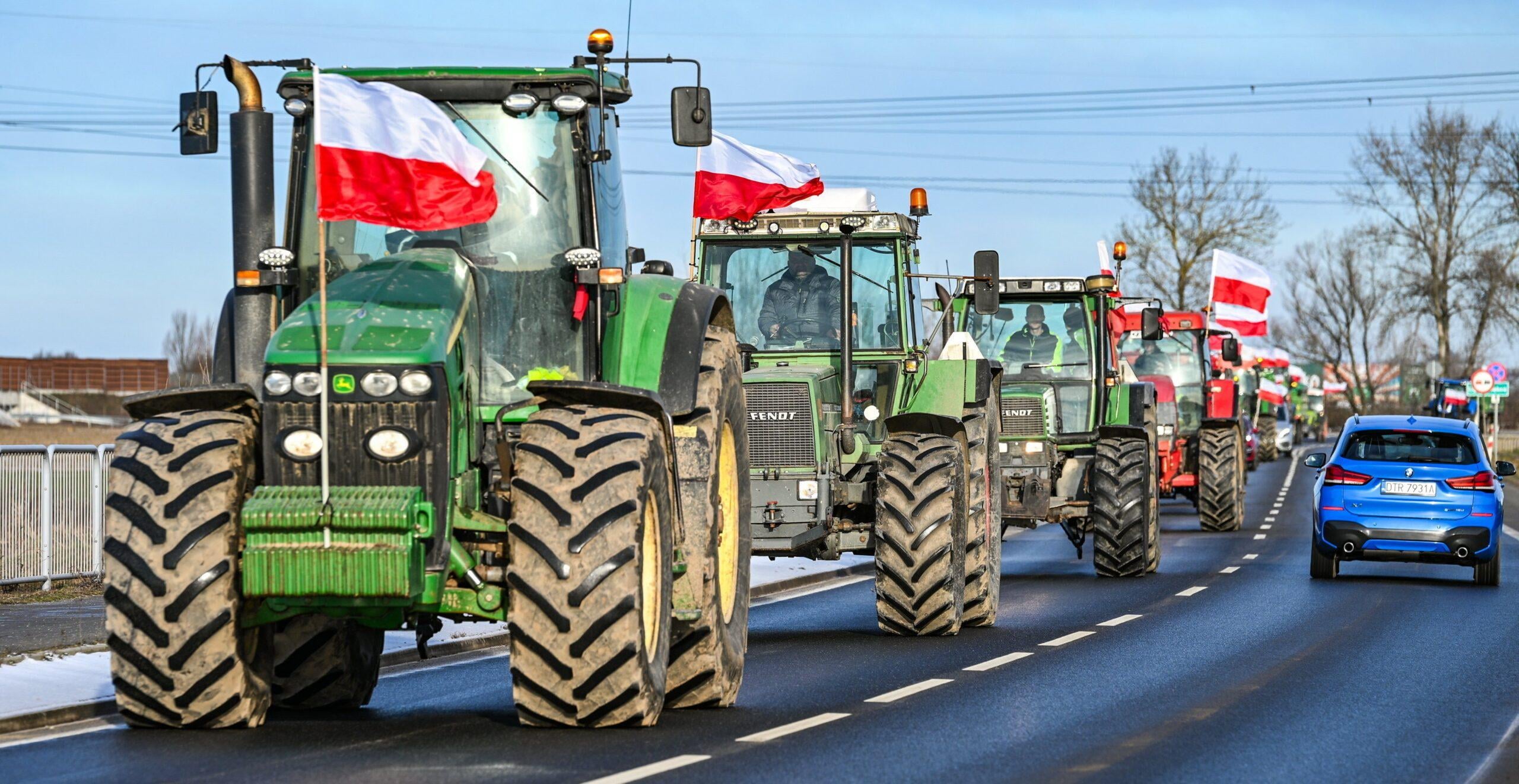
Gli agricoltori polacchi organizzano una protesta nazionale contro il previsto accordo di libero scambio Mercosur dell’UE
Polish farmers stage nationwide protest against EU’s planned Mercosur free trade deal
di Gamebyter

Gli agricoltori polacchi organizzano una protesta nazionale contro il previsto accordo di libero scambio Mercosur dell’UE
Polish farmers stage nationwide protest against EU’s planned Mercosur free trade deal
di Gamebyter
13 commenti
**A Polish farmer in 2025:**
**Does not pay PIT income tax** – most individual farmers use a lump‑sum system based on the Agricultural Tax Act, which means they do not pay standard income tax. PIT applies only if they run non‑agricultural business activity.
**Generates low added value for GDP** – the agricultural sector accounts for about 2–3% of GDP, and its productivity is significantly lower than in other sectors. Estimates of losses around 15 billion PLN per year appear in systemic efficiency analyses, but these figures are debated and depend on methodology.
**Receives direct subsidies** – under the EU’s Common Agricultural Policy, subsidies are granted mainly per hectare of land, regardless of production efficiency. In 2025 the average subsidy is around 1000–1500 PLN per hectare.
**Uses cheaper agricultural fuel** – farmers can apply for an excise tax refund on diesel used in agricultural production. In 2025 the refund rate is 1.46 PLN per liter.
**Does not pay ZUS or NFZ contributions** – farmers are covered by a separate social insurance system (KRUS), which has significantly lower contributions than ZUS. In 2025 the KRUS health insurance contribution is about one‑third of the ZUS rate.
**Uses EU funds** – farmers have access to investment programs (e.g., farm modernization) and social support programs (e.g., aid during weather‑related crises). In 2025 the “Disasters 2025” program was launched, offering compensation of up to 3000 PLN per hectare for crop losses.
**Receives compensation for not performing work** – in disaster situations (e.g., frost, floods), farmers may receive compensation for lost crops even if they did not sow that year. The condition is documenting losses exceeding 30% of average production.
**Mostly votes for PiS** – according to CBOS and IPSOS surveys, farmers are one of the most loyal electorates of Law and Justice. In the 2023 parliamentary elections, about 67% of farmers supported PiS.
**The farming profession is partially closed** – access to farmer status (e.g., for KRUS, subsidies, or inheritance of a farm) requires meeting specific conditions, such as owning agricultural land and conducting agricultural activity. Not everyone can simply “walk in from the street” and join the syste
It’s always the farmers…
If only other groups in society would also be as good as protesting, major changes would happen. But it’s just that much more comfortable behind screens.
They are providing a strategic resource. How about we don’t bankrupt our own agricultural sector by brainlessly pushing free trade with the third world?
Most farmers in Poland are not like French rich farmers. Most farms in Poland are small plots of lands on which family work in order to feed itself, feed couple of pigs, chickens etc. and sell the rest as a surplus.
Our constitution explicitly states that such farms needs to be protected
„Article 23
The basis of the agricultural system of the State shall be the family farm. This principle shall not infringe the provisions of Articles 21 and 22.”
(article 21 is about protecting private ownership and article 22 is about protecting freedom of enterprise).
Last 20 years is anything but keeping up with this article in constitution. Governement after goverenement is prioritising big, agricultural businessmen over family farms. This new mercosur deal will be something benefitial for agro-business, but not for small farms. As such it is against the spirit of our constitution for the governement to sigining this deal, but everyone knows that „ideas and values” in polish cosntitution are considered non-binding by corporate lawyers (for example in our constitution we also have full productive employment as a goal of governement).
What squeze our farmers are middlemans, that buy agricultural products cheap and then sell them to markets by bulk in much higher prices. In farming markets, straight from farmers, you can buy friuts and vegetables much cheaper than in shops.
They receive huge amount of money from EU and they awant to end EU…. How they will pay for their Lamborghini tractors?
TL;DR
> Then we turn to Mercosur, a trade agreement 25 years in the making that would cut tariffs, open South American markets, and reduce Europe’s reliance on China — but once again failed at the finish line. Farmers’ protests, national vetoes, and leader hesitation reveal a deeper problem: Europe repeatedly choosing caution and optics over strategy.
https://youtu.be/xR4_tglJvJs (5:23)
How about the 95 % non farmers started to protest for it. The time for petty interest group politics should be over. Can’t have sensible policies if the 5 % tail wags the whole dog.
Good for them! Lula is a notorious Putinlover and the EU should not wish to cooperate with him. We’ll make deals with the rest of SA
This deal is awesome for the EU and horrible for South America.
SA countries will get even more desindustrialized
Prepared to read once again for the a millionth time how the farmers are the most oppressed group in all Europe, how they’re poor in the brink of collapse if they get sick and need to be a couple of hours out of work, how they’d ruin their family line financially if a crop would fail, how they’re so suicidal that a cross face would spiral them into doing it, how they’re running a pro bono activity solely thinking on the well being of their compatriots, how everyone is against them while being helped like no one else…
I mean, seriously. In solidarity I’ll refrain from consuming water or generating any nitrogen in order to provide them with more room for profits.
fuck them
Hi! Greetings from Uruguay (MerCoSur founding member and HQ).
Question: Why is the European Union even trying anymore? We’re approaching three decades already of stagnant negotiations, but it’s clear from here that both MerCoSur and the European Union are both too deep into regional protectionism. But some industries in here have a problem with the EU, and there’s always someone at the EU side that doesn’t want cheap food.
Unless there’s more at gain with trying, even without success. Thanks.