
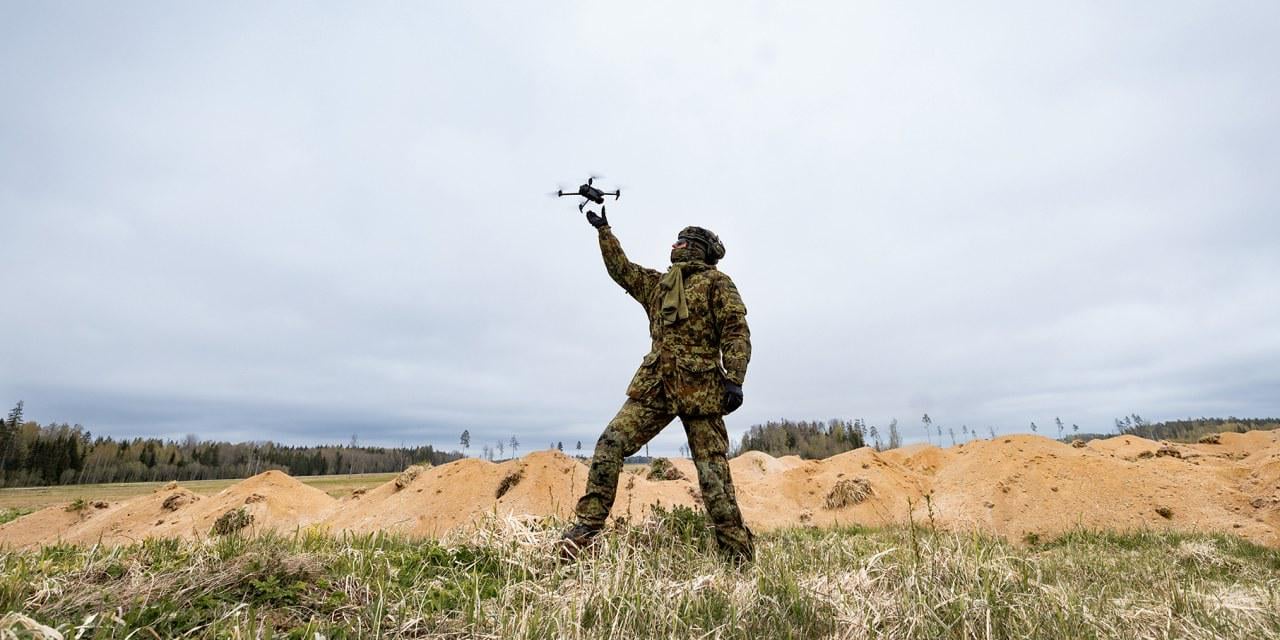
WSJ: Nelle esercitazioni in Estonia, i soldati ucraini hanno rapidamente sconfitto una forza NATO simulata, rivelando importanti lacune nella preparazione dell’Alleanza alla guerra dominata dai droni
https://www.wsj.com/opinion/nato-has-seen-the-future-and-is-unprepared-887eaf0f
di cowauthumbla
10 commenti
Russia and Ukraine have shown the world the future of warfare—and America and its allies aren’t ready for it. That’s the lesson of a major exercise that North Atlantic Treaty Organization members conducted in Estonia last May. What transpired during the exercise, with the details reported here for the first time, exposed serious tactical shortcomings and vulnerabilities in high-intensity drone combat.
The exercise, known as Hedgehog 2025, involved more than 16,000 troops from 12 NATO countries who drilled alongside Ukrainian drone experts, including soldiers borrowed from the front line. It simulated a “contested and congested” battlefield with various kinds of drones, says Lt. Col. Arbo Probal, head of the unmanned systems program for the Estonian Defence Forces. “The aim was really to create friction, the stress for units, and the cognitive overload as soon as possible,” he says.
That tests the soldiers’ ability to adapt under fire. In Ukraine the front line is largely frozen, but Hedgehog envisioned a battlefield where tanks and troops still have some ability to move.
During one scenario, a battle group of several thousand troops, including a British brigade and an Estonian division, sought to conduct an attack. As they advanced, they failed to account for how drones have made the battlefield more transparent, several sources say. The NATO battle group was “just walking around, not using any kind of disguise, parking tents and armored vehicles,” recalls one participant, who played an enemy role. “It was all destroyed.” During Hedgehog Ukrainians used Delta, their sophisticated battlefield-management system. It collects real-time battlefield intelligence, uses artificial intelligence to analyze huge amounts of data, identifies targets, and coordinates strikes across command and units.
That enables a fast “kill chain”: See it, share it, shoot it—all within minutes or less.
A single team of some 10 Ukrainians, acting as the adversary, counterattacked the NATO forces. In about half a day they mock-destroyed 17 armored vehicles and conducted 30 “strikes” on other targets.
Aivar Hanniotti, an Estonian Defense League unmanned aerial systems coordinator, led an adversary unit of about 100 that included Estonians and Ukrainians. Mr. Hanniotti, who has since left the regular military, describes how they deployed more than 30 drones against NATO troops in an area of less than 4 square miles. That’s only about half the drone saturation Ukrainians currently see at the front, though Col. Probal says the Hedgehog umpires sometimes offset that discrepancy by recording the drone strikes as twice as damaging or more. But even with less reconnaissance than in real life, “there was no possibility to hide,” Mr. Hanniotti says. “We quite easily found cars and mechanized units, and we were able to take them out quite fast with strike drones.”
Overall, the results were “horrible” for NATO forces, says Mr. Hanniotti, who now works in the private sector as an unmanned systems expert. The adversary forces were “able to eliminate two battalions in a day,” so that “in an exercise sense, basically, they were not able to fight anymore after that.” The NATO side “didn’t even get our drone teams.”
Credit the Estonians for forcing NATO partners to confront these weak spots. Hedgehog was also an example of how Ukrainians can contribute to overall European security.
There’s only so much you can learn from watching online footage or reading about what’s transpiring in Ukraine, says Sten Reimann, a former commander of Estonia’s Military Intelligence Center who helped bring in Ukrainian drone experts for Hedgehog. He said the results of this exercise were “shocking” to military officials and troops on the ground. Hedgehog didn’t deal with political or strategic issues like drone procurement. Estonia is small, and land-use limitations sometimes constrained how troops could move. No single exercise can reflect how quickly drone technology evolves during an actual war. Still, Hedgehog showed how visible the battlefield has become—and how vulnerable that makes anyone or anything moving on it.
NATO will need to adjust its tactics and find better ways to protect its tanks and armored vehicles. Another lesson is the need for a faster kill chain, which requires more efficient cooperation on strikes. During a future war game, NATO might consider pitting Delta against a similar battlefield-management platform developed by the U.S. to see how they stack up. There’s also room to improve communication and coordination between units. Ukrainians accelerate attacks by sharing large amounts of data between command and units.”
I am completely unsurprised. I am 100% certain our military leaders are completely ignoring the 40 km wide killzone in Ukraine and are just insisting “hur dur, combined arms”. Anders Puck Nielsen explained the Danish military’s failure to procure drones for a future conflict in grim detail. Of course one day someone will claim that none of this was foreseeable.
Arent most of these exercises set up in very specific ways, often favouring one side and prohibiting certain possible actions?
I find it absolutely plausible that a ukrainian infantry unit virtually takes out a NATO unit in an exercise concentrating on FPV drones, for example.
I find it highly implausible to assume the same for an exercise where everything is permitted.
What is happening in Ukraine on the battlefield is different in one very significant way from a war that involved NATO – air power. Neither Russia nor Ukraine have air superiority over the battlefield. NATO forces would completely dominate the skies in any conflict and this would completely change the nature of any conflict. European air forces are well equipped and overall at much higher readiness levels than ground forces.
While I’m sure this exercise was very useful and turned up a lot of learning points for everyone involved, I can’t help noticing that the article summarising it made no mention that I could find of more traditional air power.
That’s a pretty big caveat to the breadth of any conclusions we can draw, given that NATO fighting doctrine puts an enormous importance on effective air supremacy and the massive increases in speed and cover it provides. An exercise like this one that, by the sounds of it, basically pitched NATO infantry against Ukrainian drone operators, isn’t intended to give a full-picture assessment of NATO’s power, just how well troops respond to this specific thing.
Excellent. Drilling our forces for the warfare they’ve experienced is one of the most valuable things they could do, after actually destroying Russian forces. Hope we’re paying them well for it.
According to many redditors russia can’t attack NATO because look they can’t even take Ukraine, but in reality both russia and Ukraine was building up their expertise incrementally whole this time while it looks like NATO solders doesn’t bother to learn anything. I hope they will do more such drills.
Good propaganda
Aren’t the Ukrainian soldiers supposed to fight back against the Russians?
Do they have free time to do exercise with NATO forces ?
Humanitarian reasons aside, supporting Ukraine from a strategic standport is absolutely vital, simply because once the war is over they Ukrainian army will be THE most experienced army in modern warfare.