Il centrosinistra tedesco è sull’orlo dell’oblio
https://www.politico.eu/article/germany-center-left-is-on-the-brink-of-oblivion/
di Any-Original-6113

Il centrosinistra tedesco è sull’orlo dell’oblio
https://www.politico.eu/article/germany-center-left-is-on-the-brink-of-oblivion/
di Any-Original-6113
27 commenti
If the Social Democracts don’t want to disappear into the fringes, they have to decide, once and for all, what they stand for and who they represent.
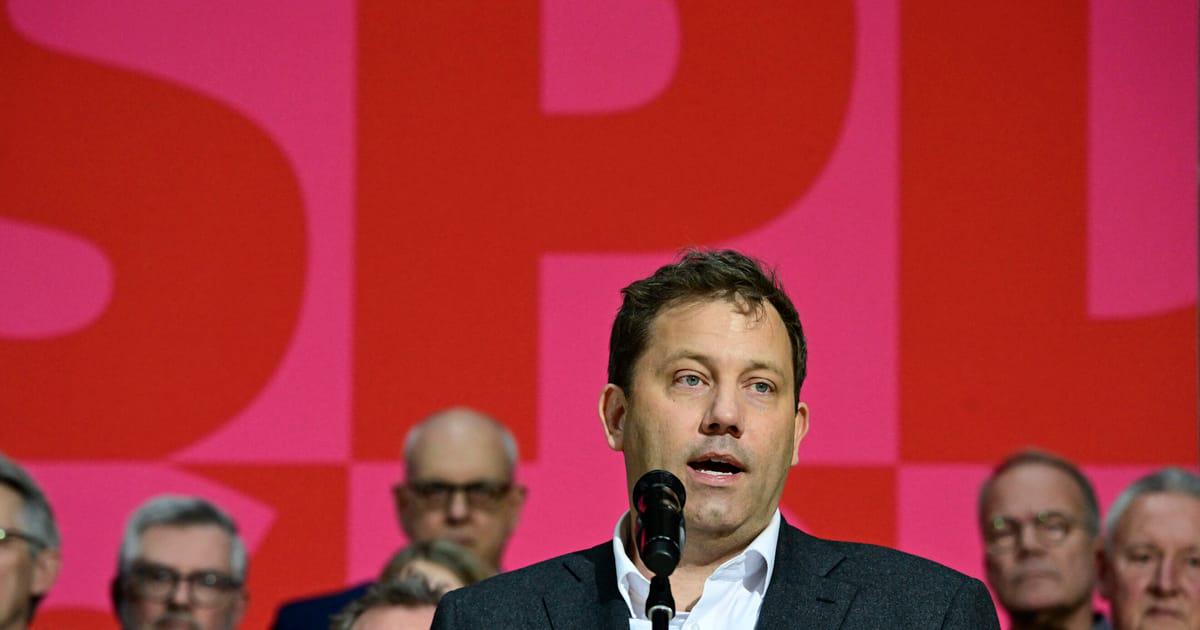
“It is up to us to determine whether Germany will remain a strong country. No one else gets to decide. Not the White House, not the Great Hall of the People — and certainly not the Kremlin. We decide,” declared Lars Klingbeil, Germany’s vice chancellor, minister of finance and co-leader of the Social Democratic Party (SPD).
“Doing this will pose challenges for each and every one of us. We will have to break habits, overcome gridlock; 2026 will require courage,” he added.
But has the floundering man with three jobs finally found his courage?
If he doesn’t want his party to disappear into the fringes, and possibly bring down the coalition with it — he needs to.
Let’s look at the numbers: 2026 is Germany’s “super-election-year,” and the SPD — Germany’s oldest party and possibly the oldest center-left party in the world — kicked things off by being trounced.
On March 8 the party received only 5.5 percent of the vote in the wealthy state of Baden-Württemberg — its worst result in postwar history — barely managing to surpass the 5 percent threshold for parliamentary representation. Two weeks later, in Rhineland-Palatinate, the party was decisively relegated to second place after 35 years in power, receiving its worst-ever election result in that state. Meanwhile, its national polling average has fallen to 15 percent.
All this for a party that has either run the government or been the junior partner for all but four years of the first quarter of this century.
What’s more, the SPD’s decline happened in plain sight, gradually but inexorably. Broadly speaking, the party’s younger, more metropolitan and socially liberal supporters drifted either to the Greens or, more recently, to the avowedly left-wing The Left party, while its socially conservative, anti-immigration voters in smaller towns opted for the far-right Alternative for Germany (AfD).
This has left an electoral rump comprised of state employees, welfare recipients and pensioners, or so the accusation goes. And it’s why — except for one notable period during the early 2000s — the SPD has been seen as the preserver of the status quo, the land of postwar milk and honey, immutable employment rights and generous benefits.
Interestingly, during that period of anomaly, when the party briefly followed a different path, then-Chancellor Gerhard Schröder had uncharacteristically confronted shrinking growth and burgeoning state spending with reforms that included tax cuts, cuts to unemployment and an overall refashioning of welfare.
By the standards of Germany’s consensus-based politics, the changes were a bombshell. And while “Agenda 2010,” as the package was known, did revive the economy, it also saw the SPD lose power. Such was the controversy that although Schröder’s Christian Democrat successor, Chancellor Angela Merkel, kept the changes in place, she was careful not to promote them.
Today, a similar dynamic is back in play. An embattled SPD leadership is split between its traditional wing, which wants to preserve and enhance Germany’s vaunted “social market,” and those who believe it should support — and perhaps even own — a liberalizing reform agenda that the current government has fallen shy of thus far.
Klingbeil belongs in the latter camp, and yet his most immediate task has been to stabilize his position amid calls for his resignation, both from government and as party co-leader. One of the more popular alternatives floated in his stead has been Defense Minister Boris Pistorius, who regularly polls as Germany’s favorite politician. But Pistorius has so far dismissed the idea: “Neither the party nor the coalition needs a debate about personnel right now,” he said.
Meanwhile, Chancellor Friedrich Merz is in a curious position: He wants to exploit the SPD’s weakness electorally but also to prop it up within the coalition. Hence, he told senior figures from his CDU party not to crow. But while Merz and Klingbeil have gotten along reasonably well since the government’s formation just under a year ago, they both know that their parties — separately and collectively — must start delivering on the domestic agenda.
The country’s non-starting “autumn of reforms” has already turned into the “spring of reforms,” with concrete proposals on several fronts yet to be reported. The initials results, on long-term care, are expected soon, followed by those on health care funding. After that, plans to reform the pension system are expected by June, so legislation can be drafted and submitted to parliament before it breaks for summer recess in July.
Normally, all this would be a tall order for the SPD. But “major reforms must take place,” Klingbeil admitted in a recent keynote speech, and they must lead to “lower taxes, lower levies, less bureaucracy, competitive energy prices. In short: A country where work is worthwhile again.”
This means the battle within the coalition will be focused on points of detail and priority that Merz and Klingbeil will argue over — both in private and performatively in public — to present their credentials to voters.
But a much bigger question still looms over the SPD, just as it does with similar social democratic groupings in other European countries, such as the U.K. Labour Party and France’s Socialists: Deciding — and declaring — what they actually stand for in the current political context.
These parties have all allowed themselves to be portrayed as overly cautious, looking over their shoulders to identify and forestall the first signs of trouble. Even when they enact radical reforms, they appear frightened by what they have unleashed and end up being punished for it. Then, they retreat into protection rather than innovation, and the vicious cycle continues.
For the SPD, nobody represented this tendency more clearly than former Chancellor Olaf Scholz — a man who never knowingly said or did anything that hadn’t first been risk-assessed to death. Even his one moment of note — his February 2022 Zeitenwende speech, signaling a historic turning point in terms of Russia, hard power and defense spending — quickly fizzled out.
Overall, as across most of the bloc, politics in Germany has grown increasingly bifurcated, with many voters looking for a clearer sense of definition from their politicians. And in this landscape, the SPD’s quiet incrementalism is in danger of being drowned out from both the left and right.
With some of their voters dying out and others simply losing patience, this party in omni-crisis has to decide, once and for all, what it stands for and who it represents. There are no easy choices here. But one thing is clear: Doing nothing and trying to muddle through will consign the SPD to oblivion.
The SPD was once a major party when they had working people as their main constituency.
Today, their policies largely burden the working middle class while centering on transfer payment recipients. Today, low-income earners, immigrants and retirees are the main beneficiaries of their policies.
The SPD has no way out.
Every decision it makes will be interpreted as either pivoting to the left or the right, and the party will be hounded to oblivion for both.
German political discourse has eroded to the point that one inch to the left and the newspapers will dub them the neo-SED, while every even incidentally non-left-wing-coded reform will get the party exiled from the German left altogether. Meanwhile, the tolerance for even the slightest readjustments is zero; Germans love reforms unless they change something.
Even today, they are looking forward to screwing the working population & middle class with their unrealistic policies & proposals. They are just a majority generator for CDU & have been partners for all the mess the country is facing.
They go down the path of FDP.
Calling the SPD left is kind of stretching the definition at this point.
Destroyed by the media owned by rich people convincing the working class that their enemy are not the rich, but retirees, immigrants, and the unemployed. “Solidarity is good – but only if it benefits ME, not THEM!”
I literally couldn’t tell you what SPD policy principles are these days other than being there for every government coalition.
The SPD and CDU have literally been in government together or as separate parties since the end of the second world war.
Even if the SPD loses they always get to go into a coalition with th CDU or on the extremely rare occasion, lead with other parties.
In their role as junior coalition partner they spend all their time moderating the CDU and fighting for every single crumb they can get whilst also bending over backwards to the pensioners.
They don’t need to improve or do anything better in their eyes as they’re basically guaranteed to be in every government no matter what they do.
The current SPD/CDU government’s achievements can be counted on a single hand after a year and a half in office: raising pensions by record amounts every year, calling German workers lazy and saying they should work more, saying canabis is bad now, commissioning a report about how bad it is, receiving said report and promising to publish it three years after they receive it (this is why we’re fucked as a country). OH and of course trying to undo everything the Ampel coalition did.
Taxing energy profits (aided by their own exit from Nuclear?) will not help anything. Really seems like the left sometimes misses on realism.
The SPD is not left.
The Danish Socialdemokraterne (S) is heading the same direction. Their main base is old red ppl, and they’re losing the current worker’s class to parties further left. There was an election a few weeks ago here, and no new government has been made yet, because of parties in the middle of the spectrum still think they can keep going making a collaborative government together. Issue is that that setup is one of the most failed ones in recent history. Very interesting times at the German neighbours….
That’s because they’re not acting particularly center-left and completely ignore what once used to be their core-constituency, the working-class.
March 19, 2006
Yeah, they did that to themselves, I couldnt even tell you what their policy is
Looks like a recurring theme at the moment.
Centre-left parties across the board are suffering from an identity crisis: they used to represent the working class, but now they’re often social welfare and/or environmentalism.
Now, both those things are good and important, but they’re not exactly popular amongst the majority of the population. So the working class ends up migrating to right-wing populist movements which at least claim to be fighting for the common man, and give them a clear target to be angry at.
It’s the wrong target, of course, but it’s better than the centre-left’s attempts to be as inoffensive as possible.
Not a German; but from what I’ve read about him, clearly Lars Klingbeil is not the man up to the job. Maybe Pistorius would have a better chance
Center left ? Not nowadays
USPD anyone?
SPD lacks the same as CDU, Grüne, FDP: they don’t explain shit of what they want to do and what the effects are going to be. And they lack modern communication skills in the shape of TikTok, Instagram Videos and the like. If they have someone to do Social Networking, they stick to one platform. And either it’s picture threads or cringe material or stuff from their party playback. They need to do stuff less glossy, to the point, and one statement per video.
I sure don’t see the SPD doing a lot of center-“left” politics, but okay
Biggest criminal government since 1945 was SPD under Olaf Schulz as chancellor. He sold his soul to USA and Israel.
Of course they disappear. They are just economical über liberals with some conventional social values. And über liberalism doesn’t give a shei**e about social values, in fact declared it as their enemies, impending their never ending growth myth.
So now, time to remember that politics are, like the economy, servitors of the people first and foremost.
The CDU is going the same way. All they lean into is the hate against immigrants and low income people, basically everyone they see as “leeches” to society. All this in a desperate attempt to steal voters from the AfD which is only getting stronger through this.
Merz’ approval rating is at 15% now. I honestly fear we will get a 35+% AfD next election because many people don’t care to vote for anything else nowadays. They feel let down by the old parties.
Because they aren’t Center left for about 30 years.
Interesting. The SDP in Finland is polling as the most popular party in preparation for elections next year, and their current leadership is more center-right than center-left.
SPD needs to abandon its rabid antinuclearism if they want to stay relevant.
Atomausstieg was brainchild of Greens and Schröder’s government in 2002 , confirmed by CDU in 2011
Wer hat uns verraten? is still relevant to this day. We haven’t forgotten nor forgiven the crimes of the SPD.