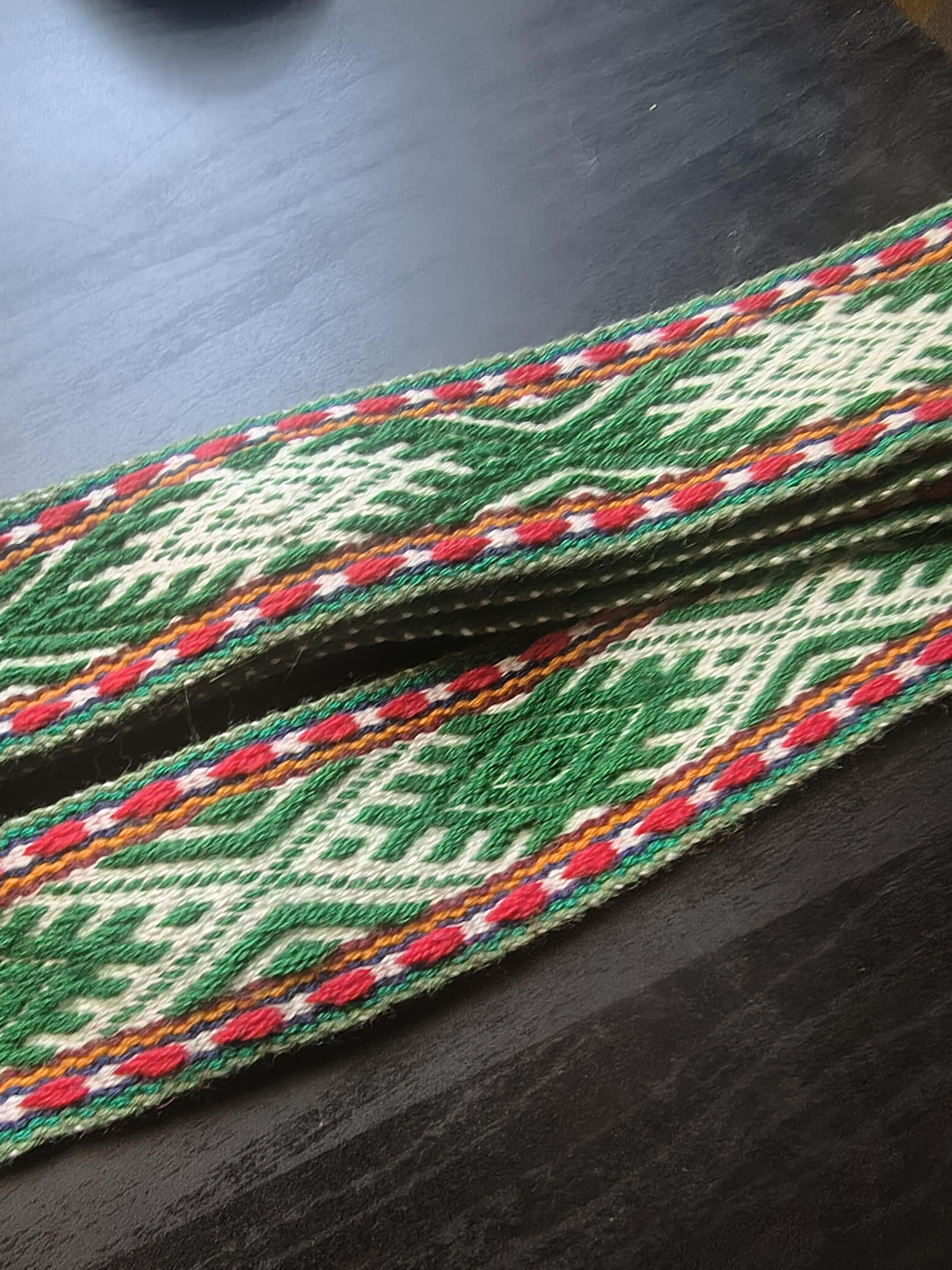
Qualcuno sa quale regione rappresenta il disegno su questa juosta (se presente?)
https://i.redd.it/7axd2v5ixfdh1.jpeg
di Meizas

Qualcuno sa quale regione rappresenta il disegno su questa juosta (se presente?)
https://i.redd.it/7axd2v5ixfdh1.jpeg
di Meizas
2 commenti
If you can read with Google Translate – https://lt.wikipedia.org/wiki/Juosta_(apranga)
TL;DR Sashes done by Lithuanians of old. These in particular are generic ones (each ethnological region having their own styles and ornaments), while there were also “event-based” sashes, like honoring jubilees, or being worn by people in the weddings (especially the newlywed, their witnesses and best men/ladies).
As for this sash in particular – hard to tell, looks very “simple”. Feels more like towards north, Žemaitija or Aukštaitija.
Hi! Its hard to guess the region, as they do have similarities when it comes to colors (Klaipėda region is quite different tho).
Generally, these types of sashes (juostos) were very popular in Suvalkija region. And colors were mainly red, blue, green, purple.
Other regions could have some similarities.
Dzūkija had dominant color as red, but also green, blue and purple. Pattern would be usually made using one or two colors. I found a similar pattern description from Alytus. It had green as the pattern color, pattern is quite similar.
So I would still guess that it might be Dzūkija or Suvalkija region. They are next to each other.
The pattern is basically a rhombus with rays going outwards. Might be wrong, but could represent sun, warmth of life.