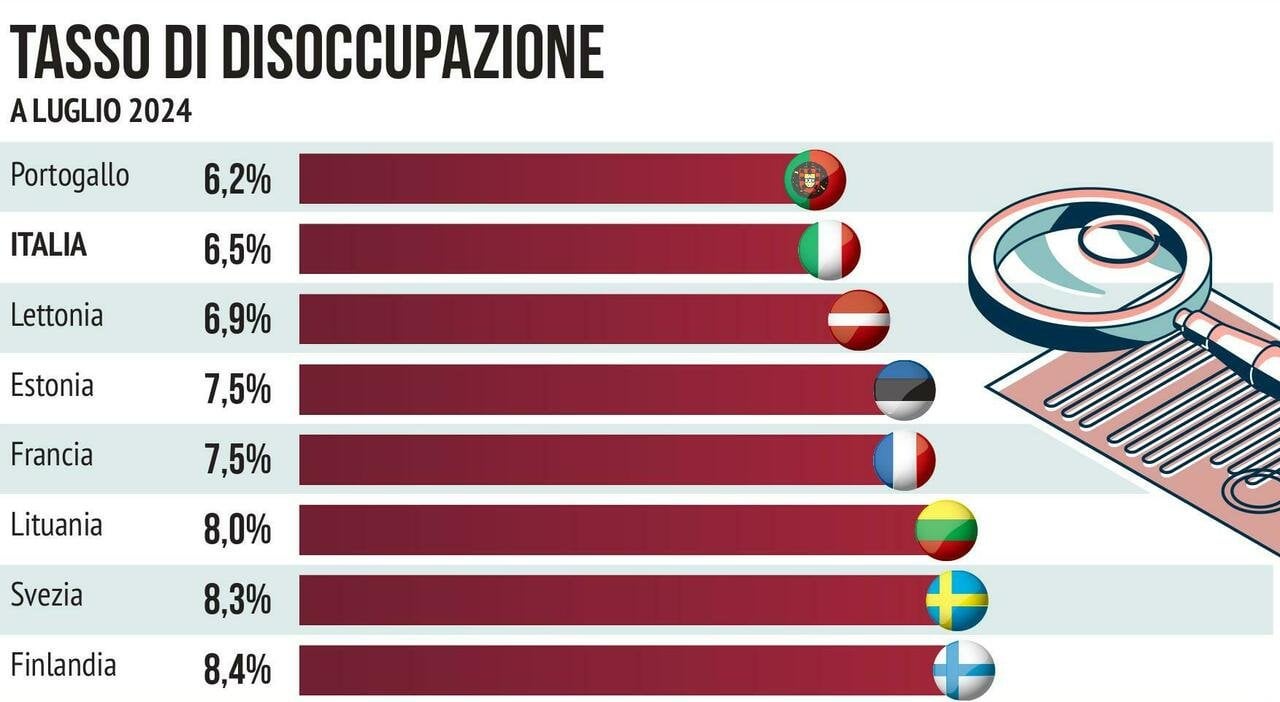
L’Italia ha ora un tasso di disoccupazione inferiore a quello di Francia e Scandinavia
https://www.ilmattino.it/cambio_di_paradigma/italia_tasso_disoccupazione_analisi_marco_fortis-8330343.html
di Sium4443

L’Italia ha ora un tasso di disoccupazione inferiore a quello di Francia e Scandinavia
https://www.ilmattino.it/cambio_di_paradigma/italia_tasso_disoccupazione_analisi_marco_fortis-8330343.html
di Sium4443
27 commenti
PORCO DIOOOOOOOOOOOO 🔥🔥🔥🇮🇹🇮🇹🇮🇹🍕🍕🍕🍝🍝🍝🔥🔥🔥
Obviously this is fake news, Italy can’t be in an economic upswing. All news outlets predicted the opposite
We all know it’s just unreported unemployment.
Might be missing something due to the paywall, but I only saw mention of Sweden out of the Scandinavian countries in the thumbnail?
This is the article, some user reported a paywall but somehow I got the article without paying
numeri su occupazione e disoccupazione dell’Italia di luglio hanno stupito tutti e acquistano ancora maggiore significato nel confronto sullo scenario internazionale. L’Italia, infatti, ha raggiunto un massimo storico dell’occupazione e del tasso di occupazione. In parallelo il tasso di disoccupazione è sceso al 6,5%, un livello che non si vedeva da prima della grande crisi mondiale del 2009. Il 6,5% di disoccupazione attuale dell’Italia, per capirci, è un valore più basso rispetto a quello dei Paesi scandinavi e baltici dell’Unione europea. Si tratta di quei Paesi i cui politici e commissari europei sono soliti esprimere ripetute reprimende al nostro Paese e alla nostra economia, mentre da noi avrebbero anche parecchio da imparare. I dati dell’Eurostat sono chiari: nella disoccupazione la Svezia è all’8,3%, la Finlandia all’8,4%, l’Estonia al 7,5%, la Lettonia al 6,9% e la Lituania all’8%.
L’Italia è anche, tra i più grandi Paesi del Mediterraneo, l’unico assieme al Portogallo a presentare un tasso di disoccupazione sotto il 7%, essendo il Portogallo al 6,2%, la Francia al 7,5%, la Grecia al 9,9% e la “lodatissima” Spagna all’11,5%.
L’Italia che nessuno racconta: i 10 numeri chiave del sorpasso
I numeri dell’Eurozona
Nel confronto tra i tre big dell’Euroarea, in un anno, da luglio 2023 a luglio 2024, i disoccupati in Italia sono calati di 333 mila unità, mentre sono cresciuti di 209 mila unità in Germania e di 59 mila unità in Francia.
Intanto il Pil italiano nel secondo trimestre 2024 è cresciuto dello 0,2%, il Pil francese del secondo trimestre di quest’anno è stato rivisto al ribasso da +0,3% a +0,2%, mentre è stato confermato il calo dello 0,1% della Germania della prima stima.L’Italia, dunque, rimane il grande Paese dell’Euroarea cresciuto di più rispetto all’ultimo trimestre 2019 antecedente lo scoppio della pandemia.
Intanto l’Organizzazione Mondiale del Commercio (meglio nota come WTO), ha ufficializzato che nel primo semestre del 2024 l’export italiano, pari a 341,5 miliardi di dollari, è risultato superiore a quello del Giappone, pari a 338,3 miliardi: un sorpasso che avevamo già anticipato nei giorni scorsi sulla base delle prime stime preliminari in euro.
Se l’export italiano aggancia il Giappone
Tutti questi dati indicano con chiarezza che l’economia italiana, pur in un contesto di debolezza della dinamica mondiale e soprattutto europea, sta evidenziando capacità di resistenza e reazione che erano del tutto inimmaginabili anche soltanto un paio di lustri fa. La stagione delle riforme e del cambiamento che ha caratterizzato gli ultimi dieci anni ha generato progressi competitivi e più crescita. Una stagione iniziata con i governi Renzi, che avviò tra l’altro il Piano Industria 4.0, e Gentiloni. Ci fu, con questi governi, la ripresa post austerità e il debito/PIL, con il contributo di Pier Carlo Padoan, fu finalmente stabilizzato dopo un quinquennio di aumenti ininterrotti. C’è stata poi l’azione del governo Draghi, che ha rassicurato ulteriormente la Commissione Europea e i mercati e che ci ha portato fuori dalla pandemia avviando il Piano Nazionale di Ripresa e Resilienza. Infine, l’Italia sta oggi sperimentando in concreto il combinato di riforme e investimenti che costituiscono la sfida da vincere dello stesso Pnrr. Tutti sforzi e risultati che meriterebbero più riconoscimenti sia da parte delle agenzie di rating e dei mercati finanziari sia da parte della stessa Commissione europea.
Gli interessi sul debito che l’Italia non merita di pagare
Gli interessi
Non ha alcun senso che l’Italia, a causa di uno spread immeritato, paghi ogni anno più interessi sul debito di Germania e Francia insieme, mentre ha un debito estero su Pil tra i più bassi dell’Eurozona e una posizione netta sull’estero positiva per oltre 150 miliardi l’anno.
L’abitudine di “bacchettare” l’Italia anche quando dovrebbe invece essere lodata e incoraggiata per il suo impegno è, d’altronde, dura a morire a Bruxelles. È vero che il nostro rapporto debito/Pil resta elevato ma è quello cresciuto decisamente di meno tra i grandi Paesi del G7 rispetto ai valori pre-pandemici.
È altresì significativo che l’attuale nostro minimo del tasso di disoccupazione somigli ai valori minimi del Governo Prodi II, che con il contributo di Tommaso Padoa Schioppa, ebbe anche il merito di portare il rapporto debito/Pil dell’Italia al 103,9 nel 2007, il valore più basso dai tempi della grande crisi del nostro debito degli anni ’90. Ciò nonostante, anche allora, il Commissario europeo agli affari economici e monetari Joaquin Almunia strigliò secondo il consueto e ritrito copione l’Italia, esprimendo critiche immeritate che Romano Prodi rispedì al mittente, facendo benissimo.
Always interesting to look at the employment rate too to see what’s going on in a labour market.
Numbers for Italy have improved. But remember that the employed rate for the adult population (15-65 years old) is 62% in Italy vs 75% in sweden.
https://ec.europa.eu/eurostat/web/products-eurostat-news/w/ddn-20240425-1
Employment rate among 20-64 year olds in 2023 was 82.1% for Sweden, 74.4% for France and 66.3% for Italy.
Sure mate it’s magical
Go Portogallo!
The headline is a bit misleading. Italy might have lower unemployment than Sweden, but Denmark is currently sitting at 2,9% unemployment (Source Danish ministry of employment: [https://bm.dk/nyheder/pressemeddelelser/2024/08/naesten-uaendret-ledighed-i-juli-2024](https://bm.dk/nyheder/pressemeddelelser/2024/08/naesten-uaendret-ledighed-i-juli-2024) )
Scandinavia, great country!
I doubt that it is lower though.. in Denmark there’s only 86.000 people who are unemployed of a population of 5.9 million. That’s an unemployment rate of 2.9%..
Unreported unemployment is a magical thing, isn’t it
People are comparing employmante rates, to unemployment rates. These are not the same. Students are neither employed nor unemployed, same goes for people who got early retirement or prolonged sick leave (without a job to go back to).
Italy having low unemployment can mean they are just “hiding” their numbers in other programs. Have been done in Sweden before where the government halfed the unemployment in just a few years (while we saw a sharp rise in early retirement and people on sick leave).
Wtf is this comment section, only negativity
Yeah but the salaries are shit anyways
Please remember that Unemployment rate do not consider if the contract is permanent or temporary.
Italy permanent job rate is among the lowest in western Europe sitting at mere 16% and the trend is *lowering* since 2023.
Basically Italian government is pushing precarious employment and helping companies to focus on temporary deals compared to permanent contracts.
You can easily find all these official stats on dating.istat.it that is the official website of Italian National Statistical Institute.
Those fascists and their labor camps again WHY IS NOBODY STOPPING THEM? WHERE IS THE USA?
Norway has a unemployment rate of 4% https://www.ssb.no/arbeid-og-lonn/sysselsetting/artikler/arbeidsledighet-i-norge
Not sure if the calculation is the exact same as the original as there are many numbers you can use for unemployement, but I doubt it would be as high as 6%
It’s true that the unemployment rate is lower. The employment rate has also grown significantly, and there are about 1 million more people in the workforce compared to the end of 2022.
BUT, the GDP is growing very little. Compared to the end of 2022, Italy’s GDP is only 2% larger at this point, while the workforce has grown by almost 5%.
This means that the workers we have gained have a productivity level that is basically half of the Italian average (which is already low).
If you look at the data (I could post the graph later; I’m on mobile right now) on investment over the last 5 years, half of the growth is in the “housing category.”
We threw 128 billion euros down the drain for something called “Bonus 110,” which is basically a form of incentive where the state literally pays you to carry out construction maintenance interventions on your home.
A lot of small, unproductive businesses were born during this period, using government money.
We didn’t create quality jobs; we created VERY low-quality jobs, and our average real salary decreased by an additional 6% over the last two years.
Meanwhile, our public debt, which was already one of the highest in Europe, grew by 10%.
So:
1. We don’t really know if this increase in employment is stable. Now that we don’t have Bonus 110 anymore, unemployment could rise again.
2. The jobs that have been created are very unproductive. Because of this the wages are terrible. And our productivity has already been lagging behind for decades at this point. Our wages are lower than they were in 1990.
Forza, Itali-bros.
Time to shit on Italy anyway saying that the data is wrong knowing r/europe
I think it’s maybe because Italy exports its unemployed people, but where would an unemployed Swede go if they can just sit on welfare and get a rent free apartment paid for by the government.
Same thing happened in the UK, most of the unemployed stayed put because most other countries are poorer and the State pays their rent.
Could summer jobs have an influence on this?
And now sort it by Gross Annual Salary
Isn’t it because people live the country ?
Misleading title. Sweden does not equal “Scandinavia”. To say “Scandinavia” here, I would expect each of the Scandinavian countries, individually.