Paphos Giorno 8: Fatto più interessante
https://i.redd.it/z11xwl9e877e1.png
di notnotnotnotgolifa

Paphos Giorno 8: Fatto più interessante
https://i.redd.it/z11xwl9e877e1.png
di notnotnotnotgolifa
3 commenti
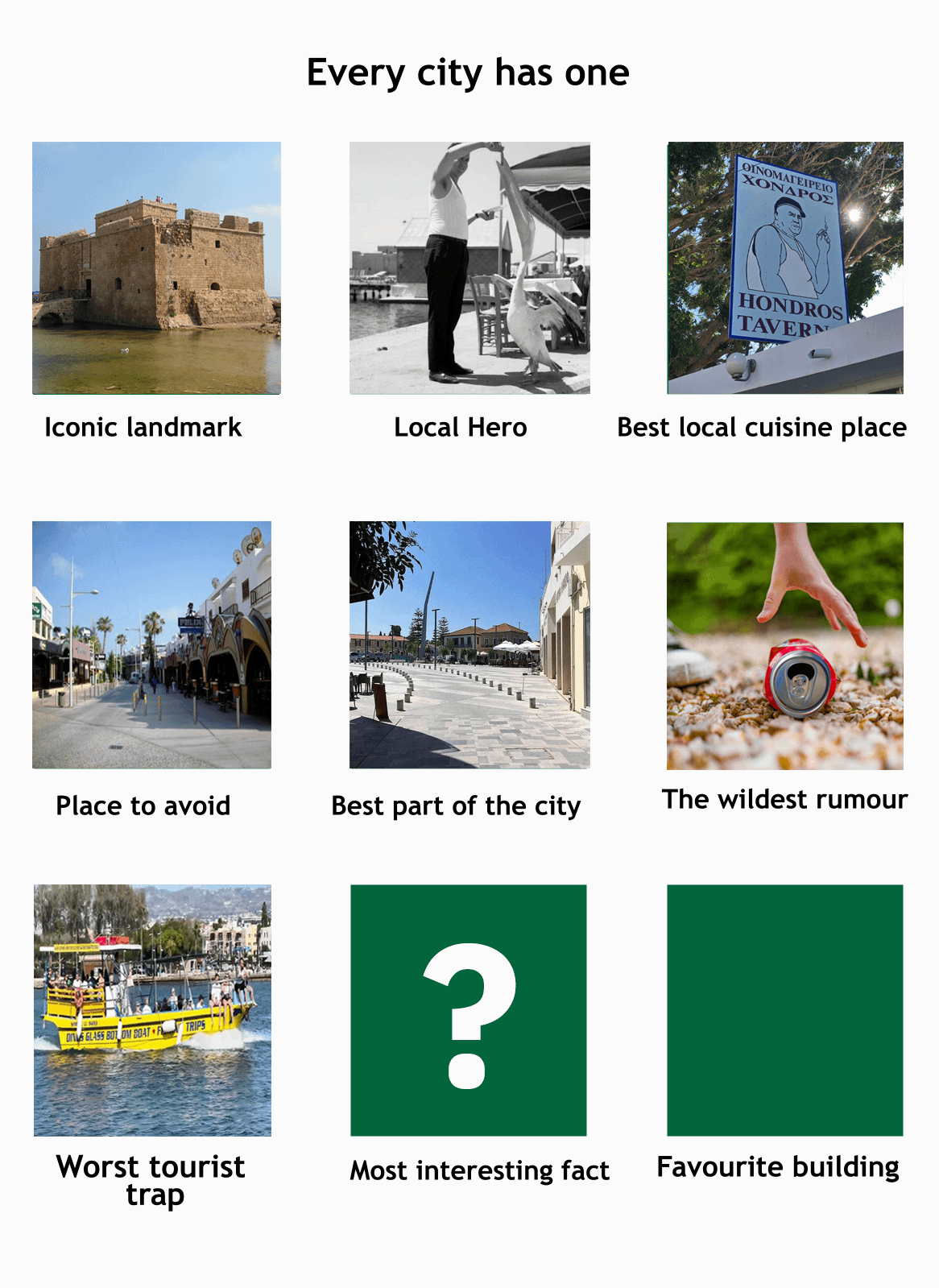
Paphos has been inhabited since the Neolithic period(10,000 BC), making it one of the oldest continuously inhabited areas in the world. It was inscribed on the UNESCO World Heritage List in 1980.
Despite its name, actual kings were not buried in Tombs of the kings. They were for high ranking officials and wealthy citizens during Roman and Hellenistic times.
On the 11th of May 1222 one of the largest and most violent earthquakes in the history of the island occurred with its epicenter near Paphos. It was somewhere around 7.0-7.5 on the Richter scale, and was felt all over the island, causing major damage as far as Nicosia, and more minor damage in Famagusta. The massive earthquake was followed by a tsunami in Paphos.
The earthquake and tsunami were catastrophic to the degree of reducing Paphos to a minor provincial town ever since. The earthquake destroyed the Byzantine castle near the port, as well as the Frankish castle of Saranta Kolones further north. The coastal part of the town was devastated, and after the flooding from the tsunami subsided, the coast permanently moved further south (Saranta Kolones was initially near the original coast, for reference). While the castle by the coast was rebuilt, the port and most of the coastal part of the city were gone completely.
Paphos for the next 6 centuries would be mostly contained further inland up the hill and be known as “[Βασιλικό] Κτήμα” (“[Royal] Estate”), which is how Pano Paphos is still known.