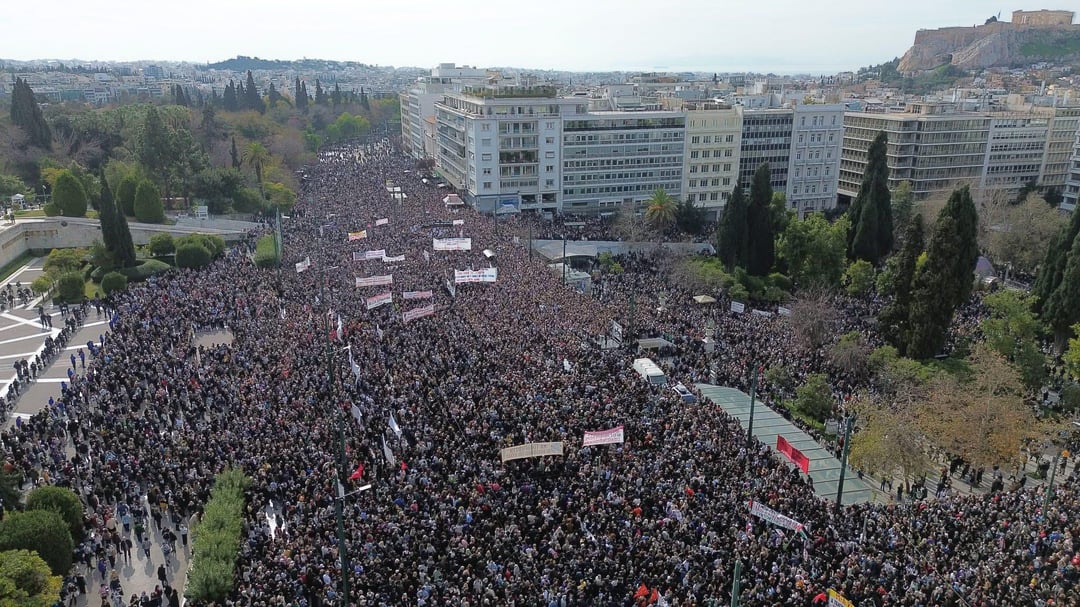
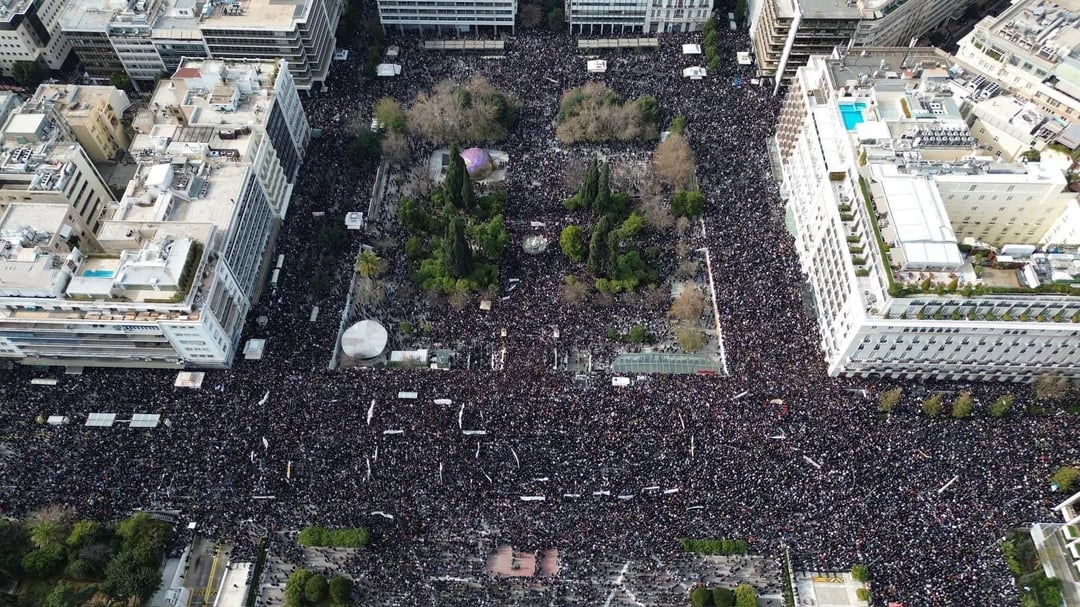
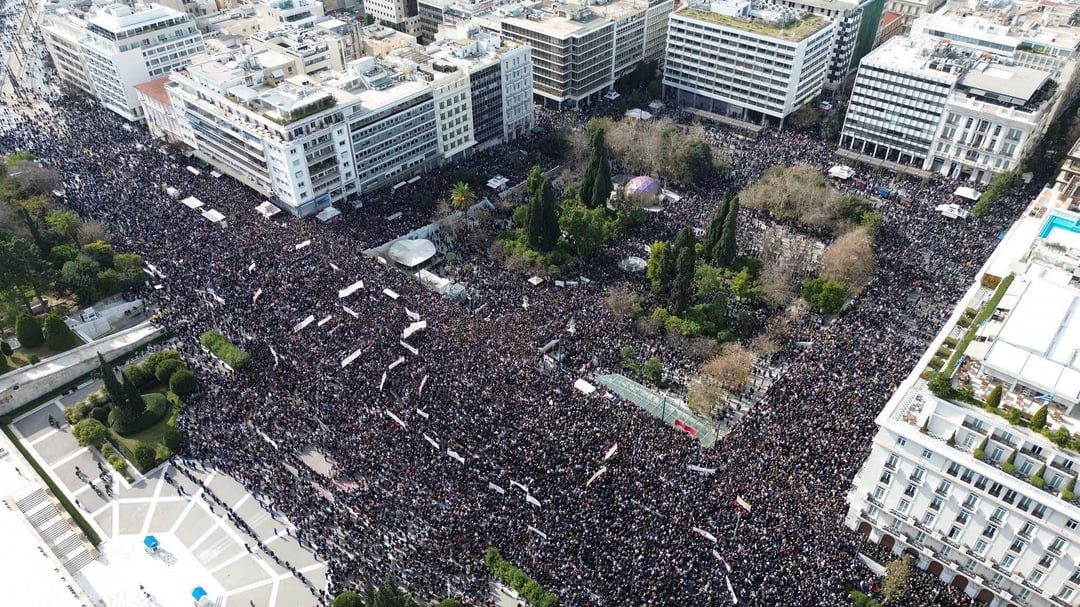
Centinaia di migliaia si radunano attraverso la Grecia per la tragedia di tempi
https://www.reddit.com/gallery/1iaq3sj
di Xp3kt

Centinaia di migliaia si radunano attraverso la Grecia per la tragedia di tempi
https://www.reddit.com/gallery/1iaq3sj
di Xp3kt
2 commenti
On February 28, 2023, Greece witnessed one of the deadliest train accidents in its history. Two trains — a passenger train carrying civilians and a freight train — collided head-on near the town of Tempi. The crash killed 57 people and left many others injured.
The aftermath has been marked by widespread protests, including a massive demonstration in Syntagma Square, where thousands gathered to demand accountability and justice for the victims.
**Warnings That Were Ignored**
Railway employees had repeatedly warned that the safety systems were outdated and the railways were unsafe. These warnings were not acted upon by the goverment, which went so far as to misrepresent the safety of the network.
The crash might have been avoided with ETCS (automatic safety systems), which had been available for 20 years but were never installed.
**The Explosion and the Allegations**
At the time of the collision, a massive explosion occurred — one so large that it raised immediate questions about its cause. Suspicions grew that it was due to flammable materials on the freight train. The prime minister stated the explosion was caused by the train’s brake oil and that nothing suspicious was on board. Two years later, an expert report identified approximately 10 tons of flammable liquids were present on the freight train, challenging the earlier explanation.
**Handling of Evidence**
Critical evidence was mishandled or went missing. Video tapes of the freight train’s loading disappeared. Transcripts of communications between conductors were found to be edited, leaning more on the narrative of “human error”.
Shortly after the crash, the site was excavated and backfilled within days, long before all necessary evidence could be collected. Experts argue that this severely hindered the judicial investigation, leaving many questions unanswered.
According to families of the victims, political mechanisms are delaying the judicial process, keeping case files buried and obstructing justice.
**Blame and Public Outrage**
Two years after the accident, accountability has been primarily directed toward the conductors, with charges brought against them for negligence. No politicians or high-ranking officials have been held accountable.
Recent evidence and leaked audio from emergency calls made by victims to 112 revealed that many passengers survived the collision but were burned alive as the fire consumed the carriages. This harrowing revelation deeply impacted the people of the country.
**Why It Matters**
The protests are not just about justice for the victims but also about holding those in power accountable for systemic negligence and corruption.
Despite losing faith in the justice system and national institutions, people have united to support the victims’ families and honor the memory of the deceased.
What a tragedy.
Your summary reads like a movie plot – so sad that it’s real.