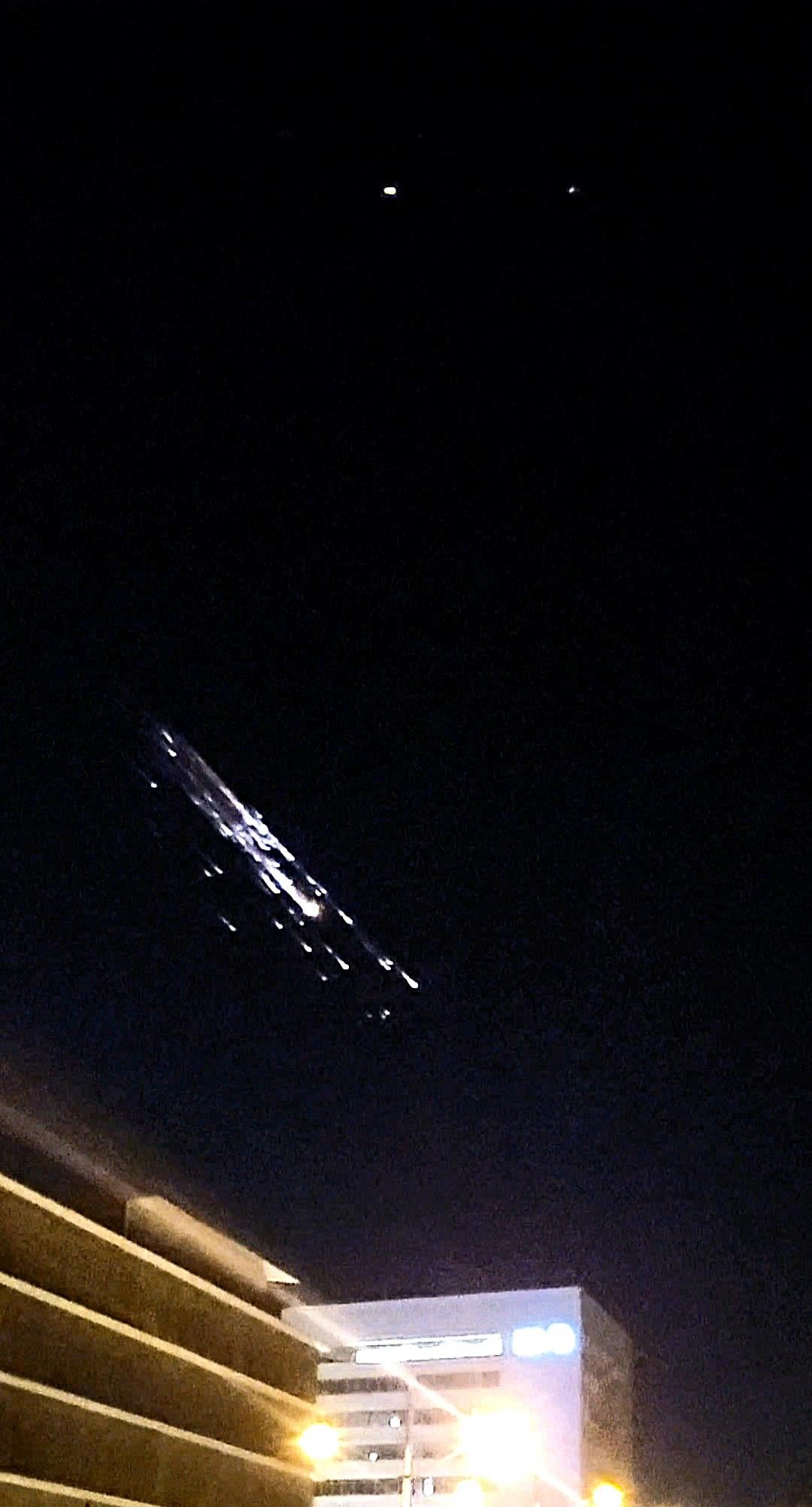
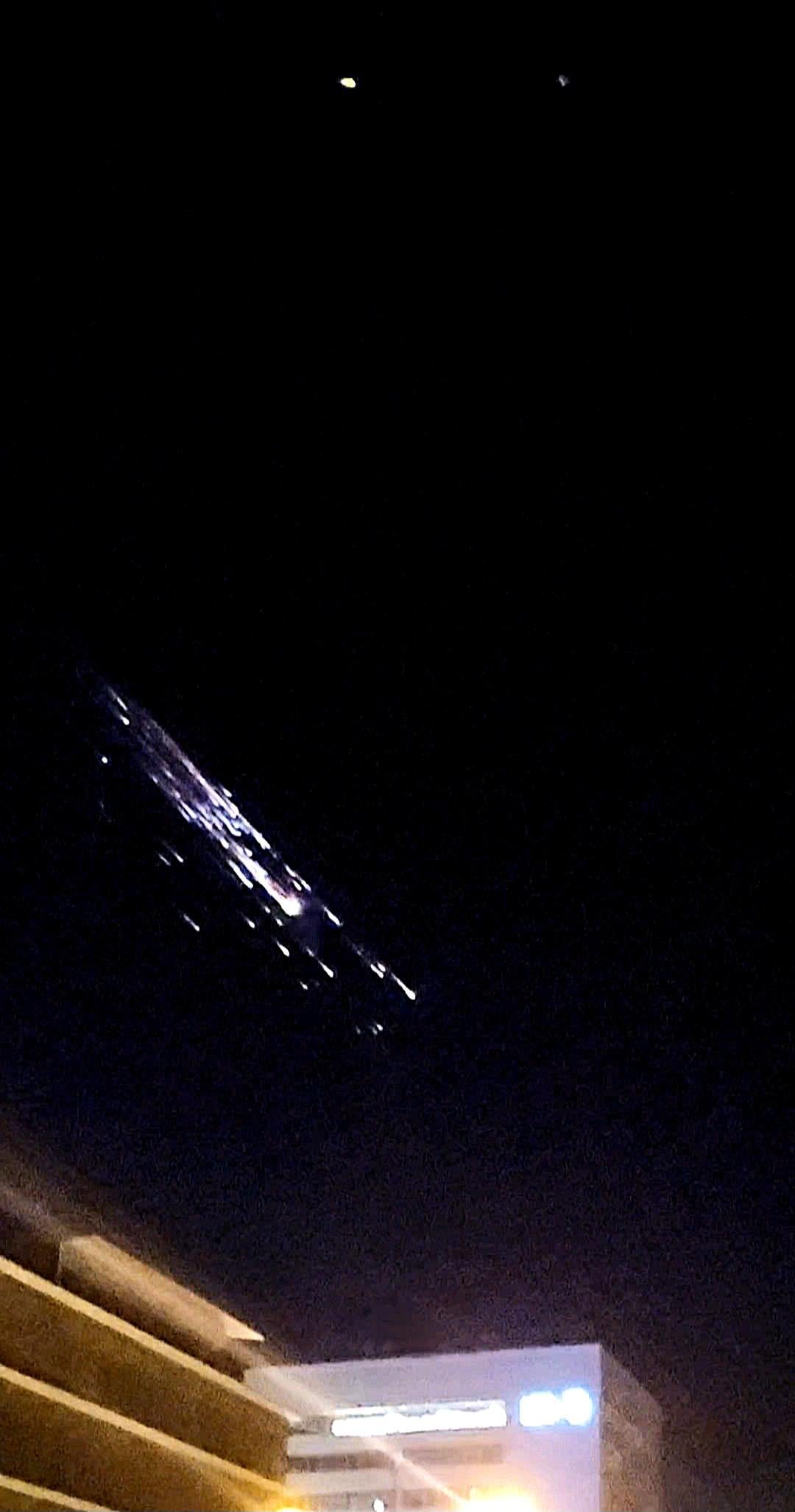
Qualcuno ha visto questa roba oggi mattina in cielo?
https://www.reddit.com/gallery/1isxnh4
di South_Barber_5778

Qualcuno ha visto questa roba oggi mattina in cielo?
https://www.reddit.com/gallery/1isxnh4
di South_Barber_5778
6 commenti
What is that?
Starlink ?
That’s Musk’s stuff.
Not completely sure, but this launch is/was scheduled for today.
In the early morning of February 19, 2025, at approximately 4:49 AM CET, a bright streak of light with multiple burning fragments was observed in the sky over Berlin. The event displayed characteristics consistent with the atmospheric re-entry of space debris, rather than a natural meteor.
Eyewitness accounts described the object moving from east to west, breaking apart as it traveled. This slow-moving fragmentation is a well-documented feature of space debris re-entry. Supporting this, data from Orbital Focus indicated that several Starlink satellites, including STARLINK-1581, STARLINK-2372, and STARLINK-5063, were predicted to re-enter Earth’s atmosphere around this timeframe. Their expected decay dates, spanning from February 17 to February 19, 2025, align with the observed event.
While meteors, particularly fireballs, can also create bright streaks, they typically move faster and do not fragment in the same way. Given the available data, the event was most likely caused by the controlled or uncontrolled re-entry of a defunct satellite or other space debris.
I saw that today near Kassel. I wondered what it was.