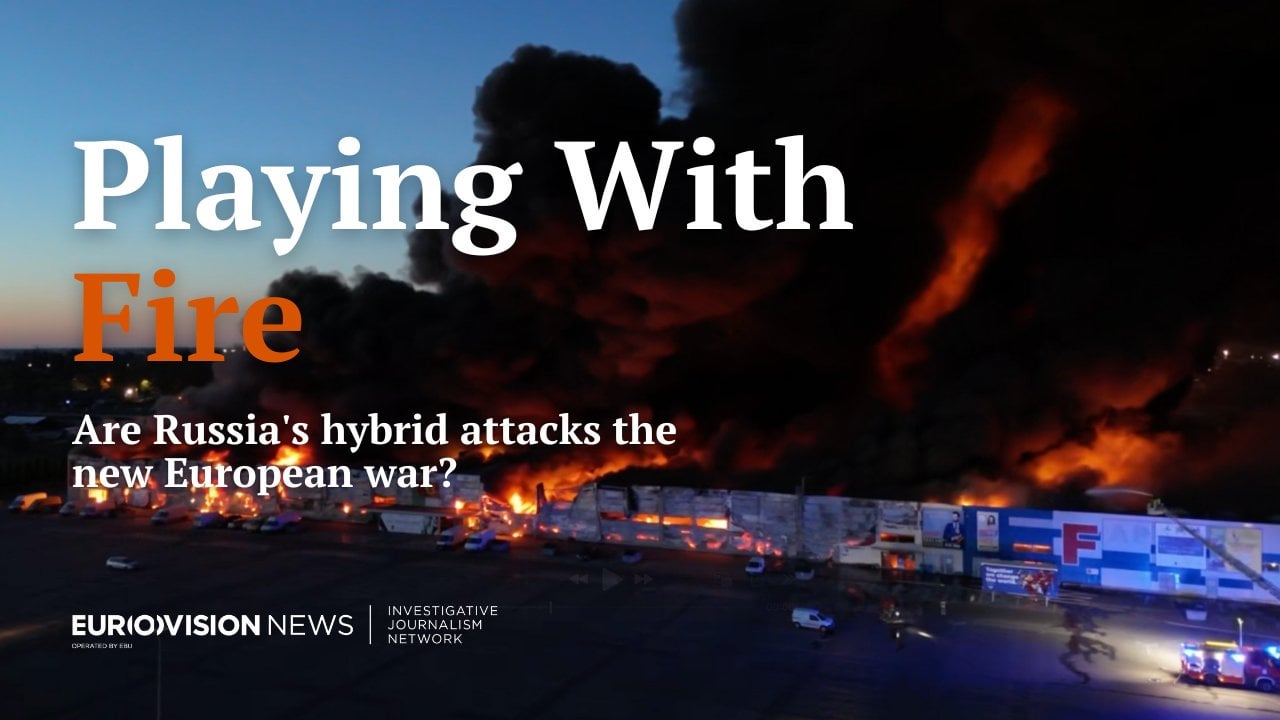
“Abbiamo preparato un primo compito per te”: metti 10 adesivi con “F *** NATO” a Bruxelle
https://investigations.news-exchange.ebu.ch/playing-with-fire-are-russias-hybrid-attacks-the-new-european-war/
di ThisOtterBehemoth

“Abbiamo preparato un primo compito per te”: metti 10 adesivi con “F *** NATO” a Bruxelle
https://investigations.news-exchange.ebu.ch/playing-with-fire-are-russias-hybrid-attacks-the-new-european-war/
di ThisOtterBehemoth
17 commenti
PRÉCIS:
#Russia’s Invisible War on Europe
A journalist pretending to be a Russian sympathiser on Telegram was offered his first assignment. He had to put up anti-NATO stickers in Brussels in exchange for a small cryptocurrency payment. It seemed trivial, but it was the first step into a shadowy world of cyberattacks, sabotage and covert influence campaigns that European security officials now warn are part of a growing Russian hybrid war against the continent.
From hacking water plants in Lithuania to setting fire to industrial sites in London and Madrid, a network of disposable operatives has been linked to dozens of acts of vandalism, arson and cyber warfare across Europe. Some spread anti-Western propaganda while others have been charged with far more serious acts, including attempts to disrupt vital infrastructure. According to NATO and European intelligence, these operations are not about seizing territory. They are designed to spread distrust, confusion and political instability while draining resources and weakening public confidence in democratic institutions.
Court records and security sources point to an increase in such activities since Russia’s full-scale invasion of Ukraine. Hacktivist groups with names like NoName057 and the Cyber Army of Russia Reborn have carried out cyberattacks on NATO states. Intelligence-linked operatives have been caught attempting to start fires, interfere with elections and damage underwater cables. These are not highly trained spies but expendable agents drawn from pro-Russian networks, willing to take risks for small rewards.
Establishing a direct link to the Kremlin is difficult, though officials in countries from Estonia to Spain are convinced Moscow is behind many of these incidents. NATO has started tracking such attacks. Some analysts warn they could, in theory, escalate to the level of an armed assault, triggering Article 5, the alliance’s collective defence clause. However, with US President Donald Trump casting doubt on America’s commitment to European security, many wonder whether NATO’s response will be as united as it claims.
For now, European leaders like Kaja Kallas warn of a war in the shadows. It may not involve tanks or missiles, but it is no less dangerous for the societies it aims to undermine.
Man, that’s some advanced psy-ops. Even Tom Cruise wouldn’t dare to take on a mission to put up 10 stickers.
If Russia’s goal is to weaken Europe from within, it is doing a disturbingly good job. These hybrid attacks do not need to be spectacular or deadly to be effective. A few cyber disruptions here, a well-placed act of vandalism there, and suddenly people start losing trust in their institutions. The real danger is not just the sabotage itself but the slow erosion of confidence in democratic systems. And the worst part? Most of it is happening in plain sight, yet governments are still struggling to respond in any meaningful way. At what point do these “shadow” attacks cross the line into an act of war? Or have we already passed that point without realising it?
F**k NATO indeed!
I’m just wondering: do all the people who shout “fuck Nato” here work for putin too?
Seems like a very weak approach… But I guess it’s cheap to print stickers.
Don’t we collectively have some of the best intelligence services in the world? The Russians have been doing this for well over a decade and most people still don’t know about it.
Why can a bunch of gangsters in a poor country dominate the space like this?
Can people chill out? We’ve had to deal with the USSR agents attempting to subvert Western democracies since the USSR began in the 1920s, often through funding a socialist movement here or getting a communist in France or Britain there.
All we had to do was just contain it and get on with our lives. It never meant going to war with the USSR because that was insane (and the USSR actually had a much greater chance of ‘conquering’ the West through communism because communism was an ideology rather than just a nation-state.)
If you guys want to go to war because some agent puts up ‘Fuck Brussels’ stickers be my guest, but you should be thankful you don’t live in South Korea where the Koreans literally don’t go to war even after being bombed by North Korea or having pamphlets dropped into their nieghborhoods.
elon did it on twitter
I think you believe in the boogie man
I am pretty sure most political graffiti is paid by abroad actors, yes.
Lots of account one/Europe pushing for a breakup… just like Putin wants…
The joke part is that now President Muppet Musk could have equally carried out simillar hybrid warfare attacks, in fact he is sposoring fringe, unpopular politicians across Europe and probably employing AI on social media platforms to grow their popularity during elections. What is the difference between Russian and American interference in elections anymore? The lines are blurred, the foreign pressure is felt from East and West which is why it is naive to still cling to NATO no matter what the Russians or Americans say or do, the alliance has been compromised. The orange agent s threats to annex territories like Greenland are no different than the Russian threat, perhaps it is worse since people are still stuck thinking they are still allies.
I recommend everyone to read the article in its entirety.
Nice but scary read.
In the last few years a bunch of protests in universities in Amsterdam would sometimes include a few anti-NATO stuff for no reason at all, I remember even seeing someone in an student association trying to rally people to disturb a NATO-employee speech at, I think, UvA.
If it is that easy to undermine NATO’s reputation in people’s eyes – things are already far beyond the point of no return.