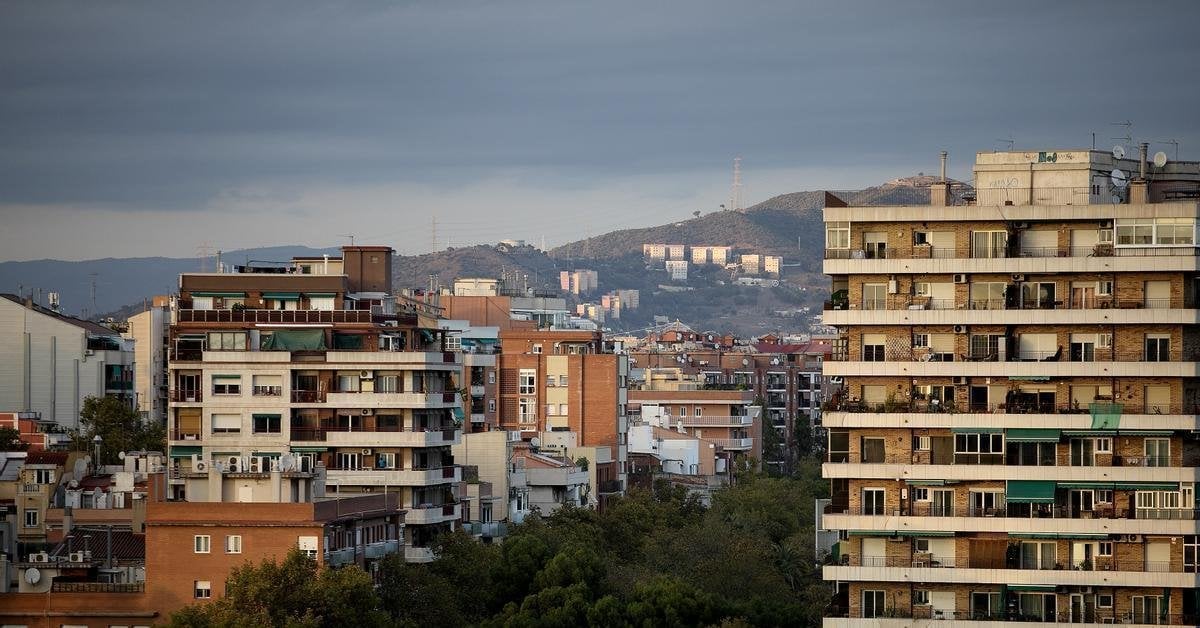
Bruxelles esorta la Spagna ad aumentare la fornitura di alloggi: “C’è una carenza di 600.000 appartamenti”.
https://en.ara.cat/economy/brussels-urges-spain-to-increase-housing-supply-there-s-shortage-of-600-000-homes_1_5401706.html
di mods4mods

Bruxelles esorta la Spagna ad aumentare la fornitura di alloggi: “C’è una carenza di 600.000 appartamenti”.
https://en.ara.cat/economy/brussels-urges-spain-to-increase-housing-supply-there-s-shortage-of-600-000-homes_1_5401706.html
di mods4mods
7 commenti
The European Commission urges the State to increase environmental and property taxes.
Brussels “The Spanish economy, in general, is doing well,” summarizes a source from the European Commission. Spain continues to grow above the European average and has inflation under control. And, despite exceeding the 3% deficit limit for 2024 by two-tenths, setting it at 3.2%, Brussels has not opened disciplinary proceedings, considering it a temporary deviation due to the unforeseen investments it has had to undertake due to the DANA (National Development Plan). However, there is one aspect that particularly concerns the EU executive: the housing access crisis, which is particularly affecting Barcelona, and Catalonia in general.
On this point, Brussels is clear. “The Spanish economy faces a housing deficit of approximately 600,000 units,” says the report of economic policy recommendations published this Wednesday by the EU executive. Specifically, it highlights the lack of social housing and criticizes the fact that it only represents 1.5% of the total in the State, a percentage that is “well below” the average recorded in the European Union.
With the goal of building more housing, Brussels also recommends that Spain “free up public land” and “increase funding for affordable and social housing,” which it believes would “boost housing availability.” In this regard, the EU executive is pressuring Spain to approve the pending land reform, considering that it would “provide regulatory stability and eliminate administrative bottlenecks.” “It is essential to reverse these factors,” the European Commission insists.
Brussels turns a blind eye.
The maximum deficit allowed by the EU is 3% of gross domestic product (GDP), and Spain finally exceeded it by two-tenths of a percentage point in 2024. However, Brussels turned a blind eye and, as expected, did not open disciplinary proceedings. Therefore, it considers the deviation justified by unexpected expenses related to the DANA (National Anti-Dumping Act) and the state’s rearmament plan, since otherwise it would have been 2.8% and would have complied with EU fiscal rules.
In this way, Brussels assures that the State, “in general,” is complying with the fiscal path agreed upon for seven years and that, for example, this year’s increase in public spending will be offset by last year’s. Specifically, in 2025, the EU executive estimates that net public spending will grow by 4.2%, five-tenths of a percentage point more than the maximum agreed upon, but last year it stated that it was well below the agreed 5.3%.
*laughs in Dutch
Wasn’t there a housing bubble a decade ago in Spain with many empty buildings?
Nah… Let’s just increase the prices on existing ones and rent them out for insane money (c) average landlord
In before it wasn’t the tourists inflating the prices?
The problem is the companies that own hundreds of appartments, only for rent, never to sale. If you want to buy an appartment to live in, there are very few available.
The only solution can be **massive** taxes when you have a large ammount of appartments.
Meanwhile in Croatia, rampant building everywhere, but regularly people can’t afford to buy them because the prices are too high, and all the apartments are bought in advance by rich people parking their money in real estate.
Over half of the apartments built and sold in and around Zagreb in the last 5 or so years are completely empty.
Rent is averaging about 30-50% of average wage, depending on how much of a shithole you’re willing to endure.