La Repubblica Ceca lascia la Polonia da sola nell’UE ponendo fine all’estrazione del carbone duro entro il 2026
https://tvpworld.com/88014526/czechs-to-shut-last-hard-coal-mine-by-2026
di dat_9600gt_user

La Repubblica Ceca lascia la Polonia da sola nell’UE ponendo fine all’estrazione del carbone duro entro il 2026
https://tvpworld.com/88014526/czechs-to-shut-last-hard-coal-mine-by-2026
di dat_9600gt_user
7 commenti
Weird headline, but good for Czechia.
**The Czech Republic will close its last hard coal mine by 2026, making Poland the EU’s only remaining producer of the fuel.**
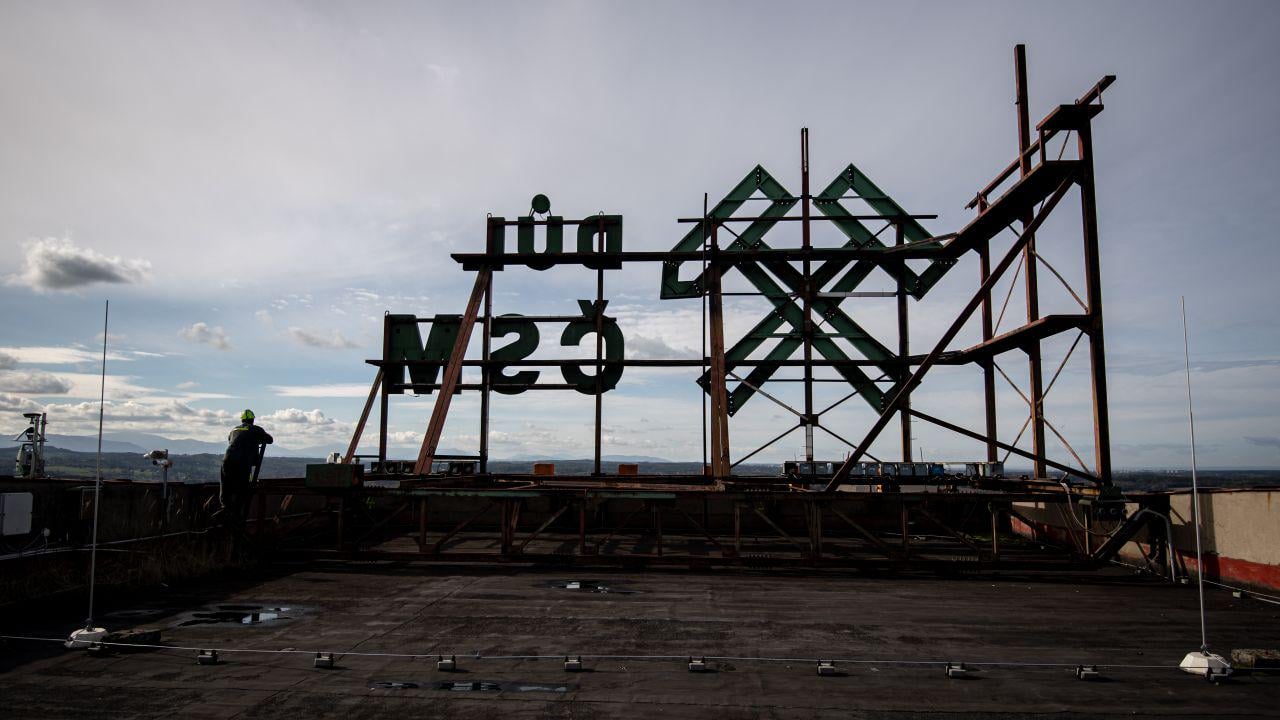
Czech mining company OKD announced the move, although its ČSM mine, located in the eastern part of the country near the border with Poland, remains profitable.
Both the Czech government and the company say the phase-out should take place while operations are still financially sustainable.
The mine is expected to produce 1.14 million tonnes this year. In contrast, Poland extracts roughly 48 million tonnes of hard coal annually, according to industry figures. That puts Poland’s share of EU coal production at around 98%, with the Czech Republic contributing the remaining 2%.
OKD reported a profit of 1 billion Czech koruna (around €41 million) last year. Despite that, Czech policymakers and company officials say continuing operations would soon become economically risky so by shutting down while still profitable, they aim to avoid future losses and government subsidies.
The Czech approach contrasts sharply with that of Poland, where the coal sector relies on significant public subsidies. According to estimates cited by the energy-sector news website Energetyka 24, the Polish state spends about €235,000 per hour to keep its coal industry afloat.
Unlike the Czech plan, Poland has not committed to a fixed timeline for closing its coal mines.
The Czech government’s decision is part of a broader plan, which, according to the Czech Ministry of Industry and Trade, is to eliminate all “coal (including lignite) mining and combustion by 2033.”
# The elephant in the room
Despite most EU countries phasing out hard coal production—except for Poland—brown coal (lignite) remains a major issue.
According to a 2018 report by the Health and Environment Alliance, lignite is “the most polluting and health-harming form of coal.”
Compared to hard coal, lignite has a lower energy content, releases more harmful substances and particulate matter than hard coal when burned. Lignite mining also causes severe environmental damage, including landscape destruction, groundwater disruption, and loss of habitats.
Phasing out lignite is a bigger challenge because it is still widely used across the EU. In 2024, EU lignite production totaled about 198 million tonnes. Germany produced and consumed 46% of that total, Poland 21%, the Czech Republic 12%, and the rest of the EU 21%.
This production closely mirrors consumption because brown coal is rarely traded across borders—it is usually burned in the same country where it is mined.
It’s so great that Europe is refusing the coal mining as well as nuclear energy just to depend on Russia’s gas. Way to go, Europe! Continue supporting the Russian invasion of Ukraine just to ponder to the green crowd.
Great to see the Czech Republic phasing out coal! Now’s the time to invest in cheap, safe, and locally produced renewable energy. It’s cleaner, healthier, and strengthens communities – no more pollution, no nuclear waste for the coming one million years, no need for buying fossil fuels, just a sustainable future.
Renewable energy sources are cheap, can be built and scaled quickly, the installation and operation is classic low tech and low risk. And energy production is distributed, which is good for resiliency.
>OKD reported a profit of 1 billion Czech koruna (around €41 million) last year. Despite that, Czech policymakers and company officials say continuing operations would soon become economically risky so by shutting down while still profitable, they aim to avoid future losses and government subsidies.
>The Czech approach contrasts sharply with that of Poland, where the coal sector relies on significant public subsidies. According to estimates cited by the energy-sector news website Energetyka 24, the Polish state spends about €235,000 per hour to keep its coal industry afloat.
Lung cancer is an essential part of polish national identity
tvpworld found 3 years old “news”