Il Belgio raggiunge le 100.000 stazioni di ricarica pubbliche, rendendolo uno dei fronttrunner in Europa
https://vrtnws.be/p.bDLveVQ6K?ndl=true
di Leiegast

Il Belgio raggiunge le 100.000 stazioni di ricarica pubbliche, rendendolo uno dei fronttrunner in Europa
https://vrtnws.be/p.bDLveVQ6K?ndl=true
di Leiegast
1 commento
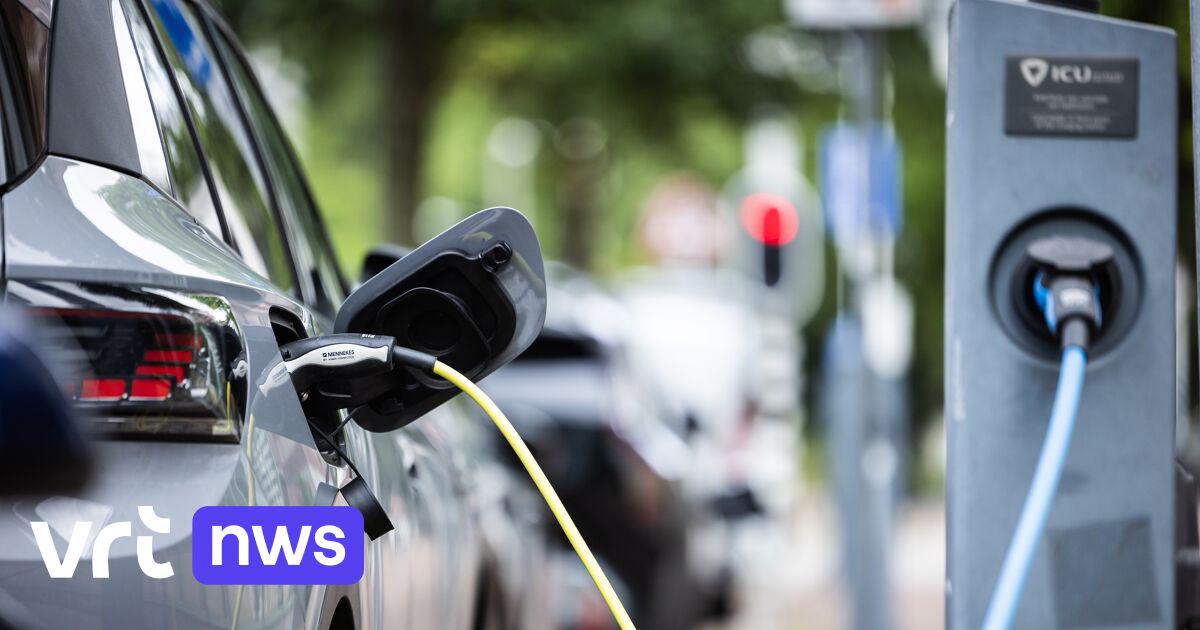
**Belgium has reached the milestone of 100,000 public charging points for electric cars, as reported by the sector federation for electric mobility, EV Belgium. This puts us in the top three EU countries with the most charging points per inhabitant. By 2030, the federation wants to see that number doubled.**
Ten years ago, electric cars and charging stations were rather rare in Belgium. Today, our country has over 650,000 plug-in cars – 380,000 of which are fully electric – and 100,000 public charging points.
This puts us in 3rd place in terms of the number of public charging points per inhabitant in Europe. In Belgium, that comes down to 7.6 per 1,000 inhabitants. Only Denmark (7.7 per 1,000) and the Netherlands (11 per 1,000) do better.
France and Germany – which are just above 2 charging points per 1,000 inhabitants – are far behind. This summer, Europe reached the milestone of 1 million public charging points.
**Flanders far ahead**
If we look at the concentration of the number of public charge points in Belgium, we see big regional differences. Flanders has some 77,000 public points, Wallonia over 13,000, and Brussels just under 10,000.
If we looked at Flanders alone, we would even be on par with the Netherlands in terms of public charging points per population. It is mainly Wallonia that lags behind.
‘That in there are more charging points in Flanders can be explained, on the one hand, by more residential stress,’ Philippe Vangeel of EV Belgium points out.
“People live closer together, making them more dependent on public charging stations. This is especially the case in cities, where charging at home is not always an option. We see the same thing in the Netherlands.”
“In Wallonia, there is more space and so home charging is more often an option. But the fact is that Wallonia needs to step up a gear in terms of their charging infrastructure. The current Walloon government, unlike the previous one, is making efforts to do so.”
**Doubling by 2030**
Rapid progress is due to policy choices at European, national and regional levels. For instance, active policies to green our car fleet have been in place for years.
However, according to EV Belgium, the ceiling is far from being reached. By 2030, the industry federation expects 220,000 public charging points in our country, more than doubling the current number. When asked whether our electricity grid can handle this growth, Philippe Vangeel resolutely replied “yes”.
Furthermore, EV Belgium expects that in five years’ time there will be 2 million electric cars driving around in Belgium. An ambitious target, but possibly not as crazy as it might sound.
Electric cars, for instance, are on the rise. 1 in 3 cars registered this year is fully electric. Furthermore, electric company cars continue to be fiscally attractive in our country this legislature, while that for fossil-fuel cars is declining.
Meanwhile, carmakers continue to invest in better technology to ensure that electric cars can cover more and more kilometres. At the same time, more compact and affordable models are coming onto the market and increasingly finding their way to private individuals.
It has to be said though: the still relatively high purchase price, coupled with high electricity prices and the lower driving range, do still cause hesitation among people who cannot buy an electric car through their work.
‘But the future of electric mobility in Belgium is clear,’ Vangeel concludes. ‘The move to 100,000 charging points is the ultimate proof that it is achievable.’
“The challenge for 2030 is ambitious, but with the same drive and cooperation we will succeed in that too. This is just the beginning.”