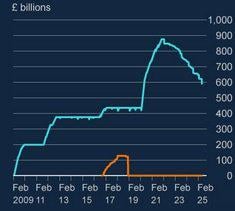
La Banca d’Inghilterra ha ora invertito £ 300 miliardi di allentamento quantitativo
https://peakd.com/uk/@candy49/the-bank-of-england-has-now-reversed-gbp300-billion-of-quantitative-easing
di rose98734

La Banca d’Inghilterra ha ora invertito £ 300 miliardi di allentamento quantitativo
https://peakd.com/uk/@candy49/the-bank-of-england-has-now-reversed-gbp300-billion-of-quantitative-easing
di rose98734
5 commenti
Just another £600bn to go and we’ve fully Paid for our parents sins.
Something vaguely positive. Glad they have clawed it back but reducing liquidity might explain some of the pain (its a leading cause of the depression)
So we had 15 years of austerity and the Tories didn’t pay off a single penny of the QE?
Good article. One of the issues with QT is that the BoE is selling bonds at a loss, which is costing the government billions. It also pushes up gilt yields, meaning higher interest costs on new borrowing. I recall seeing an estimate that the total bill for the programme is something like £150bn (over many years) which isn’t ideal during a cost of living crisis.
On the positive side, QT does appear to be taking some of the heat out of house prices (in real terms) and, hopefully, inflation too. Given an increasingly uncertain world, perhaps this short-term pain helps us create some monetary space for the future.
I was brought up on folk memories of wheelbarrows of banknotes in the Weimar Republic.
When they did quantitative easing at first I couldn’t understand it.
Then I realised the alternative was worse.