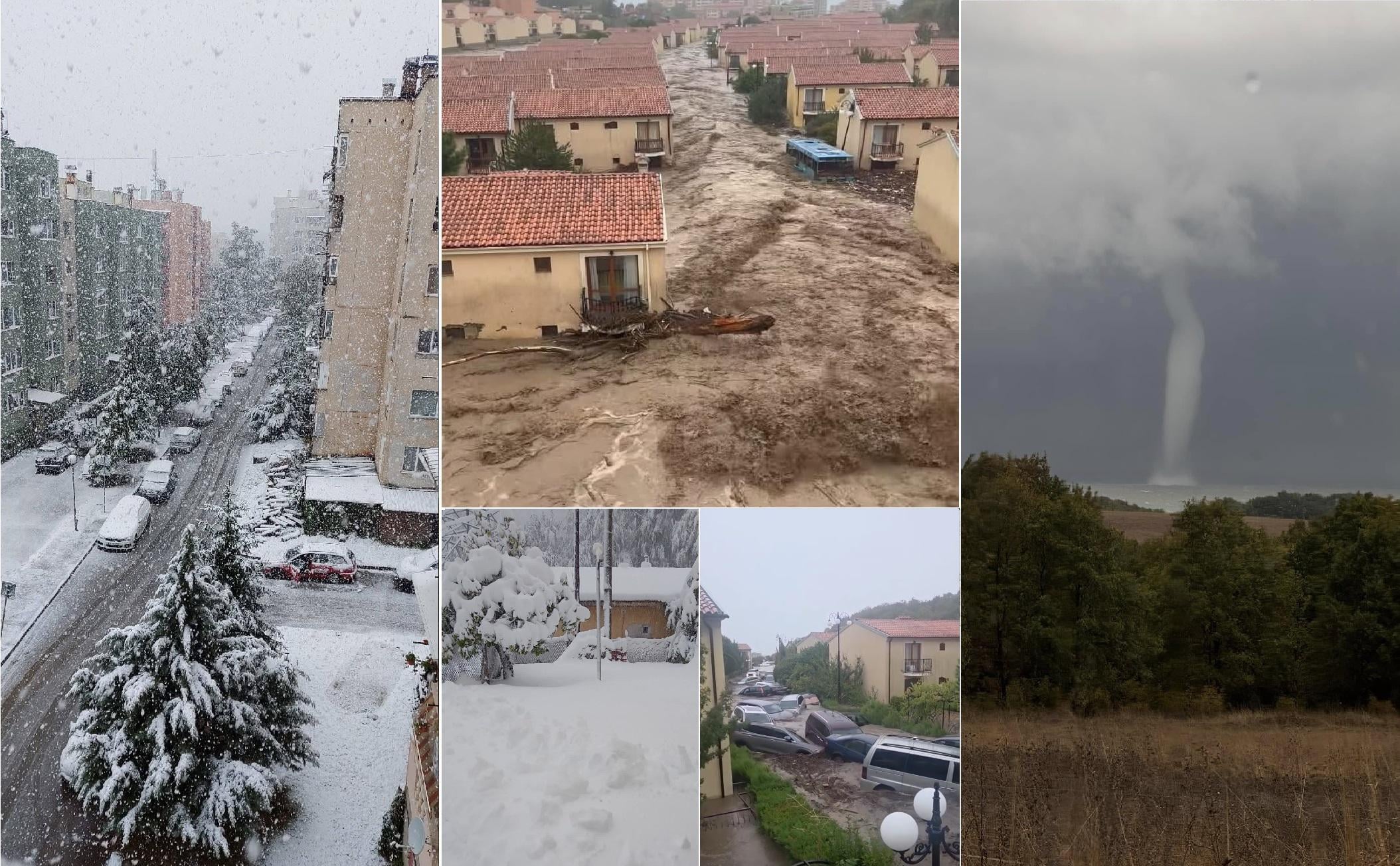
3.10.2025 in Bulgaria – Snow, Tornados e Floods
https://i.redd.it/87xru3qiu0tf1.jpeg
di AdmirableFlow

3.10.2025 in Bulgaria – Snow, Tornados e Floods
https://i.redd.it/87xru3qiu0tf1.jpeg
di AdmirableFlow
2 commenti
On October 3, 2025, Bulgaria experienced extreme and contrasting weather conditions driven by a powerful Mediterranean cyclone combined with a cold air outbreak from Siberia. This led to torrential rains causing widespread flash flooding in the eastern and coastal regions, while heavy snowfall blanketed the western and mountainous areas. The events resulted in at least three fatalities, mass evacuations, infrastructure damage, and disruptions to transportation and power supplies. Although weather warnings had included risks of isolated tornadoes, no confirmed occurrences were reported.
The most devastating impacts occurred along the Black Sea coast and inland, where intense rainfall—up to 200–250 mm (7.9–9.8 inches) in just a few hours—triggered catastrophic flash floods. Resorts like Elenite, Nessebar, and Sunny Beach were inundated, with floodwaters sweeping away cars, buildings, and debris into the sea, creating waves over 2 meters (6.5 feet) high. In Elenite alone, a major flood hit around 11:40 LT, submerging hotels, homes, and campsites, leading to the deaths of three individuals: a man found drowned in a hotel basement, a border police officer in a rescue boat, and a volunteer tractor driver clearing debris during a second wave. Six people were rescued from the deluge, and emergency operations involved mass evacuations amid outrage over construction in flood-prone ravines that exacerbated the disaster. Parts of Plovdiv also flooded, prompting a partial state of emergency declaration. Overall, the floods caused extensive damage across the country, with two to five deaths reported in initial tallies, trapping residents and destroying property.
In stark contrast, western Bulgaria and higher elevations saw an unseasonably early and heavy snowfall, marking the first significant cold outbreak of the autumn season. Up to 30 cm (1 foot) of snow accumulated in places like Hemus and the Petrohan Pass, downing trees, closing mountain roads to traffic, and causing power outages in multiple settlements. Crews worked overnight to clear roads and restore electricity, but the snow disrupted transport and highlighted the dramatic shift from summer-like conditions to winter weather. This was fueled by a moist airmass steered by the cyclone, with snow initially limited to mountains but intensifying as temperatures dropped.
Where are the climate change deniers when something like this happens?