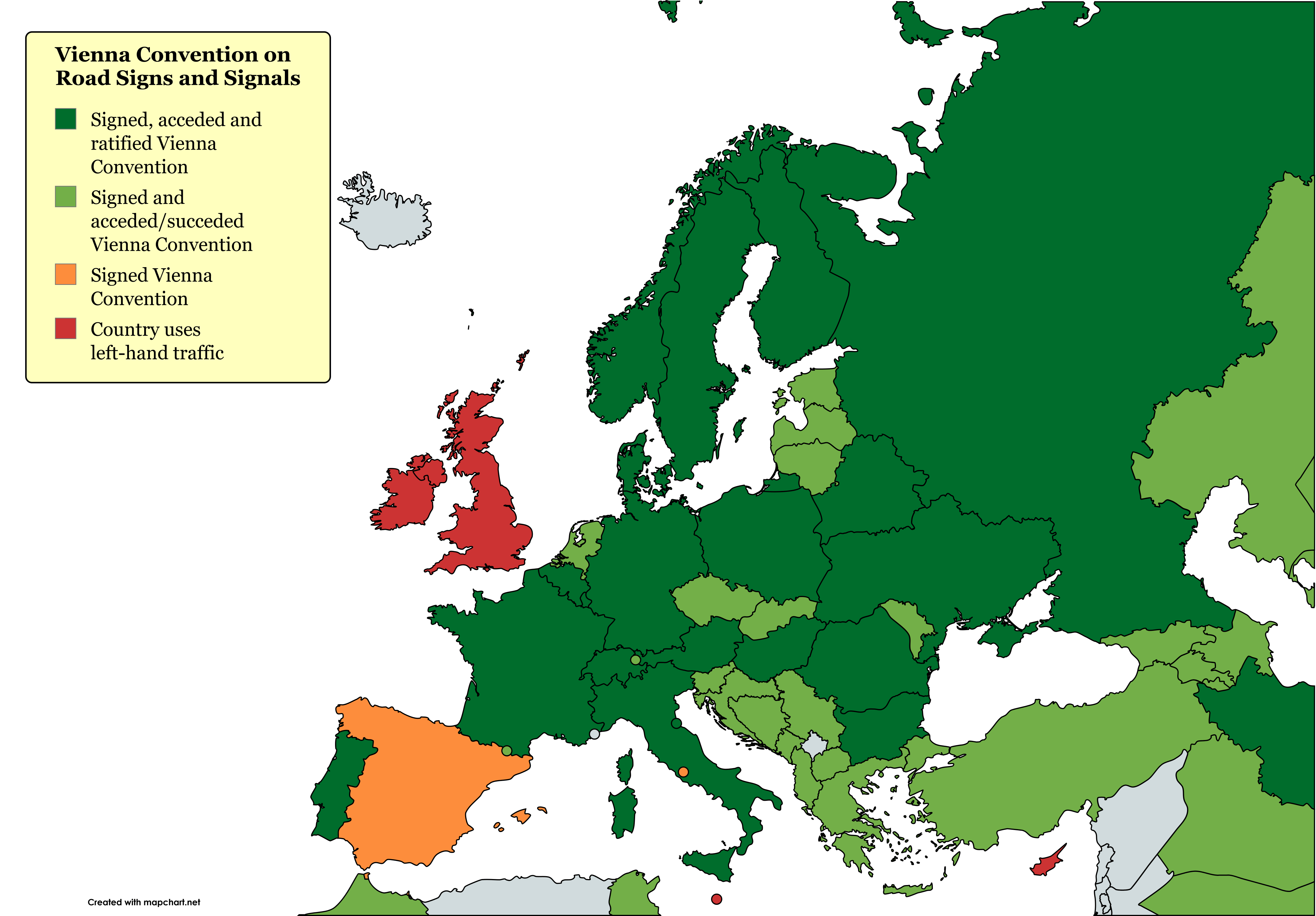
Paesi che hanno firmato o ratificato la Convenzione di Vienna sulla segnaletica stradale nel 2025
https://i.redd.it/olq30ooxupxf1.png
di DrNeutrino

Paesi che hanno firmato o ratificato la Convenzione di Vienna sulla segnaletica stradale nel 2025
https://i.redd.it/olq30ooxupxf1.png
di DrNeutrino
9 commenti
Vienna Convention on Road Signs and Signals establishes an international standard for road signs, traffic lights and road markings. It was created in 1968 in Vienna, Austria and it has been in force since 1978. This is why when you go for example from Germany to Poland, you don’t experience incapacitating unfamiliarness on the traffic signs: warning signs, give way signs, stop signs, mandatory signs, regulatory signs et cetera look very similar in countries which follow the Vienna Convention.
Latest update: 25.9.2024 Andorra acceded the treaty.
Source: [United Nations](https://treaties.un.org/Pages/ViewDetailsIII.aspx?src=TREATY&mtdsg_no=XI-B-20&chapter=11&Temp=mtdsg3&lang=en#4)
Why we have to be orange 🙁
How does it matter that some countries use left-hand traffic?
Oops
What are the practical implications of acceded but not ratified?
Iceland..
Ireland didn’t sign the Vienna Convention on Signs and Signals at all – and is quite far off the standard, using signs influenced by the US MUTCD standards for warning signs at at least – yellow diamonds. The signage is closer to Australia and New Zealand than it is to Europe.
Would love if we moved from left-hand but the logistics of it and volume of cars involved along with the shared border with NI makes it impossible
The UK, although left-handed, has in fact signed the Vienna Convention on Road Signs and Signals. Ireland didn’t, funnily enough.
Cyprus has also acceded.