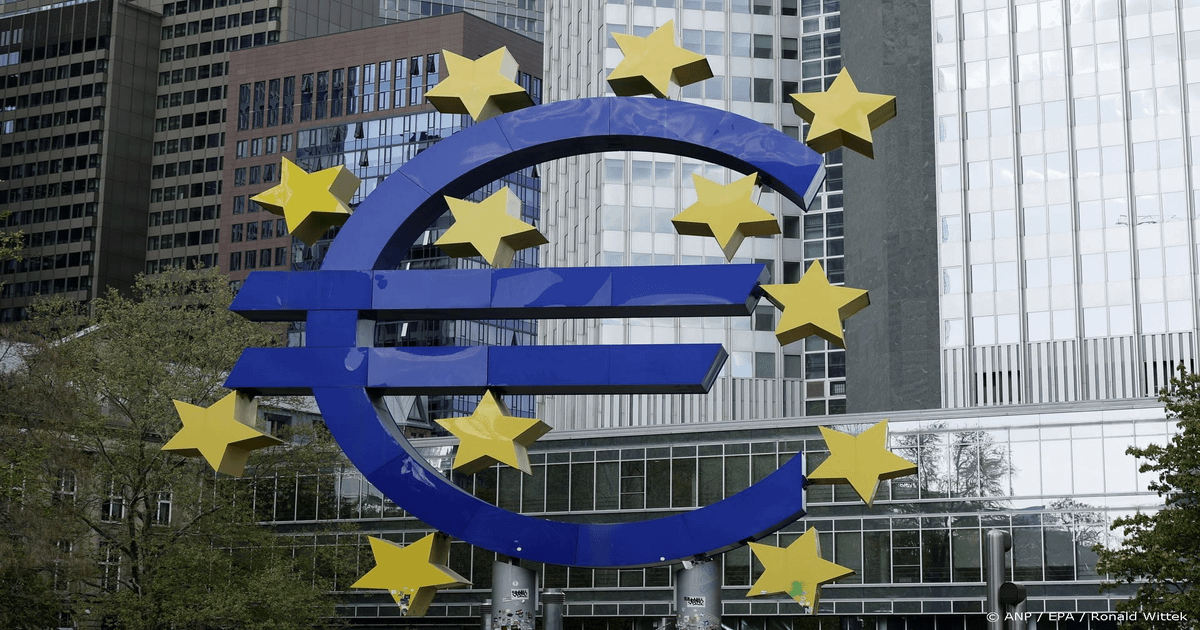
L’Europa otterrà l’euro digitale nel 2029 – indipendentemente da Visa e Mastercard
https://www.upday.com/nl/binnenland/europa-krijgt-digitale-euro-in-2029-los-van-visa-en-mastercard/18h3vj0
di goldstarflag

L’Europa otterrà l’euro digitale nel 2029 – indipendentemente da Visa e Mastercard
https://www.upday.com/nl/binnenland/europa-krijgt-digitale-euro-in-2029-los-van-visa-en-mastercard/18h3vj0
di goldstarflag
19 commenti
The European Central Bank (ECB) wants to start a trial with the digital euro in 2027. If the trial is successful, the digital currency could be officially introduced in 2029. The schedule depends on a legislative framework that European governments and the European Parliament must agree on next year.
ECB Executive Board member Piero Cipollone presented the project on Thursday as a broader goal than just technical innovation. ‘This is not just a technical project, but a joint effort to make the European monetary system future-proof,’ Cipollone said. The digital euro should make Europe less dependent on American payment companies such as Visa and Mastercard.
The Dutch Central Bank (DNB) emphasises the urgency of a public digital payment method. ‘As payment habits evolve and cash payments decline in favour of digital transactions, the need for a public digital means of payment alongside cash has become increasingly urgent,’ the central bank explains.
The plans have been met with objections from privacy advocates, who fear that governments will gain too much insight into citizens’ spending habits. Outgoing Finance Minister Eelco Heinen (VVD) emphasised last month that the digital euro must offer guaranteed privacy and ‘never be programmable’.
The ECB has been working on a digital counterpart to cash for years. The digital euro is intended to complement physical money, not replace it.
I say 2031.
Although the Euro is very convenient, I’m not convinced a centralising money is such a wise endeavour.
Good. Hope it works well.
So what I understand is (and please correct me if I am wrong):
That it is going to be a third money system, separate from the other two, cash and commercial bank money, and will be interchangable with the two. But the long term plan is that the other two will gradually disappear only leaving the CBDC.
It is like a bank acccount issued by the central bank, meaning it is alway guaranteed and you cannot lose your money like with the icesave bankrupcy.
Sounds great right? Well no, this digital euro gives them FULL control. They can decide to issue negative interest if they think the economy needs a boost, and they intend to do so. They could even decide who can spend his money on what. Of course ‘they have no intention’ of doing that, but the framework for them to do it is being put in place with this.
A way for EU to censor stuff themselves right from home. There’s no guarantee that this scheme won’t end up like Visa and Mastercard censoring or closing down private businesses because they sell legal products, like anime & manga stores in Japan, Pixiv, Patreon.
yes only like 40 years late
Is this Wero or something completly different?
these claims of censorship, monitoring are nonsensical. We already live in a world in which all our communications, payments, can be traced, and leveraged against us. The matter is:
do we want to entrust this enormous power to institutions that are borne out of our democratic processes, and that are subjected to powerful conventions and bodies safeguarding our fundamental rights (namely the European Convention on Human Rights).
or, do we deem preferable to send these data to opaque and private companies whose compliance to said frameworks will always be subjugated to the desire of the US government for extraterritorial shenanigans? Is it acceptable that, tomorrow, should sanctions be pronounced by the executive branch of the US, for things as subversive as prosectuing crimes against humanity or advocating for freedom of conscience, those people could lose access to their means of payment since Visa and Mastercard would comply?
I have bigger faith in the ECB, the ECHR, european strength in numbers than I have towards Visa, Mastercard, the US government and its ability to coerce national governments into ceding their data.
Makes you wonder if those Italian stores with severe tax evasion issues is going to survive with this change.
The digital euro is completely necessary for European sovereignty and needs to be introduced as soon as humanly possible. Hope the trials and tests are successful.
Purely digital currency will be a huge step in the wrong direction.
Now the state can earmark what you can buy, where you can buy, how long your money stays valid.
Saving will be come a choice the state can make for you, this is bad on all fronts.
It’s fascinating to see how Europe, after witnessing the impact of sanctions on Russia, realized the same could happen to them and began developing its own sovereign payment and internet infrastructure. It’ll be interesting to see how that plays out given the EU’s fragmentation.
Nobody wants this “solution”!
So it begins. Digital slavery for all
USA proved we can’t trust them with anything, why should we let them see all our payments?
EU should be standalone and independant of outsiders like China and USA.
Just use Bitcoin
Good news!
2029 lmao. as usual way too slow and way too late