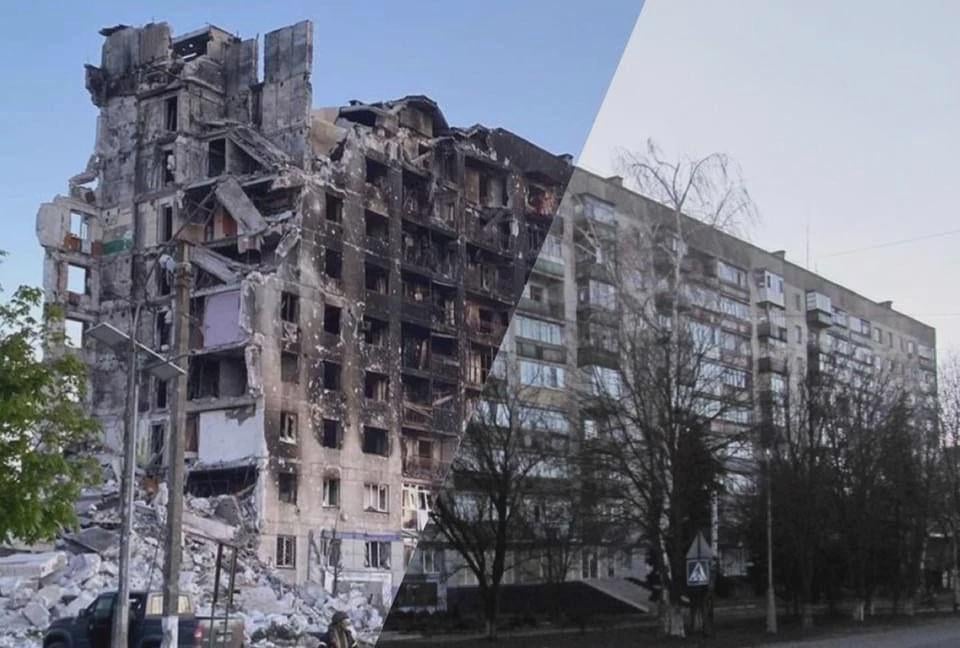
Dal boom economico alla distruzione totale: un soldato descrive le sette fasi di declino di ogni città davanti alla quale si avvicina il fronte e invita alla mobilitazione.
https://i.redd.it/6b4nx34sciyf1.jpeg
di Lysychka-

Dal boom economico alla distruzione totale: un soldato descrive le sette fasi di declino di ogni città davanti alla quale si avvicina il fronte e invita alla mobilitazione.
https://i.redd.it/6b4nx34sciyf1.jpeg
di Lysychka-
2 commenti
Ukrainian soldier Dmytro Diomshin published an outline of sevenl stages any Ukrainian city goes through when it finds itself on the line of an enemy advance.
**1. 50–70 km from the line of combat operations. Economic boom and a lot of new money.**
If the front starts approaching a city – that is, the distance to the LCO shortens to 50-70 kilometers – military personnel will begin to arrive en masse. Rear units, services and brigade supply depots will come in order to provide security. Rents in the city immediately spike, and finding housing becomes almost impossible. Infrastructure can’t cope: there will be queues in shops, you can be standing at Nova Poshta for hours, hairdressers and barbers will stop accepting walk-ins. To get into an auto repair shop you might wait a couple of weeks or even a month.
This is a period of economic boom for the city and crazy cash flow – these cities have never seen anything like it. New hardware stores, auto parts shops, service stations, grocery stores, cafés, pizzerias, sushi bars, hairdressers, Nova Poshta branches – they all pop up like mushrooms after the rain.
**2. 35–40 km to the front. Strikes on industrial zones and forests, and astronomical prices**
At this stage most rear units will pull out and be replaced by combat units. Retail will leave along with the rear units. That’s when people really get rich if they supply goods that are important for military.
The troops, on arrival, will immediately set up their daily life; since many will be quartered in ruined houses, the cost of items for making those places habitable will be astronomical. Big building-supply stores will be restocked by trucks several times a week.
There will be incoming fire – mainly on industrial zones and the forests around the city; sometimes the city itself will be hit too, but locals will be very focused on making money.
Local authorities won’t lag either, because real money will finally appear in the budget, so everyone will rush to slice and spend it – new roads, new flowerbeds, new lighting, repairs of damaged buildings, new windows in schools and kindergartens that nobody attends… they have vivid imaginations.
**3. 25–30 km. Strikes hit businesses; prices rise even further**
A ten-kilometre shift of the front changes things again: strikes become more frequent, and the focus shifts from military targets to civilian ones, including Nova Poshta branches (in Lyman, three branches were destroyed in two days), hardware stores, service stations, auto shops (I don’t know why they like them so much, but I remember five such shops destroyed by KABs). People start to leave gradually, but the most desperate stay, and prices climb higher still.
**4. 15-20 km. Residents have left, and military bases pull back too**
Strikes happen more often; nobody bothers to repair the power grid anymore, mobile service disappears, FPV drones in the streets become a common sight, most shops are closed, a few, dilapidated ones, still operate, but their parking lots already contain several burned-out cars that no one can remove. Almost all residents have left; remain: only a few hundred retirees, a few hundred ‘waiters’ (those who want for Russia to arrive), mentally unwell, and people who believe they have nowhere to go.
The number of troops decreases, because many have moved their bases about ten kilometres from the city. After deployment on positions, it’s not easy to rest in a place where an FPV drone can fly through your window at any moment.
**5. 5-10 km to the front. Complete annihilation of the city**
When the enemy army approaches very close (5-10 kilometres), the city faces total destruction; it’s torn down by KABs, artillery, MLRS and missiles. Volunteers evacuate some people who now decide that leaving this place is more important than the destination of their travel, police (who do operate and carry out evacuations in these conditions) take others, some get out on their own, and some never get out because they are buried in the remains of their home.
**6. Occupation**
Over time enemy groups seep into the city and try to find cover, and then it becomes our (Ukrainian) turn to destroy every possible shelter – every house and barn that survived, cellars and basements. Sometimes in urban fighting the front shifts several times back and forth, which adds to the destruction.
After Ukrainian forces leave the city, the enemy tries to create a logistics center in the ruins to gather personnel and resources for further assaults, and then we level the city with KABs, artillery, MLRS and missiles…
**7. Nobody and nothing left**
After several months (or maybe half a year) the city becomes a relatively safe zone where you can walk, and that’s when looting, rape and extortion would normally occur – but it’s impossible because there’s nobody left and nothing to take. The city disappears: there are no habitable houses, no infrastructure, no roads, no electricity, no water or gas supply. For example, Popasna was even removed from the list of populated places because it is beyond rebuilding. The only thing one can do in such towns is collect scrap metal, but that’s extremely risky because the scrap can explode in your hands, and it’s a good outcome if you only lose your hands; it could blow up half a block.”
**Author’s conclusion**
To prevent this from happening you need to join the Defense Forces of Ukraine, and those who cannot should donate as much as they can. If the enemy reaches your city, you might make money from the military, but you’ll then be left without housing, without a business, without property, because it will all burn as it has burned before. The lack of people is one of the main factors that enables the enemy to advance, because we fight much better but they press us with sheer numbers. By the way, a fully staffed and fully equipped unit suffers far fewer losses, because people have time to recover and are in better physical and psychological shape,
[https://espreso.tv/ekonomika-vid-zbagachennya-na-zsu-do-povnogo-zniknennya-viyskoviy-opisav-sim-etapiv-degradatsii-kozhnogo-mista-do-yakogo-nablizhaetsya-liniya-frontu-y-zaklikav-mobilizuvatisya](https://espreso.tv/ekonomika-vid-zbagachennya-na-zsu-do-povnogo-zniknennya-viyskoviy-opisav-sim-etapiv-degradatsii-kozhnogo-mista-do-yakogo-nablizhaetsya-liniya-frontu-y-zaklikav-mobilizuvatisya)