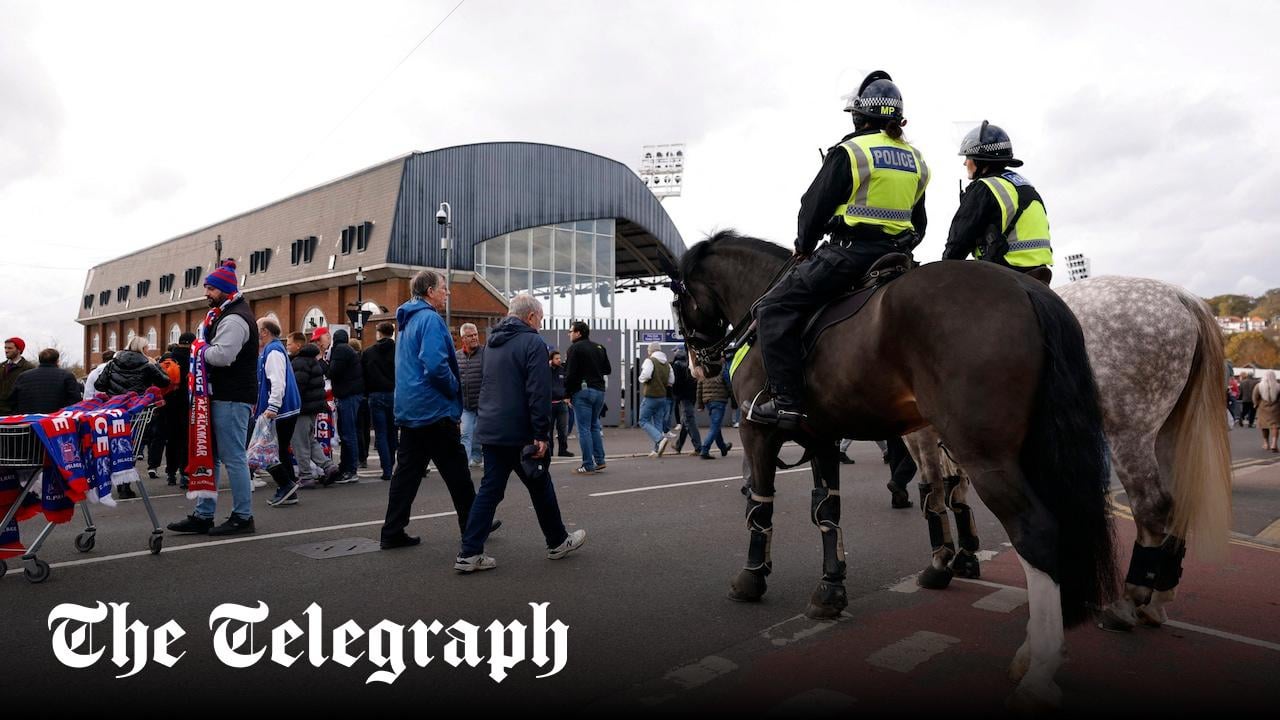
Lo sport raccontato dal Ministero degli Interni: paga la tua polizia
https://www.telegraph.co.uk/football/2025/12/01/premier-league-clubs-face-paying-70m-policing-costs/
di BestButtons

Lo sport raccontato dal Ministero degli Interni: paga la tua polizia
https://www.telegraph.co.uk/football/2025/12/01/premier-league-clubs-face-paying-70m-policing-costs/
di BestButtons
14 commenti
Article contents:
*Ben Rumsby, 01 Dec 2025 – 02:00PM GMT*
Premier League football clubs and other event organisers face being forced to pay tens of millions towards policing costs under plans being drawn up by the Government.
Leading sports organisations have been summoned to a series of meetings at the Home Office over the next few days as part of a consultation on proposals to let police forces charge them more for keeping major events safe.
Currently, football clubs are only required to foot the bill for the policing of their own land but senior officers, including Sir Mark Rowley, the Metropolitan Police Commissioner, want them to pay the £70m per season they say it takes to maintain matchday law and order over a much wider area.
Most of the cost of policing UK sporting events is spent on Premier League matches. But the likes of English Football League games, international rugby and cricket fixtures, the Grand National, Cheltenham Festival, British Grand Prix, London Marathon and Boat Race could all be affected by any changes regarding who pays for how they are overseen by police.
Non-sporting events such as Notting Hill Carnival or Pride could also be affected.
**How much do clubs spend on policing football matches?**
The cost of policing football matches ranges from zero to millions of pounds – last week, West Midlands Police claimed it cost an estimated £2m to deploy 700 officers for the recent controversial Europa League match between Aston Villa and Maccabi Tel Aviv.
News that the Government was considering forcing football clubs to pay more towards such costs first emerged earlier this year after Mark Roberts, the Cheshire Police Chief Constable and head of the UK Football Policing Unit (UKFPU), revealed he had been actively lobbying ministers on the issue.
According to figures provided by UKFPU, the total bill for police services for football in England and Wales for the 2023-24 season was £71.69m, of which clubs paid only £14.87m (20.7 per cent).
Roberts argued removing the remaining £56.82m burden from the taxpayer would allow 1,200 additional officers to be deployed on Britain’s streets.
Leading sports bodies – including the Football Association, Rugby Football Union, England and Wales Cricket Board, Jockey Club, Silverstone and Boat Race – responded by sending a joint letter to Sir Keir Starmer, the Prime Minister, via the Major Event Organisers Association.
They wrote: “Such an ill-thought-out change would damage a crucial sector of the economy that provides employment, inward investment and brings joy to millions of people each year.
Citing a 2017 Court of Appeal decision overturning a High Court judgment that Suffolk Police were entitled to charge Ipswich Town for policing the streets around Portman Road, they added: “We highlight our collective deep concern at proposals that we understand are being put forward by the Home Office, to create new legislation with the intent of dramatically increasing the charges police forces can exact against those who stage major events in the UK.
“After many months of waiting for any official contact, the Home Office has only this week contacted organisations about this matter with a vague, general invite to a meeting.
“Proposals have not yet been shared with us beyond generalised statements, but we understand that changes are being put forward to alter the long-standing, well-established law on what ‘Special Police Services’ (or SPS) police forces can charge for under section 25 of the Police Act 1995.
“We have been told separately that moves are being made to do this by the Home Office introducing an amendment to its own recently published Crime and Policing 2025 Bill. We gather this will be a move to reverse the clear law we have now following the Court of Appeal decision in 2017.
“This issue has been thrown into the spotlight recently by comments of chief constable Mark Roberts.
“We are gravely concerned at the approach Mr Roberts has chosen to take. All our members would be impacted by the change in the law which he is advocating. This is simply not just a Premier League football issue.”
The letter highlighted other non-sporting events covered by the taxpayer, such as London’s New Year’s Eve celebrations, Notting Hill Carnival and Pride.
It also cited a 2021 report which stated “major sporting events have the potential to drive £4bn in soft power, investment and trade impacts to the UK this decade”.
The letter added: “This proposed change appears to us to inevitably give rise to the idea of ‘pay-as-you-go policing’, where private organisations end up paying for services in the public space that the police are legally bound to police and funded to do so.
“Private organisations and the public (including those attending our events) already pay for such protections through their rates and taxes.
“Under these proposals, it is likely that at a minimum, consumers would be forced to pay more, harming accessibility of our sporting and cultural events, but in the long run it is possible that only the biggest, elite-level events would survive and that events outside of London in particular would suffer.”
The letter urged the Prime Minister to “reject any proposals to change the law along the lines apparently now being advocated”.
**Fan incidents on the rise**
In July, the Government published figures showing the number of football matches in England and Wales with reported incidents of disorder had increased by 18 per cent last season.
The Home Office said the number of reported incidents rose from 1,341 in 2023-24 to 1,583 but that the number of arrests had dropped by 11 per cent from 2,167 to 1,932.
Responding to the figures, Roberts said: “In a nutshell, this means that we as the police are subsidising clubs that quite happily spend up to £1bn in a single transfer window.”
In October, policing minister Sarah Jones said in a response to a written question on the subject: “The Home Office is concerned that the cost of policing football matches that is currently falling to the public purse is too high and is exploring ways to address this. This is an important issue that requires careful consideration in order to ensure a balance between the costs to the public purse and the wider cultural and economic value of these events.”
The Home Office has been approached for comment.
Probably long overdue, policing big games can cost serious money and takes resources away from day-to-day policing.
As for football clubs paying their taxes, they’ll pay as little as they can. Liverpool FC made a loss of £57m last year, so other than things like business rates they’d have paid sweet FA in taxes. Their turnover was £300m.
[https://www.bbc.co.uk/sport/football/articles/crewwx4rjvjo](https://www.bbc.co.uk/sport/football/articles/crewwx4rjvjo)
An extra £55m (or half a Florian Wirtz) a season total split between 20 clubs doesn’t seem like an unreasonable ask. £2.7m per club per season – and that’s if you split it equally.
> Sir Mark Rowley, the Metropolitan Police Commissioner, want them to pay the **£70m per season** they say it takes to maintain matchday law and order over a much wider area.
I had no idea that the cost is that high, and that’s just for Met to police football matches.
> West Midlands Police claimed it cost an **estimated £2m to deploy 700 officers** for the recent controversial Europa League match between Aston Villa and Maccabi Tel Aviv.
Just one match.
> According to figures provided by UKFPU, the total bill for police services for football in England and Wales for the 2023-24 season was £71.69m, of which clubs paid only £14.87m (20.7 per cent).
Almost £57 million paid to private companies by the tax payers. It doesn’t say what’s the total bill for all other sports and events, but my guess is more or less a drop in the ocean compared to football matches.
Id actually support allowing companies in general to hire police officers to be on premises.
Supermarkets lose a lot of money via theft, and their security are not allowed to tackle it. Have a police officer on every shop door, and it allows those security guards to flag people to the dedicated officer for questioning.
You get double benefit – increase in the police force is now paid for through sources other than general taxation, and now you have a lot more officers in places people know they will be and can see them.
Collections of smaller shops could even come together to sponsor an officer at peak times outside their shops as well – would be a return to the beat of sorts that all these older people tell us used to happen.
Ultimately so long as they are upholding the law, why should it matter if they are in a certain place?
[deleted]
Clubs pay for officers at games. Clubs contribute huge sums of money to both the local and national economy. Clubs are not responsible for violence kicking off in a pub a mile from the ground.
I don’t see why the general public has to pay for policing sporting events.
Dunno
Sounds like bollocks to me
Do parades, protests and marches have to pay policing costs?
Why shouldn’t the football teams pay for their own supporters causing trouble?
All events on this scale. Rugby. Football. Music concerts. Etc should pay for the cost to police the event.
Don’t they already do that, my mate works at Bristol city and says that there’s a tiered system depending on how much trouble there will be. So the bigger the risk and resources they need the club will pay for it
Just tax them more to cover it?
Could it be based on attendances?
This is probably going to need legislation to make the change as the police have asked some clubs to foot the bill before. Ken Bates took the police to court with Leeds and forced the police to pay so there’s case law precedent in place stating the police should pay. The only way the government can change that is with legislation which will take time.
See ken Bates v west Yorkshire police 2012.