
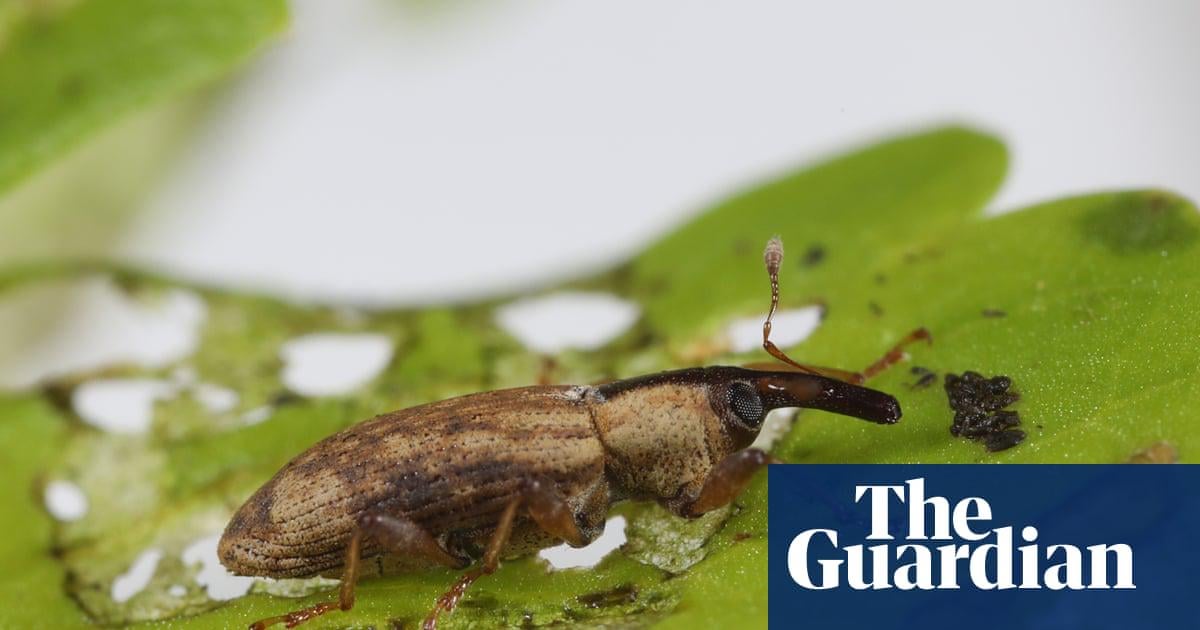
Gamberi, punteruoli e funghi rilasciati nel Regno Unito per contrastare specie invasive come il poligono giapponese
https://www.theguardian.com/environment/2025/dec/24/crayfish-weevils-fungi-wild-tackle-invasive-species-japanese-knotweed?CMP=Share_iOSApp_Other
di topotaul
1 commento
‘Olaf Booy, deputy chief non-native species officer at Apha, said: “The science around biological control is always developing. It really works for those species that were introduced quite a long time ago, that we haven’t been able to prevent getting here or detect early and rapidly respond.”
As well as releasing biological control agents into the wild, government scientists have been breeding threatened species to protect their populations from invasion. Britain’s native white-clawed crayfish has disappeared from most of the country since the invasive American signal crayfish was introduced in the 1970s. These non-native creatures outcompete the native crayfish and carry a deadly plague, making eradication or containment virtually impossible.’
Reading the article, I hadn’t realised people are keeping raccoons as pets. I agree, that’s one species we don’t need in the wild.
Biological control sciences is also impressive, as it’s not easy to reverse ecological imbalances once they occur. The precision to target specific invasive species and the use of natural remedies to do so is an amazing achievement.
If I could retrain in another job, it would be this. I would imagine it’s such a fine art, introducing or reintroduction a species as there are so many variables to consider, as well the unpredictableness of nature.
Great article.