La Francia inizia a stoccare il gas per l’inverno
https://www.lemonde.fr/en/economy/article/2026/04/21/france-begins-storing-gas-for-winter_6752642_19.html
di pierrepaul

La Francia inizia a stoccare il gas per l’inverno
https://www.lemonde.fr/en/economy/article/2026/04/21/france-begins-storing-gas-for-winter_6752642_19.html
di pierrepaul
3 commenti
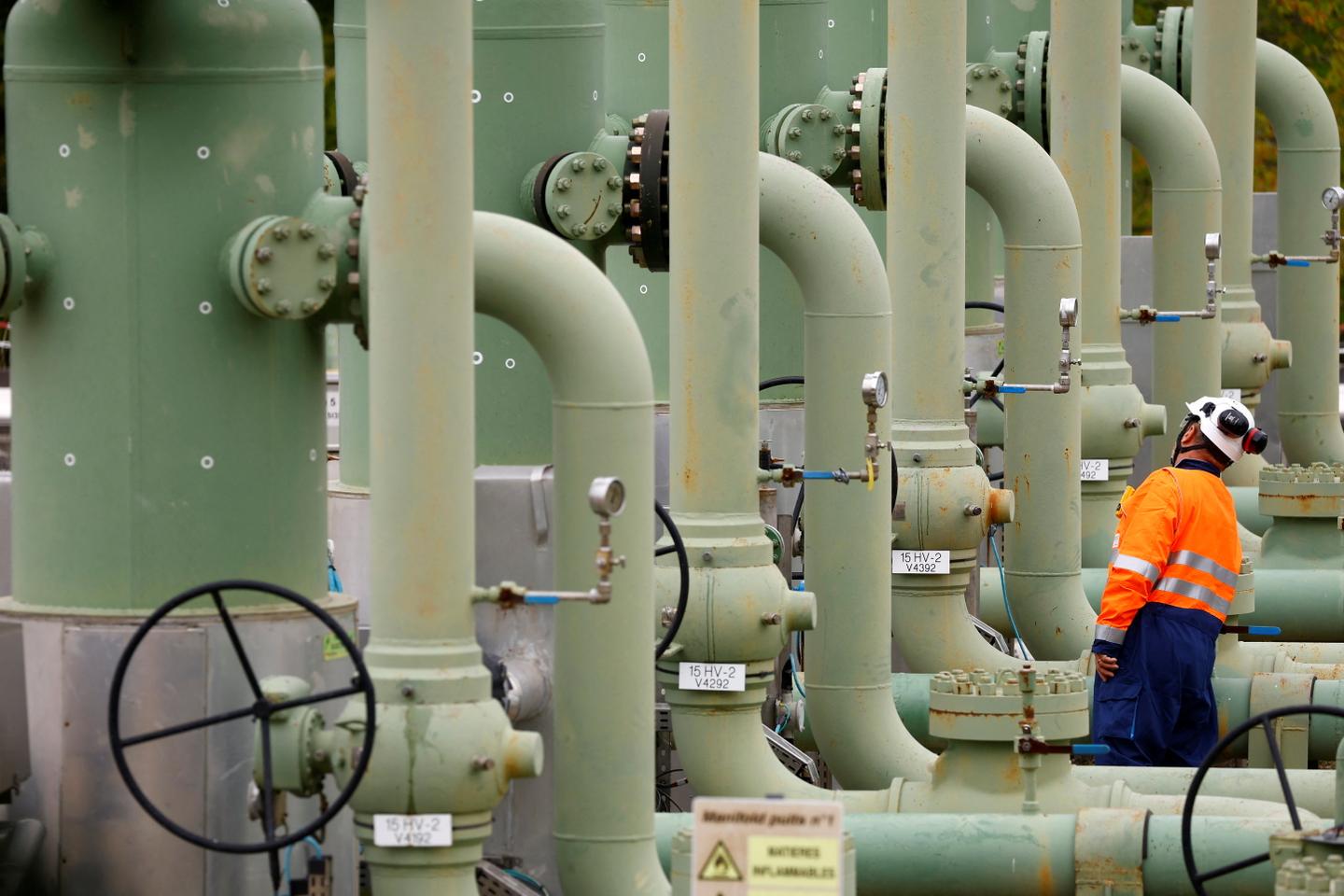
In Saint-Illiers-la-Ville, Yvelines, France, the countdown to winter has already begun. At the foot of a wooded hillside, a maze of pipelines carries gas from the main network before injecting it, through 27 vertical pipes, deep underground. This operation has been repeated almost daily since April 1. The goal: to store, before the first cold snap, more than 600 million cubic meters of gas in a porous rock saturated with water, stretching for kilometers beneath the pastures of this rural corner of the Ile-de-France region.
This aquifer, located between 330 and 460 meters below ground, is a cornerstone of France’s energy security, just like the 15 other storage sites spread across the country. These reservoirs make it possible to supplement the regular supply delivered by pipeline or by ship and to guard against any supply disruptions.
The gas “withdrawn” from these stocks – when temperatures drop – covers about one third of national consumption. “That can rise to as much as 80% on extremely cold days, like we saw in the winter of 2025,” said Charlotte Roule, director general of Storengy, France’s leading gas storage operator. This ENGIE subsidiary’s role is to rent out storage capacity – much like a parking permit – to gas suppliers such as TotalEnergies, ENGIE or EDF.
The storage campaign is set to run, as every year, from April to November. But this time it begins in a highly unusual context. The war in the Middle East has pushed up the price of gas on international markets. The closure of the Strait of Hormuz – which, before the conflict, carried a fifth of the world’s liquefied natural gas (LNG) supply – has thrown the flows into chaos.
The risk of shortages seems minimal, as Qatari gas made up only a small fraction of French and European supplies. The European Union (EU) sources mainly from Norway, and increasingly from US LNG. The volumes delivered by the US in 2025 accounted for a quarter of Europe’s gas imports and nearly 60% of LNG imports alone.
#
So does nearly every other European country who experiences winters.. Every year.
Water is wet