Matematica sulla sovrarappresentanza degli “olandesi” a Bruxelles
https://www.reddit.com/gallery/1df21hd
di LegioX_Equestris

Matematica sulla sovrarappresentanza degli “olandesi” a Bruxelles
https://www.reddit.com/gallery/1df21hd
di LegioX_Equestris
1 commento
After the meme from u/UC_Scuti96, I realised that I don’t know a lot about the math behind the mechanism protecting the “Dutch-speaking minority” in Brussels. So I opened Excel and did the math. What we need to know before the math is
1) There is no control of which language you speak to vote , everyone can choose to vote for the NL or FR
lists.
2) The number of seats doesn’t change depending on the use of the ballot (89 TOT, 72 FR, 17 NL)
3) There is no control of which language you speak to make lists. You can be as a candidate on the list you want with no limitations regarding language.
4) The minimum of 5% for the electoral threshold is calculated separately for each kind of list
5) (for context, after the election) You need a majority of seats in both linguistic groups to form a majority.
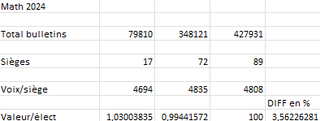
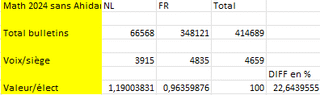
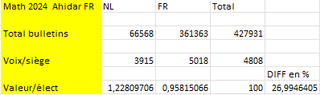
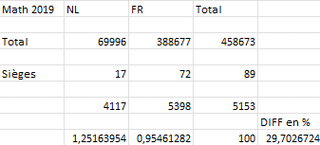
I decided to highlight Team Ahidar since I’ve mostly seen him communicate in French. I considered that he is using the mechanism to win. I made a comparison with 2019 and I switched Ahidar of linguistic constituency in “if scenarios”. The difference in electoral power is related to pure % ,not seats and not taking into account the electoral threshold.
Source for numbers is [https://elections2024.belgium.be/fr/resultats-chiffres?el=BR&id=BRR00000](https://elections2024.belgium.be/fr/resultats-chiffres?el=BR&id=BRR00000) and the math was made by me. I will appreciate corrections if you see errors or remarks if you think that the way to count is strange or irrelevant.
Yellow mean “if scenarios”. If Ahidar was in FR lists, his result would have been 3.7%, under the 5%. He is around 16.6 in NL.
One of the surprising results I found is that, since Ahidar changed a lot the number of votes for Dutch-speaking lists (and there is even a respectable progression without him), the balance of electoral power/voters have been mostly restored.