> From September 27 to November 10, 2020, heavy fighting pitted the Azerbaijani army against Armenian forces in Nagorno-Karabakh. Four years on, what tactical lessons can be drawn from this war?
> Squadron Leader Patrick Jakob (French Army)
> On September 19, 2023, after almost a year of blockade, Azerbaijan relaunched its offensive against the self-proclaimed republic of Nagorno-Karabakh, in defiance of international law. In barely twenty-four hours, Artsakh stopped resisting and laid down its arms. This swift defeat was the epilogue to 45 days of intense fighting in the region at the end of 2020.
> This conflict highlights the domination enabled by a high level of technological mastery in a modern high-intensity confrontation, in particular the use of drones and social networks. Beyond this conjunctural aspect, this 2020 campaign can be studied through the prism of three structural principles of Marshal Foch and Admiral Labouérie’s war: the Armenians lost this war when their freedom of action disappeared, while the Azerbaijanis were able to win thanks to the concentration of their efforts and the lightning speed of their campaign.
> Nagorno-Karabakh: a disputed territory lacking strategic depth.
> Nagorno-Karabakh measures 11,000 km² and has a population of 150,000. This makes the territory the size of Gironde, with a population equivalent to that of Angers, which represents a low human density. With an average altitude of 1,100 m, dense forests and a sparse road network, the terrain is very similar to the French Pre-Alps. The country is linked to Armenia by a single asphalt road: the Latchine corridor. Logistically, it remains totally dependent on this single supply route.
> When the USSR broke up in 1991, Nagorno-Karabakh declared its independence. To re-establish control over Nagorno-Karabakh, the Azerbaijani authorities sent in troops, triggering a war that lasted until 1994, when a ceasefire was signed. The laborious negotiations for the final resolution of the conflict were then organized within the framework of the Minsk Group, and resulted in an unstable balance: in 2016, violence resumed during the Four-Day War, triggered by an Azerbaijani attack that failed.
> With no real diplomatic negotiations, the conditions were ripe for renewed fighting.
> An unequal battle
> On the eve of the fighting, Armenia/Artsakh and Azerbaijan had equivalent numbers of ground forces. However, Baku’s war materiel clearly dominates that of its adversary. Azerbaijan, for example, has four times as many tanks. Baku also has more air power in terms of quantity and quality. The difference is particularly marked in the field of drones. More generally, Baku’s defense budget is almost six times that of Armenia.
> All in all, there is a real imbalance of forces that the Armenians believe they can compensate for with their “fortress terrain” and moral forces linked to the defense of their territory, as they have done for the past 30 years. Their defensive system consists mainly of a network of trenches adapted to the terrain, but with little protection against air attack. They retain good-quality artillery and anti-aircraft systems of Soviet origin, whose characteristics (radar wavelengths and frequencies, range, etc.) are well known to their adversaries. Their tanks are kept in reserve, and their main role is to organize counter-attacks if necessary.
> Internationally, Turkey supports Azerbaijan, mainly because of their cultural proximity. The slogan “one nation, two states” illustrates this shared Turkish worldview, which is reflected in regular bilateral military exercises. Russia remains neutral. Its preference may lie with Armenia, especially as opposed to Turkey. However, Moscow does not appreciate the new nationalist Armenian regime, which is hostile to Russian influence.
> On September 27, 2020, Azerbaijan launched its offensive. The fighting began with artillery fire and drone strikes. Within hours, the Armenian air defense system was largely destroyed. Within a few days, the Armenian armored fleet was generally out of action in all the depths of its defensive system. The Azerbaijani ground offensive then marked its effort to the south.
> After 44 days of intense fighting, Azeri troops reached Shushi, the gateway to the Latchine corridor.
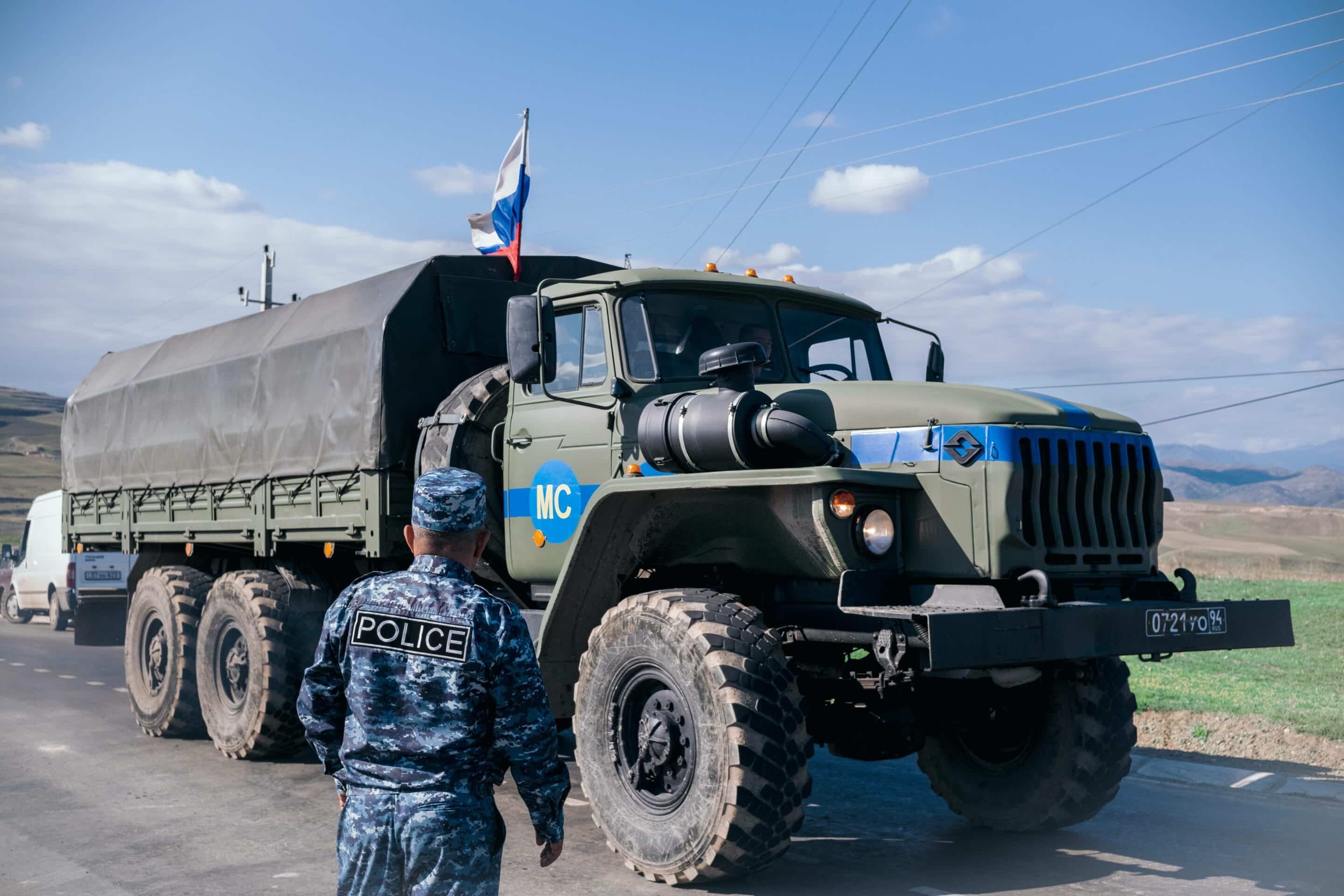
> Nevertheless, victory is still some way off, especially as Azerbaijan is running out of ammunition. Moreover, Russia does not want an Azerbaijani victory, which would enable Turkey to consolidate its influence in the region. After repeated calls for an end to the fighting, the destruction of a Russian helicopter on November 9 was the reason given for imposing a ceasefire. Moscow then deployed an interposition force.
> In the end, losses amounted to some 2500 dead on each side, i.e. more than 100 a day. In terms of destroyed equipment, the figures were equally high. Virtually all the tanks, artillery and rocket launchers on the Armenian side were destroyed. The Azerbaijanis suffered fewer losses, but lost virtually all their drones (see tables in appendix 3).
> Nagorno-Karabakh deprived of its freedom of action.
> The defensive system of Nagorno-Karabakh itself contributed to the loss of Armenian freedom of action. It consists of a double defensive line: one at the border and the other some 20 km back. These were simple stone trenches and fighting posts. This static system was supplemented by an armored division capable of sealing any breach. The major vulnerability of this static system is its weakness in the face of air attack, particularly in view of the endurance of drones at a time when Armenian air defences are no longer operational.
> This is why, on the fourth day of the offensive, the Armenian counter-attack with an armoured division ended in failure: 80 tanks and dozens of armoured vehicles were destroyed.
> Thus, within a few days, Armenian troops were pinned down by strikes throughout the depths of the country. They were under constant threat from drones and unable to reinforce and support their units in combat. As a result, each defensive position fights alone, until it is destroyed or runs out of ammunition, in the face of the inevitable Azerbaijani advance.
> In addition to these physical difficulties, Nagorno-Karabakh and Armenia find themselves at a loss in the cognitive fields, both locally and on the international stage.
> On the ground, incessant drone overflights and strikes affecting the whole of Nagorno-Karabakh, including urban areas, are having a devastating effect on the morale of soldiers and civilians alike. A striking parallel can be drawn with the French debacle of 1940. In this respect, it is interesting to note the similarity of the sound signature of the Israeli HAROP drone with that of the German Stuka bomber sirens of the same period.
> Armenia also finds itself rapidly isolated in the immaterial fields. Its isolation is due first and foremost to Azerbaijan’s systematically aggressive communication, aimed at undermining the will to fight of its forces and population, and reducing its international support. Baku is conducting a campaign of influence on social networks showing the Armenian debacle, notably with the help of drone videos. The press and non-governmental organizations around the world are also heavily involved, for example with visits organized to denounce Armenian missile strikes in urban areas.
> Azerbaijan and concentration of effort.
> Faced with an enemy deprived of all freedom of action, Azerbaijan concentrated its efforts until victory was achieved.
> To this end, it created a diversion by attacking a corps in the north of Nagorno-Karabakh, but its main effort remained in the south. There, he committed his 2nd Corps, comprising five mechanized brigades. The 5th Corps, in reserve, was then committed to the area after a week’s offensive. These corps were eventually reinforced by the 3rd Corps. As a result, 30 to 40 combined arms battle groups were engaged against 20 Armenian groups in a 50-kilometer front zone. Baku therefore concentrated a large force, but above all it continually relieved its troops, while the Armenians were exhausted with no possibility of relief or reinforcement.
> The terrain chosen for the offensive was less mountainous than northern Artsakh. This enabled Azerbaijan to deploy its tanks, armored vehicles and artillery in support of the infantry. The manoeuvre consists firstly in conquering the whole of southern Nagorno-Karabakh up to the Armenian border, then in converging forces towards Shushi, which is the gateway to the Latchine corridor and the access route to the capital Stepanakert. There was a marked concentration of effort on this fortress town, which eventually fell. This marked the end of the fighting.

1 commento
Conflits is a very renowned magazine on Geopolitics. This article is written by a French Army officer at the French [Ecole de guerre](https://fr.wikipedia.org/wiki/%C3%89cole_de_guerre)
Translation with deepl:
> From September 27 to November 10, 2020, heavy fighting pitted the Azerbaijani army against Armenian forces in Nagorno-Karabakh. Four years on, what tactical lessons can be drawn from this war?
> Squadron Leader Patrick Jakob (French Army)
> On September 19, 2023, after almost a year of blockade, Azerbaijan relaunched its offensive against the self-proclaimed republic of Nagorno-Karabakh, in defiance of international law. In barely twenty-four hours, Artsakh stopped resisting and laid down its arms. This swift defeat was the epilogue to 45 days of intense fighting in the region at the end of 2020.
> This conflict highlights the domination enabled by a high level of technological mastery in a modern high-intensity confrontation, in particular the use of drones and social networks. Beyond this conjunctural aspect, this 2020 campaign can be studied through the prism of three structural principles of Marshal Foch and Admiral Labouérie’s war: the Armenians lost this war when their freedom of action disappeared, while the Azerbaijanis were able to win thanks to the concentration of their efforts and the lightning speed of their campaign.
> Nagorno-Karabakh: a disputed territory lacking strategic depth.
> Nagorno-Karabakh measures 11,000 km² and has a population of 150,000. This makes the territory the size of Gironde, with a population equivalent to that of Angers, which represents a low human density. With an average altitude of 1,100 m, dense forests and a sparse road network, the terrain is very similar to the French Pre-Alps. The country is linked to Armenia by a single asphalt road: the Latchine corridor. Logistically, it remains totally dependent on this single supply route.
> When the USSR broke up in 1991, Nagorno-Karabakh declared its independence. To re-establish control over Nagorno-Karabakh, the Azerbaijani authorities sent in troops, triggering a war that lasted until 1994, when a ceasefire was signed. The laborious negotiations for the final resolution of the conflict were then organized within the framework of the Minsk Group, and resulted in an unstable balance: in 2016, violence resumed during the Four-Day War, triggered by an Azerbaijani attack that failed.
> With no real diplomatic negotiations, the conditions were ripe for renewed fighting.
> An unequal battle
> On the eve of the fighting, Armenia/Artsakh and Azerbaijan had equivalent numbers of ground forces. However, Baku’s war materiel clearly dominates that of its adversary. Azerbaijan, for example, has four times as many tanks. Baku also has more air power in terms of quantity and quality. The difference is particularly marked in the field of drones. More generally, Baku’s defense budget is almost six times that of Armenia.
> All in all, there is a real imbalance of forces that the Armenians believe they can compensate for with their “fortress terrain” and moral forces linked to the defense of their territory, as they have done for the past 30 years. Their defensive system consists mainly of a network of trenches adapted to the terrain, but with little protection against air attack. They retain good-quality artillery and anti-aircraft systems of Soviet origin, whose characteristics (radar wavelengths and frequencies, range, etc.) are well known to their adversaries. Their tanks are kept in reserve, and their main role is to organize counter-attacks if necessary.
> Internationally, Turkey supports Azerbaijan, mainly because of their cultural proximity. The slogan “one nation, two states” illustrates this shared Turkish worldview, which is reflected in regular bilateral military exercises. Russia remains neutral. Its preference may lie with Armenia, especially as opposed to Turkey. However, Moscow does not appreciate the new nationalist Armenian regime, which is hostile to Russian influence.
> On September 27, 2020, Azerbaijan launched its offensive. The fighting began with artillery fire and drone strikes. Within hours, the Armenian air defense system was largely destroyed. Within a few days, the Armenian armored fleet was generally out of action in all the depths of its defensive system. The Azerbaijani ground offensive then marked its effort to the south.
> After 44 days of intense fighting, Azeri troops reached Shushi, the gateway to the Latchine corridor.
> Nevertheless, victory is still some way off, especially as Azerbaijan is running out of ammunition. Moreover, Russia does not want an Azerbaijani victory, which would enable Turkey to consolidate its influence in the region. After repeated calls for an end to the fighting, the destruction of a Russian helicopter on November 9 was the reason given for imposing a ceasefire. Moscow then deployed an interposition force.
> In the end, losses amounted to some 2500 dead on each side, i.e. more than 100 a day. In terms of destroyed equipment, the figures were equally high. Virtually all the tanks, artillery and rocket launchers on the Armenian side were destroyed. The Azerbaijanis suffered fewer losses, but lost virtually all their drones (see tables in appendix 3).
> Nagorno-Karabakh deprived of its freedom of action.
> The defensive system of Nagorno-Karabakh itself contributed to the loss of Armenian freedom of action. It consists of a double defensive line: one at the border and the other some 20 km back. These were simple stone trenches and fighting posts. This static system was supplemented by an armored division capable of sealing any breach. The major vulnerability of this static system is its weakness in the face of air attack, particularly in view of the endurance of drones at a time when Armenian air defences are no longer operational.
> This is why, on the fourth day of the offensive, the Armenian counter-attack with an armoured division ended in failure: 80 tanks and dozens of armoured vehicles were destroyed.
> Thus, within a few days, Armenian troops were pinned down by strikes throughout the depths of the country. They were under constant threat from drones and unable to reinforce and support their units in combat. As a result, each defensive position fights alone, until it is destroyed or runs out of ammunition, in the face of the inevitable Azerbaijani advance.
> In addition to these physical difficulties, Nagorno-Karabakh and Armenia find themselves at a loss in the cognitive fields, both locally and on the international stage.
> On the ground, incessant drone overflights and strikes affecting the whole of Nagorno-Karabakh, including urban areas, are having a devastating effect on the morale of soldiers and civilians alike. A striking parallel can be drawn with the French debacle of 1940. In this respect, it is interesting to note the similarity of the sound signature of the Israeli HAROP drone with that of the German Stuka bomber sirens of the same period.
> Armenia also finds itself rapidly isolated in the immaterial fields. Its isolation is due first and foremost to Azerbaijan’s systematically aggressive communication, aimed at undermining the will to fight of its forces and population, and reducing its international support. Baku is conducting a campaign of influence on social networks showing the Armenian debacle, notably with the help of drone videos. The press and non-governmental organizations around the world are also heavily involved, for example with visits organized to denounce Armenian missile strikes in urban areas.
> Azerbaijan and concentration of effort.
> Faced with an enemy deprived of all freedom of action, Azerbaijan concentrated its efforts until victory was achieved.
> To this end, it created a diversion by attacking a corps in the north of Nagorno-Karabakh, but its main effort remained in the south. There, he committed his 2nd Corps, comprising five mechanized brigades. The 5th Corps, in reserve, was then committed to the area after a week’s offensive. These corps were eventually reinforced by the 3rd Corps. As a result, 30 to 40 combined arms battle groups were engaged against 20 Armenian groups in a 50-kilometer front zone. Baku therefore concentrated a large force, but above all it continually relieved its troops, while the Armenians were exhausted with no possibility of relief or reinforcement.
> The terrain chosen for the offensive was less mountainous than northern Artsakh. This enabled Azerbaijan to deploy its tanks, armored vehicles and artillery in support of the infantry. The manoeuvre consists firstly in conquering the whole of southern Nagorno-Karabakh up to the Armenian border, then in converging forces towards Shushi, which is the gateway to the Latchine corridor and the access route to the capital Stepanakert. There was a marked concentration of effort on this fortress town, which eventually fell. This marked the end of the fighting.