
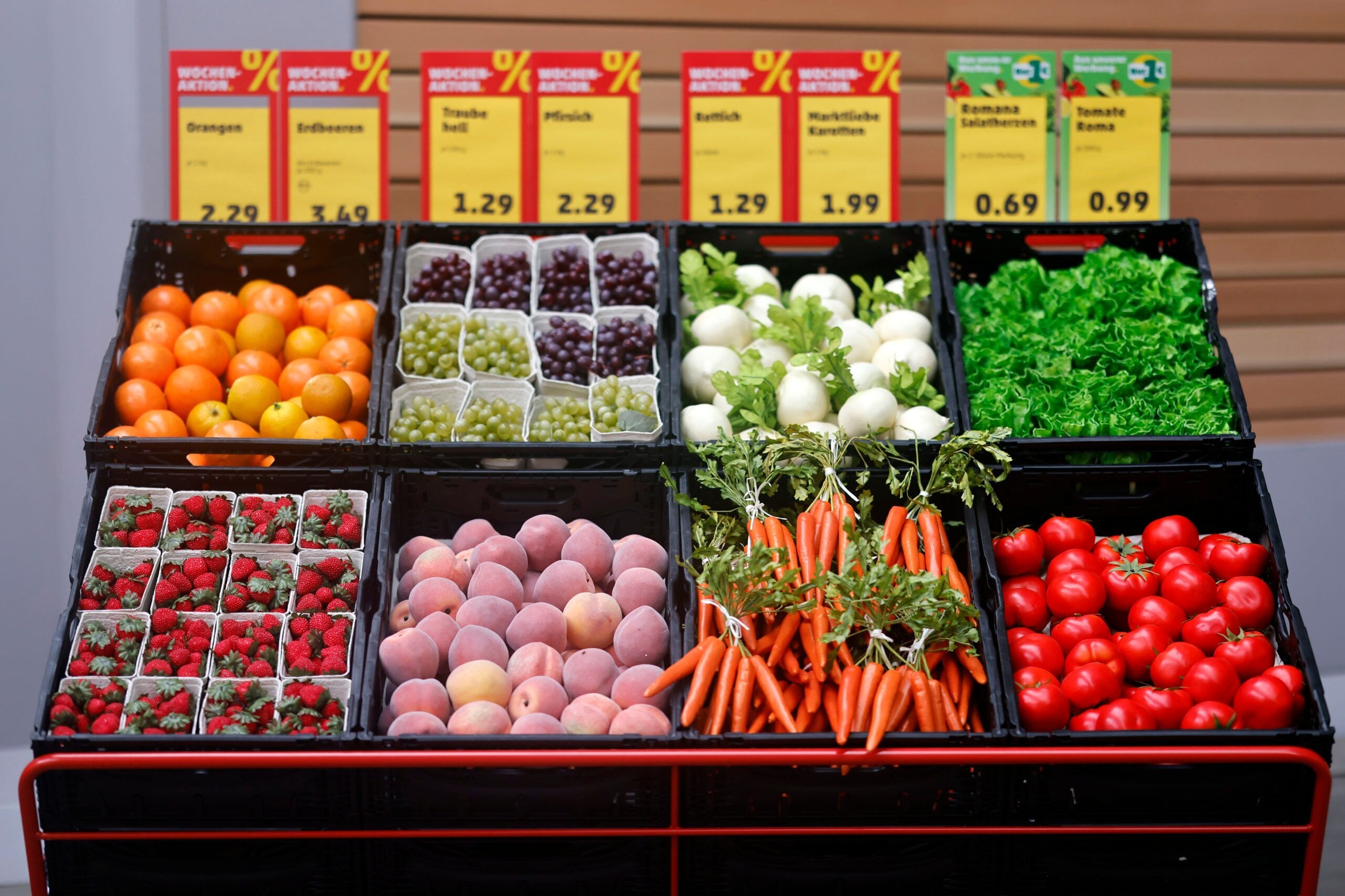
Il tasso di inflazione in Germania scende sotto il 2,0% ad agosto per la prima volta in tre anni, stima la Deutsche Bank
https://www.businessinsider.de/wirtschaft/inflationsrate-in-deutschland-im-august-erstmals-wieder-unter-zwei-prozent-sagt-die-deutsche-bank-copy/
di Stabile_Feldmaus
7 commenti
>According to calculations by Deutsche Bank, the inflation rate in Germany fell below the important two per cent mark for the first time in more than three years in August. The economists at Deutsche Bank Research expect an inflation rate of just 1.9 per cent for August. In July it was still 2.3 per cent. The Federal Statistical Office will provide an initial estimate for inflation on Thursday.
>The last time inflation in Germany was below two per cent was in March 2021. This figure is important because it marks the stability target of the European Central Bank (ECB). The faster and more sustainably inflation falls into this range, the more significantly the ECB can lower key interest rates – and thus strengthen the economy. The ECB’s next interest rate decision is due on 12 September.
>Prices had already been rising at an increasing pace since spring 2021. One reason was initially supply bottlenecks as a result of the coronavirus pandemic combined with high demand and a loose monetary policy. From spring 2022, inflation accelerated dramatically following Russia’s invasion of Ukraine. Energy and food prices in particular shot up.
>At the peak of the wave, the inflation rate in Germany was 8.8 per cent in October 2022. In the eurozone, it was in double digits, in some Eastern European countries even well over 20 per cent. In the fight against inflation, the ECB raised its key interest rates in several steps by 4.5 per cent. In June, the ECB then became the first major central bank to initiate a turnaround in interest rates and lowered its key rates slightly again for the first time.
>Deutsche Bank expects the general price increase to remain below or at two per cent until around October. Energy prices in particular would be around five per cent below the previous year. Once these base effects come to an end, the inflation rate will rise again to around 2.5 per cent. It will be slightly above two per cent in the coming year. For food, Deutsche Bank expects a low inflation rate of 1.5 per cent for August compared to the previous year.
>The core rate of inflation, excluding the strongly fluctuating prices for energy and food, is also likely to have fallen year-on-year in August. However, the bank’s economists expect only a slight decline from 2.9 to 2.8 per cent. This is mainly due to higher price pressure for many services. Inflation there is currently almost four per cent. The most important reason is the sharp rise in wages and salaries as a result of the wave of inflation, which is now having an impact on prices in labour-intensive sectors. Alongside wars and conflicts, high wage increases are therefore currently seen as the greatest risk of inflation flaring up again.
Translated with [deepl.com](http://deepl.com)
So when will the price of Döner fall below 7.50€ again?
Congratulations, Germany!
Cut them down those interest rates!!!
Cut them down!!
I posted it on the German Version. I post it here again.
Cumulative Inflation from 2019 – 2024 was 21,2% in Germany.
That prices now raise slower is nice, but if you don’t earn AT LEAST 21% more than 2019, you are poorer now.
shit stays expensive and still gets more expensive. just. slower.
What is it with all the positive propaganda about germany lately? I assure you we are still fucked big time.