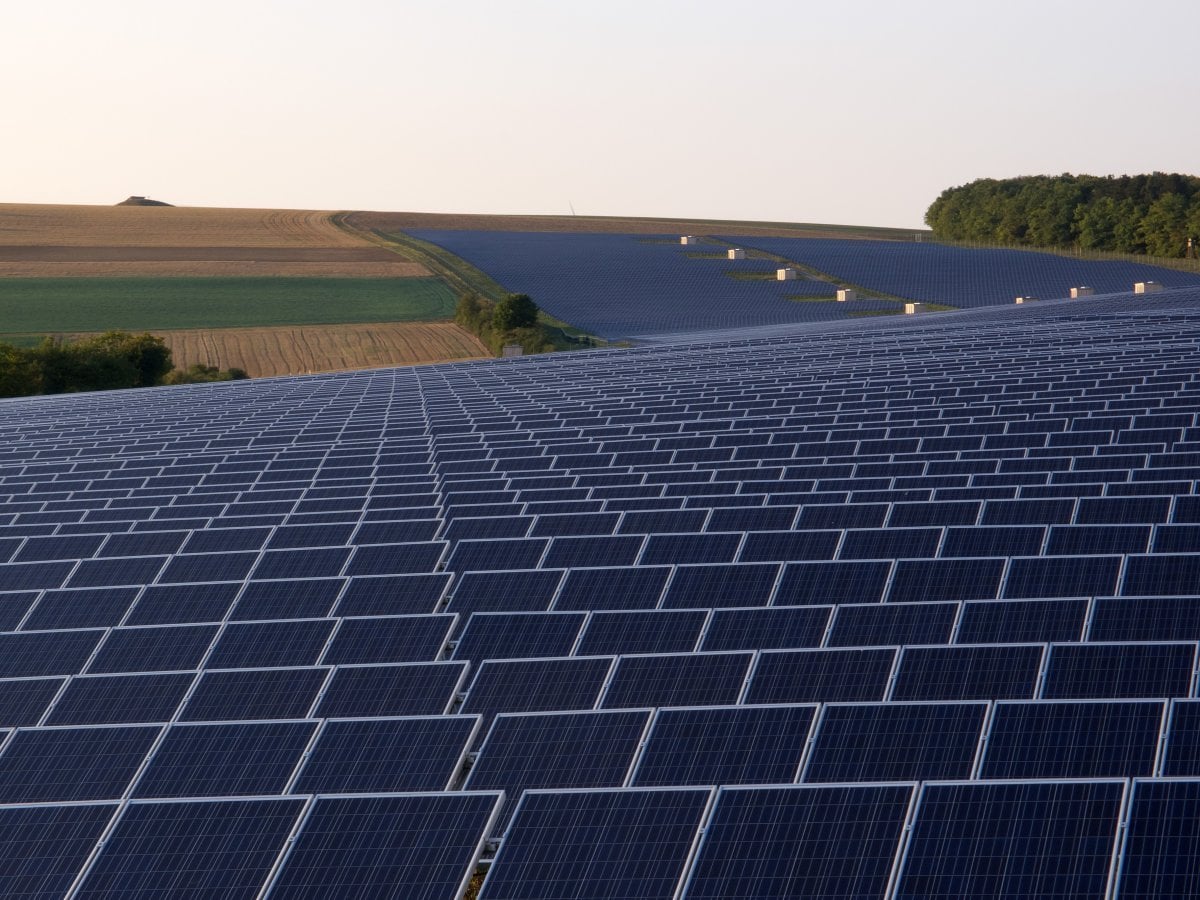
Energie rinnovabili: 100 gigawatt di fotovoltaico installati in Germania
https://www.heise.de/en/news/Renewable-energies-100-gigawatts-of-photovoltaics-installed-in-Germany-10256548.html
di poke133

Energie rinnovabili: 100 gigawatt di fotovoltaico installati in Germania
https://www.heise.de/en/news/Renewable-energies-100-gigawatts-of-photovoltaics-installed-in-Germany-10256548.html
di poke133
5 commenti
* “For the year 2024, the Federal Network Agency stated a total generation of 431.7 terawatt hours (TWh) of electricity, of which 254.9 TWh or 59% came from renewable energy sources.”
* “Wind power is the star among renewables, contributing a total of 137.6 TWh in 2024, while solar power generation was in second place with 63.3 TW.”
the article also touches on the rise of balcony solar, can someone from Germany comment on their experience with it?
Great now install some nuclear instead of hoping your neighbouring countries will install nuclear to supply you with electricity.
But drill baby drill! The ‘liquid gold’ 🤢
Installed capacity means nothing without an utilisation factor and monthly breakdown given. Solar performs poorly in winter when heating demand is high!
In the past few days, some sources claimed that the mark had been passed, but it was not until Saturday, January 25, 2025 that the time actually came: The [Market Master Data Register (MaStR) has officially recorded 100 gigawatts (GW) of installed photovoltaic electricity generators – 100,013,794 kW(p) as of today. Power generation is constantly becoming “greener” and more sustainable.](https://www.marktstammdatenregister.de/MaStR/Einheit/Einheiten/ErweiterteOeffentlicheEinheitenuebersicht?filter=Lage%20der%20Einheit~eq~%272961%27~and~Energietr%C3%A4ger~eq~%272495%27~and~Betriebs-Status~eq~%2735%27)
The share of balcony power plants in photovoltaics is still less than one percent: on Thursday of this week, the officially reported [output of all balcony power plants](https://www.marktstammdatenregister.de/MaStR/Einheit/Einheiten/ErweiterteOeffentlicheEinheitenuebersicht?filter=Lage%20der%20Einheit~eq~%272961%27~and~Energietr%C3%A4ger~eq~%272495%27~and~Betriebs-Status~eq~%2735%27) in Germany exceeded the 700 megawatt (MW) mark, currently amounting to 701,797 kW(p) according to MaStR. However, it is important to note that for every registered balcony power plant, there are at least a handful of unregistered, plug-in solar power generators. Presumably everyone knows someone who operates a balcony power plant and has not (yet) registered it.
# Around 60 percent of energy is renewable
Photovoltaic systems have thus achieved a significant share of electricity generation in Germany. For the year [2024, the Federal Network Agency stated](https://www.bundesnetzagentur.de/SharedDocs/Pressemitteilungen/DE/2025/20250103_smard.html) a total generation of 431.7 terawatt hours (TWh) of electricity, of which 254.9 TWh or 59% came from renewable energy sources: In addition to photovoltaics, this also includes wind power, biogas and hydropower plants. Wind power is the star among renewables, contributing a total of 137.6 TWh in 2024, while solar power generation was in second place with 63.3 TW.
Where there is light, there is also shadow. Photovoltaics supply too much electricity at certain times, which poses a challenge for the electricity grid. An [expert hearing on planned amendments to the Energy Industry Act](https://www.heise.de/news/Ausschuss-Anhoerung-zur-Kappung-von-Einspeiseverguetung-bei-negativen-Strompreisen-10241802.html?from-en=1) therefore took place on Wednesday last week. One of the aims of the amendments is to curb feed-in by system operators, for example by abolishing the feed-in tariff at times of negative electricity prices.
Last weekend, there was some [excitement about the plan, also known as the “Solar Peak Act”](https://www.heise.de/news/Aufregung-um-Solarspitzengesetz-Keine-Steuerung-ueber-Hersteller-Clouds-10249819.html?from-en=1). For example, it would provide for feed-in power to be controlled via “manufacturer clouds”. However, there is no mention of this in the drafts.
([dmk](mailto:dmk@heise.de))