Fn herstal a capo di un progetto europeo sulle munizioni leggere
https://www.lecho.be/entreprises/defense-aeronautique/fn-herstal-a-la-tete-d-un-projet-europeen-sur-les-munitions-legeres/10589878.html
di Gaufriers

Fn herstal a capo di un progetto europeo sulle munizioni leggere
https://www.lecho.be/entreprises/defense-aeronautique/fn-herstal-a-la-tete-d-un-projet-europeen-sur-les-munitions-legeres/10589878.html
di Gaufriers
6 commenti
The article is in French, titled ‘*FN Herstal à la tête d’un projet européen sur les munitions légères*’
PRÉCIS:
Three years ago, the U.S. introduced a new caliber for light firearms, and Europe has recently initiated its own project, led by FN Herstal, to explore potential alternatives. The growing divergence between the U.S. and European approaches to small arms ammunition comes amid strained relations, particularly after Donald Trump’s presidency.
In 2022, the U.S. Army surprised NATO allies by selecting two weapons with a new 6.8mm caliber as part of its “Next Generation Squad Weapon” (NGSW) program. This decision was driven by the need for better long-range precision and increased armor-piercing capacity, especially in the face of combatants wearing advanced body armor. The new weapons, produced by Sig Sauer, will gradually replace the M4 assault rifles and M249 machine guns that use the 5.56mm caliber. The U.S. Army’s first order, which includes a potential supply of 250,000 weapons over the next decade, began in 2024.
In response, nine European nations launched the Saat (Small Arms Ammunition Technologies) project in January, aimed at creating a new standard for light ammunition. FN Herstal is leading the initiative, which focuses on interoperability and strengthening Europe’s strategic autonomy. The Europeans, like the U.S. Army, have also recognized the limitations of current ammunition and have been exploring advanced optical systems and long-range shooting capabilities.
With a budget of €8.3 million from the European Defence Agency, Saat brings together 18 partners, including manufacturers, research institutes, and national defense bodies. The project’s goal is to assess needs and potentially develop new calibers or optimize existing ones. However, experts like Colonel Frederik Coghe argue that increasing caliber size may not be necessary, as current ammunition can be enhanced through better aerodynamics, improved penetration, or charge adaptation.
The stakes are high, as the U.S. could influence NATO’s ammunition standards. If other countries follow suit, the U.S. could set a global precedent, despite some concerns within the U.S. military, such as premature weapon wear. Europeans, on the other hand, may present a credible alternative, potentially creating a split within NATO. The ongoing FN Herstal-led research could ultimately confirm whether the U.S. caliber is the most effective.
Funny that the Americans shift to the [6.8×51 mm](https://en.m.wikipedia.org/wiki/.277_Fury) while they first forced the 7.62×51 mm upon NATO and when that turned out a poor choice for rifles they came with the 5.56×45 mm – which now isn´t good enough.
More funny is that several European nations would have preferred the [.280 British](https://en.m.wikipedia.org/wiki/.280_British). The ´new´ American 6.8mm is a virtual twin of that round. The original FN FAL was event built with the .280 British in mind. Sweden´s first FN MAG machineguns used a Swedish 6.5×55 mm cartridge, again not much different from this new American 6.8.
So what should we do? I´d say just do what´s best for Europe. If that means another, incompatible cartridge then so be it. Certainly not something for which we´d need to pay license fees to the US.
I don’t think it was really a surprise the Americans selected two weapons chambered in 6.8mm as it was a part of the requirement for the NGSW selection from the get go.
Also worth noting is that this is for the land component, the Navy (ie the marines) just upgraded to the M27, which is just an HK416 chambered in 5.56mm with a beefier barrel.
As an avid fan of ukraine combat footage and an experienced armchair general, I have doubts about switching to a bigger calibre. It will mean less ammo on hand for the soldier because the ammo weighs more. Looking at Ukraine, assault units carry up to 16 magazines per person, showing that volume of bullets is very important. Most shots are suppressing fire anyway, rendering a bigger calibre kind of moot.
First: not a big fan of the war machine, but we do need a functioning defense, that much has been made abundently clear the last years/months.. and that we need to be self-reliant has hammered home the last few days, to say the least. So this is good news. Also stepping away from yet another size, with additional wear and tear seems like all big plusses. So suck it US.
Also: US cucks using mm. Lol. Beta imperialists.
(Are we winning the memewars yet?)
I wanted to post the translation to Dutch but I’m running into the character limit I think. It won’t let me post it.
And the translated version from French to Dutch:
> **FN Herstal à la tête d’un projet européen sur les munitions légères**
OLIVIER GOSSET01 maart 2025 09:40
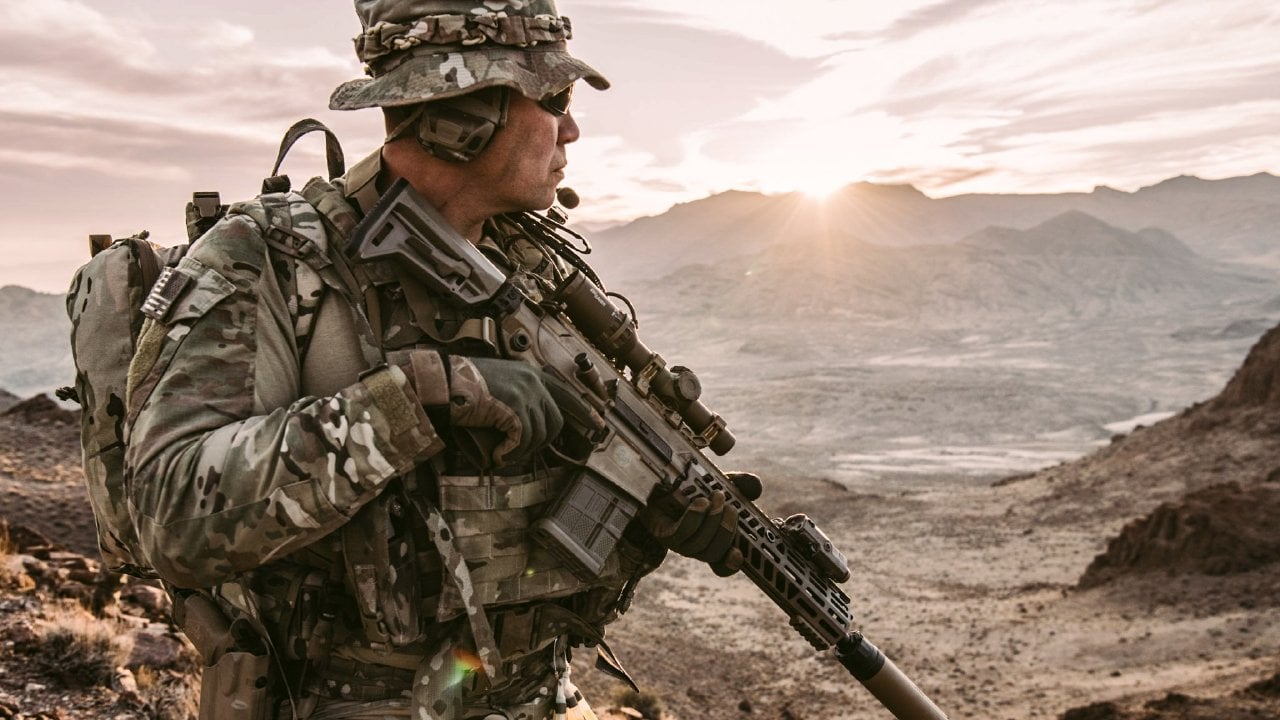
> [FOTO] ^(Verschillende eenheden van het Amerikaanse leger zijn al begonnen met het overschakelen naar een nieuw kaliber van 6,8 mm. Europeanen zitten nog in de studiefase en zouden een andere weg kunnen kiezen.
Verschillende eenheden van het Amerikaanse leger zijn al begonnen met het overschakelen naar een nieuw kaliber van 6,8 mm. Europeanen zitten nog in de studiefase en zouden een andere weg kunnen kiezen. ©doc)
> Drie jaar geleden creëerden de Amerikanen een nieuw kaliber voor lichte wapens. Europa is zojuist een eigen reflectie gestart, onder leiding van FN Herstal.
> Gaan Europeanen en Amerikanen, wiens relatie sinds de terugkeer van Donald Trump serieus slecht is, ook verschillende wegen inslaan voor munitie van het meest voorkomende wapen, het aanvalsgeweer van de infanterist? Het begin van verschillende visies is in ieder geval waarneembaar. Ze dateren zelfs van lang voor de machtsoverdracht in Washington.
> In 2022 verbaasde het Amerikaanse leger zijn NAVO-bondgenoten door te kiezen voor zijn soldaten, als onderdeel van het “Next Generation Squad Weapon” (NGSW) -programma, twee wapens te behouden met een nieuwe munitie van een nieuw kaliber: de 6,8 mm. Het doel was om geleidelijk de huidige M4-aanvalsgeweren en de M249-machines – een Amerikaanse versie van de FN Herstal Minimi – te vervangen, twee wapens met het kaliber van 5,56 mm, de standaard voor lichte wapens binnen de Atlantische alliantie.
> Om deze solo-ruiter te rechtvaardigen, voerde het Amerikaanse leger aan dat de nieuwe munitie een hoger penetratievermogen bood, evenals een betere nauwkeurigheid op lange afstanden. Volgens generaal Mark Milley, stafchef van het Amerikaanse leger in 2017, blijkt uit feedback, met name in Afghanistan, dat de 5,56-mm-projectielen steeds minder effectief zijn tegen strijders die vaak zijn uitgerust met kogelvrije vesten die “voor 250 dollar” worden verkocht.
^(lees verder in volgende comment)