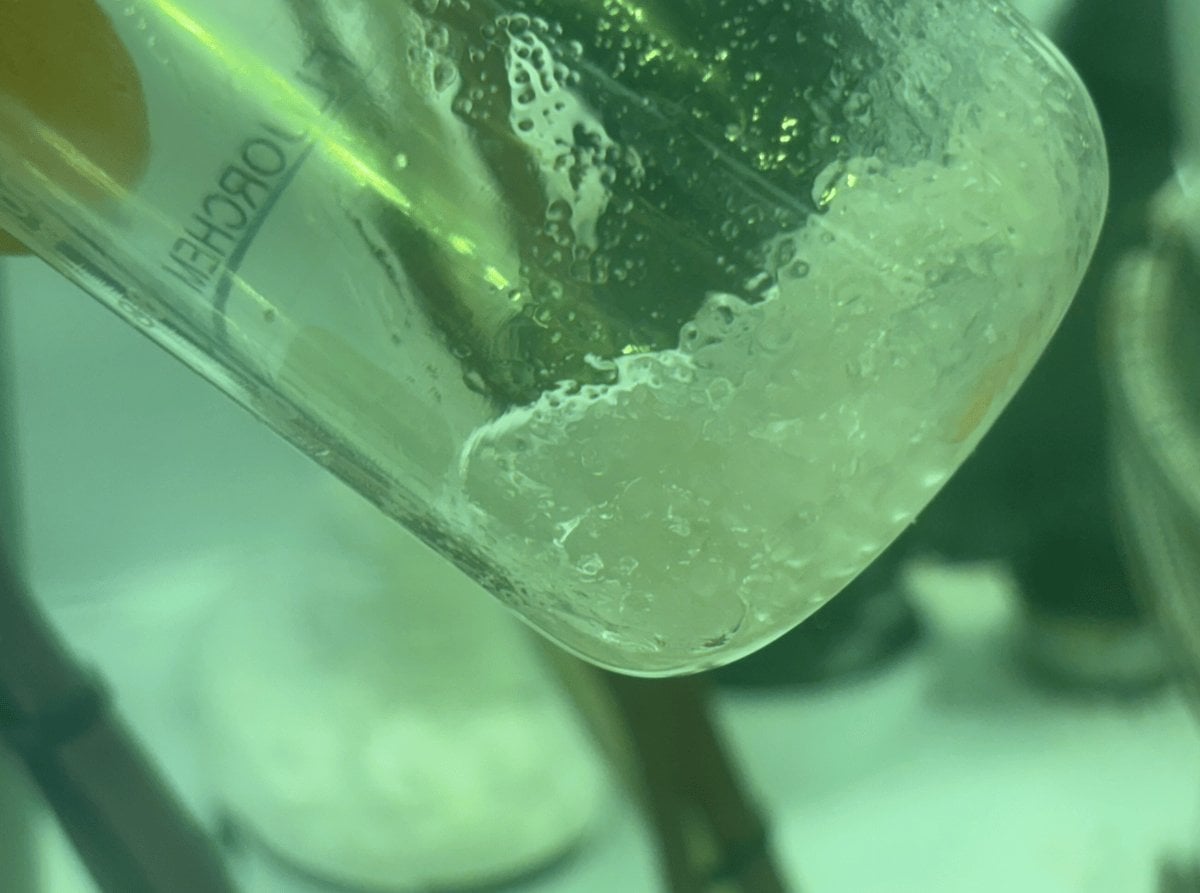
“Forever Chemicals” sono ovunque: quindi perché l’UE non li vieta tutti?
https://euobserver.com/green-economy/araaf3ce41
di thealejandrotauber

“Forever Chemicals” sono ovunque: quindi perché l’UE non li vieta tutti?
https://euobserver.com/green-economy/araaf3ce41
di thealejandrotauber
21 commenti
The thing is that PTFE and many PFAS have very important uses. The fact that they are practically inert makes them very useful for medical applications, semiconductor, nuclear energy, etc.
Honestly, our issue is that we abuse these chemicals in everyday life. Like, paper cup, food wrapping, and other stuffs.
As someone very familiar with this industry: they are busy with it for a long time already, and some harmful ones are already banned. I do absolutely agree that for most uses PFAS isn’t needed and should be banned. But a couple of years ago ECHA (EU agency) opened an consultation phase to find out about the applications where there is no substitution.
This has been a huge shock for them. Killing PFAS from one day to another would murder the EU pharma and high-tech industry (for example) overnight. No ASML chip machines, no working medical equipment from ThermoFischer, no way to enrich uranium, and the list goes on and on.
The automotive sector for example, already started years ago with PFAS replacement. It is extremely difficult to substitute those in a lot of applications. They will manage it, but it will take time, and probably some application will remain where there is no other good solution for PFAS. And otherwise we will have to accept some components will brake down at 5 years of use, instead of 20 years.
Furthermore, there is just no direct substitute for PFAS at all. And if it existed, it would have exactly the same issues. Being so inert it won’t break down in nature.
Again, spraying down your bicycle chain with PTFE/Teflon? Not needed. Coat everything in PFAS for stain resistance? Not needed. Even in complex machinery it is not needed as much and it is a very good thing to phase out as much as possible. But ”just banning” it would be a very, very bad idea.
Money 💸
… we shouldn’t just blanket ban whole categories of chemicals without an actual assessment of their harm and uses. (this is more an annoyance with the title than the article or the actual proposal)
Veritasium did a good video on the subject :
[https://www.youtube.com/watch?v=SC2eSujzrUY](https://www.youtube.com/watch?v=SC2eSujzrUY)
Because they are being used in many things that aren’t obvious as non stick pans are, like medical tools or water desalination plants (reverse osmosis membranes if I recall correctly)
The economy, fools!
Isn’t there talks of banning usage of forever chemicals in eu? Except for semiconductors.
https://www.reuters.com/business/environment/eu-plans-ban-forever-chemicals-consumer-products-2025-01-20/
For those who require a more visual approach to this topic: [Veritasium made a great video about this stuff](https://www.youtube.com/watch?v=SC2eSujzrUY)
Because in the world of policies sometimes the real or perceived health benefits aren’t worth the economic drawdown
One word : Lobbies
The EU has too many problems at the same time right now “thanks” to the combined US-Russian effort to destroy it. Everything else must wait until both aggressors are defeated: Russia – on the battlefield, US – by achieving digital independence from them.
How much of this pollution is down to companies dumping PFAS into nearby rivers for decades?
Because they’re everywhere.
They are with us forever…
Because of demand.
CItizens often forget that the things they desire are made with often toxic things.
In practise it works a bit like this.
A company wants to offer a product that is in demand or will be in demand.
Then the company often notices limiting rules (environmental i.e.)
Then the lobbying starts.
The goal is to supply the demand, so they will just change the rule and make it more lenient.
Even though the rule was there for good reason.
If we actually put nature and climate on 1, a lot of things are no longer possible or available, or in much less numbers.
If such a thing happens, people will complain.
It’s quite ironic is most cases, people want something, then it hurts them eventually, then they complain. Then people can come up with rules and regulations that stop that, but then the supply is in danger again and people will complain again.
People in general, i feel, need to be more aware that we affect each other worldwide with our collective behavior.
But this will not happen, the trend is clear.
Ban everything!!!!!!!
**Veritasium** has a nice video about PFAS.
[How One Company Secretly Poisoned The Planet](https://youtu.be/SC2eSujzrUY?si=4wyuQyZnnobXOFH2)
If they’re effective at what they do they’ll get round to it.
Just ban everything and then wonder the next day that nothing works anymore
Cause goverment is not govern the people but the industries. We getto vote once every 4 years but the industry has 24/7 access through lobbies.