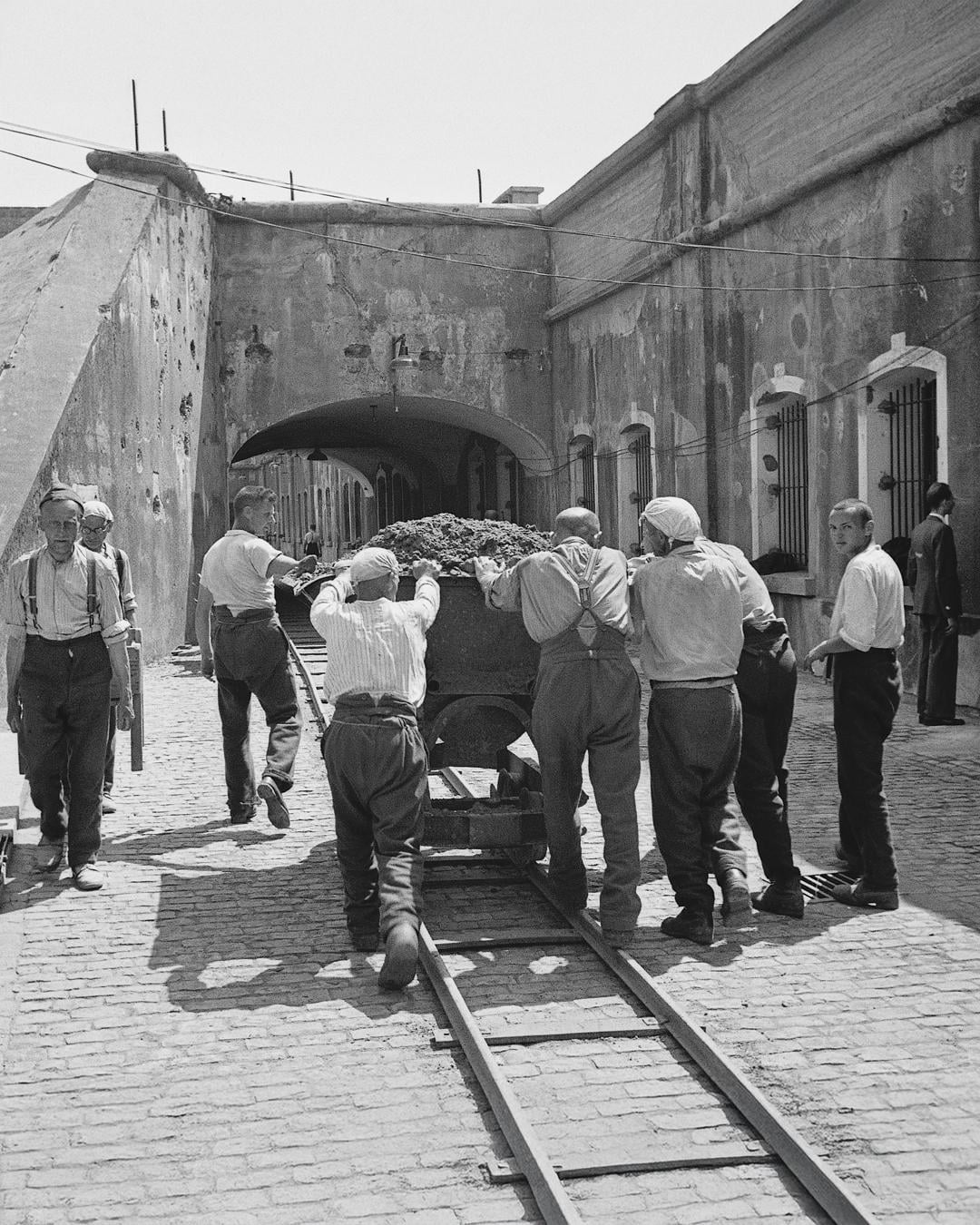
Giobbe quotidiano a Fort Breendonk: lavoro forzato (informazioni nei commenti).
https://i.redd.it/osk3oagalb5f1.jpeg
di WarHeritageInstitute

Giobbe quotidiano a Fort Breendonk: lavoro forzato (informazioni nei commenti).
https://i.redd.it/osk3oagalb5f1.jpeg
di WarHeritageInstitute
1 commento
The prisoners at Fort Breendonk were put to work: forced and brutal, pointless, inhumane and harsh.
They were made to excavate the top layer of the Fort. As the Fort was once part of the so called defence of Antwerp built at the beginning of the 20th century, it was covered in a thick layer of soil. This layer was – over the years – dug up by the prisoners. The soil was to be transported in carts as shown in this picture.
Hard work, accompanied by beatings and whipping by the guards. A cart was easily derailed or overturned: just another excuse to inflict punishment and to use violence.
The photo shown here was made in 1941 by Otto Kropf, a German photographer in service of the so called Propaganda Staffel. Kropf made more pictures at Breendonk, each of those ment to show the outside world that life at Auffanglager Breendonk wasn’t to bad – for a prison.