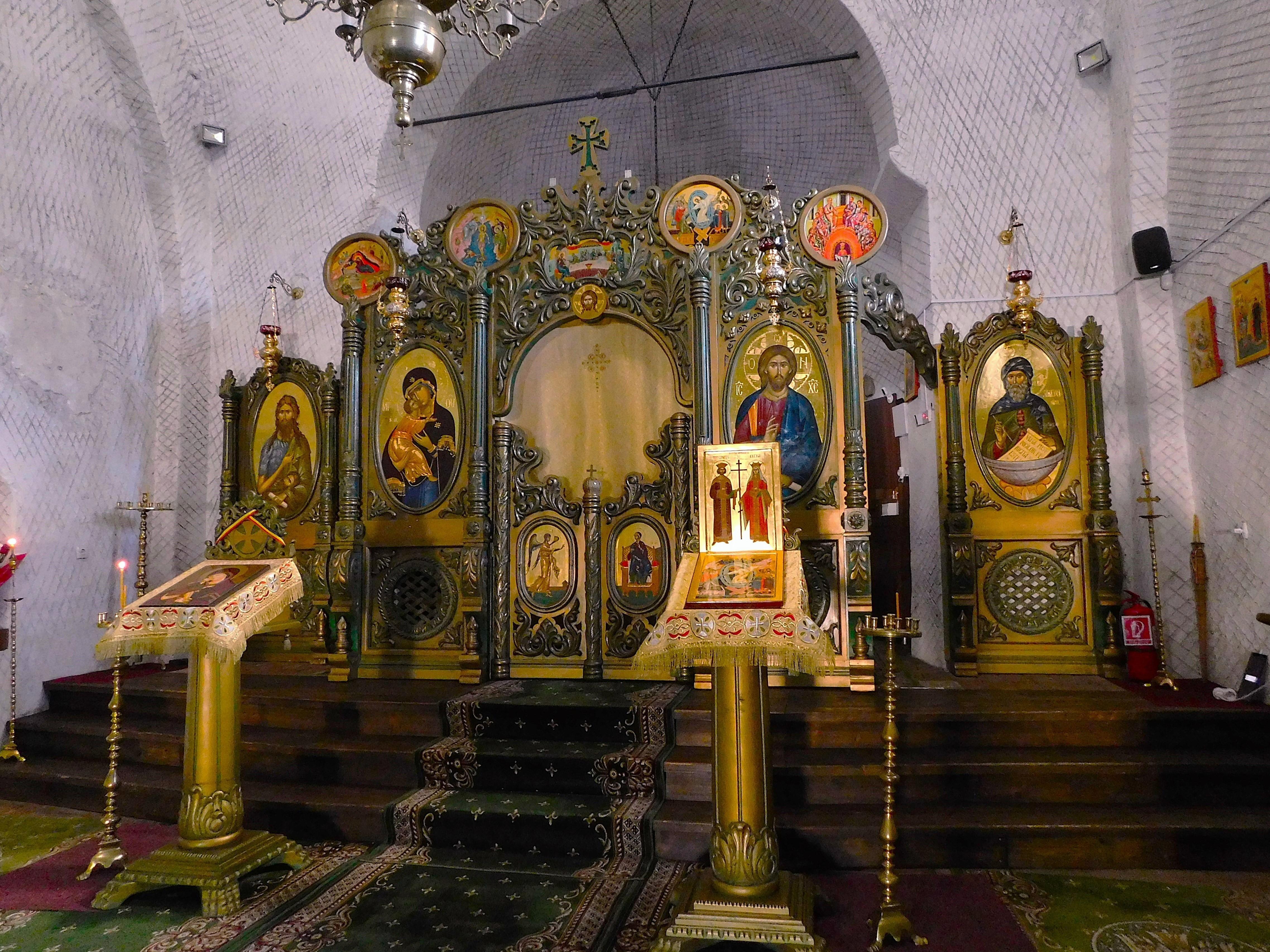
Chiesa armeno di San Simeone a Suceava, Romania – costruita nel 17 ° secolo dalla popolazione commerciale armeno della città
https://www.reddit.com/gallery/1lb4so2
di Future_Start_2408

Chiesa armeno di San Simeone a Suceava, Romania – costruita nel 17 ° secolo dalla popolazione commerciale armeno della città
https://www.reddit.com/gallery/1lb4so2
di Future_Start_2408
1 commento
The Church of St. Simeon in Suceava, also known as the Red Tower Church due to its reddish bell tower, is an Armenian Orthodox place of worship located in the Zamca district of Suceava, Romania. The church was originally built in 1513 by an Armenian named Donig. However, the current structure dates from the early 17th century (1600–1606), constructed by another Armenian named Șima (Simeon) during the reign of Moldavian Prince Ieremia Movilă.
Architecturally, the church displays a rectangular structure with a polygonal altar apse and traditional Moldavian architectural elements, including ogee windows and decorative stonework.
The church is one of the multiple Armenian churches in Suceava, the medieval capital of the Principality of Moldova.
>The Armenian community settled in Suceava in the early 14th century, engaging in trade and crafts and establishing homes along what is now Armenian Street. They developed a strong religious presence, building churches and monasteries aligned with Armenian traditions. In 1401, the first Armenian Diocese in Moldova was established in Suceava, granting the community ecclesiastical autonomy from the bishop of Lviv. Armenians enjoyed religious freedom, as noted by Dimitrie Cantemir in the 18th century, and maintained richly adorned churches. Traveler Simeon Lehatsi, in 1608, described several Armenian churches and monasteries in Suceava, highlighting their beauty and significance. [Source](https://ro.wikipedia.org/wiki/Biserica_Sf%C3%A2ntul_Simion_din_Suceava)