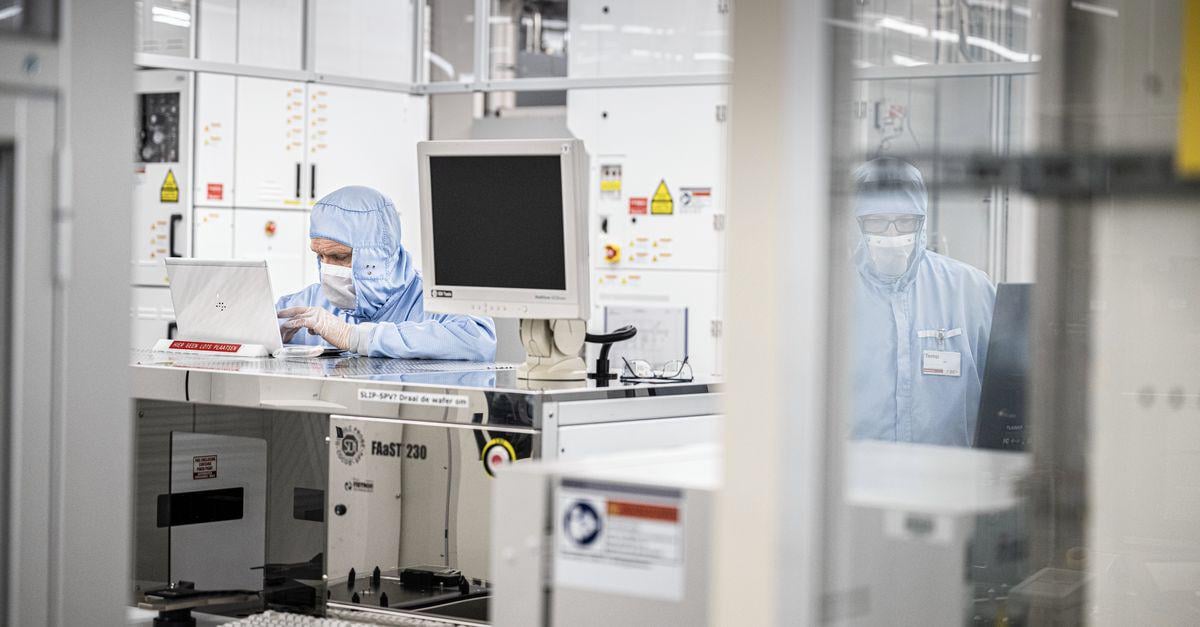
“Sequestro d’emergenza di Nexperia da parte del governo olandese dopo il furto di segreti commerciali britannici” – NRC
https://www.nrc.nl/nieuws/2025/10/27/noodgreep-bij-nexperia-na-diefstal-britse-bedrijfsgeheimen-a4910926
di StockLifter

“Sequestro d’emergenza di Nexperia da parte del governo olandese dopo il furto di segreti commerciali britannici” – NRC
https://www.nrc.nl/nieuws/2025/10/27/noodgreep-bij-nexperia-na-diefstal-britse-bedrijfsgeheimen-a4910926
di StockLifter
22 commenti
Archived Dutch because of paywall:
‘Noodgreep bij Nexperia na diefstal Britse bedrijfsgeheimen’
Chipproducent De harde ingreep van de minister bij chipfabrikant Nexperia was de enige optie om te voorkomen dat de Europese tak van het bedrijf zou worden ontmanteld, stellen ingewijden.
Het ministerie van Economische Zaken (EZ) greep in bij chipfabrikant Nexperia omdat de Chinese eigenaar Wing, in de ogen van de Nederlandse ambtenaren, bedrijfsgeheimen stal uit een Britse fabriek en op het punt stond de Europese tak van het bedrijf te ontmantelen. Dat bevestigen meerdere ingewijden aan NRC.
Minister van Economische Zaken Victor Karremans (VVD), bevroor op 30 september de bedrijfsvoering van Nexperia, via de obscure Wet Beschikbaarheid Goederen uit 1952. Sindsdien kan het Chinese moederbedrijf Wingtech, van ondernemer Zhang Xuezheng (Wing), geen bedrijfsonderdelen of machines meer verplaatsen. De omstreden ingreep leidde tot een exportverbod van China en mogelijke productieproblemen bij autofabrikanten, omdat hun toeleveranciers geen Nexperia-chips meer krijgen. Wing beschuldigt Nederland ervan dat het in opdracht van de VS handelde om China te dwarsbomen. Het ministerie houdt vol: de VS staan erbuiten; Europa dreigde chipfabrieken en kennis te verliezen.
Zelfverrijking
Nexperia, dat een hoofdkantoor in Nijmegen heeft, maakt goedkope chips die in allerlei elektronica zit. De wafers, ronde schijven waarop deze chips gemaakt worden, worden geproduceerd in Manchester en Hamburg. Het merendeel van die chips wordt verwerkt door een ‘back-end’ fabriek in het Chinese Dongguan.
Wing wilde de productie van wafers volledig naar China halen, en onderbrengen bij een andere onderneming van hem, WingSkySemi. Daarvoor eigende hij zich de recepten toe voor de productie van chips uit de Nexperia-fabriek in het Britse Manchester, die ‘mosfets’ – simpele schakelaars – maakt. Al is dit gangbare techniek, het gaat wel om bedrijfsgeheimen die ongeoorloofd met de Chinese concurrent – Wings eigen bedrijf – werden gedeeld. De conclusie van Nederlandse ambtenaren: de ceo verrijkte zichzelf door Nexperia overdreven grote bestellingen bij zijn eigen chipfabriek te laten doen en sluisde kennis weg. Om de productie voor Europa te behouden greep Karremans in.
Uit gesprekken die NRC voerde blijkt dat EZ de omstreden beslissing onder grote tijdsdruk nam, omdat Wing 40 procent van het Europese personeel dreigde te ontslaan en Nexperia’s onderzoekscentrum in München wilde sluiten. De plannen hiervoor waren al met de ondernemingsraad gedeeld.
Geopolitiek
Wing had tot afgelopen zomer meegewerkt om Nexperia een meer Europees bestuur te geven, om bij klanten en overheden zorgen over de Chinese invloed op de chipfabrikant weg te nemen. Maar in juli stelde Wing Chinese stromannen aan om Nexperia leeg te trekken. De aanleiding voor Wings handelen was de geopolitieke druk; zijn onderneming Wingtech Technologies was door de Amerikanen al op de zwarte lijst geplaatst; de VS gingen die restrictie ook toepassen op dochterondernemingen – dus ook op Nexperia.
Voor de buitenwereld lijkt het erop dat de Nederlandse staat het besluit nam onder druk van de Amerikanen. Maar minister Karremans noemde het eerder „puur toeval” dat aangescherpte Amerikaanse handelsbeperkingen bekend werden op dezelfde dag dat de minister het bevel gaf.
De Chinese ambassadeur werd meteen gewaarschuwd zodra Karremans het besluit nam. China reageerde met een exportverbod voor de fabriek in Dongguan, en sindsdien overlegt Economische Zaken vrijwel dagelijks met China over een mogelijke oplossing. De fabriek in Dongguan is nu niet meer onder controle van het Nederlandse hoofdkantoor, maar draait op halve kracht omdat het aantal wafers uit Europa afneemt. Aan Chinese klanten wordt vooralsnog wel geleverd.
Ondernemingskamer
Eén dag na het bevel van de minister greep de rechter ook in bij Nexperia. De Ondernemingskamer, een speciale afdeling van het gerechtshof die gespecialiseerd is in conflicten binnen bedrijven, schorste de omstreden directeur-eigenaar en plaatste de aandelen van Nexperia onder onafhankelijk bestuur.
Het ministerie was er wel van op de hoogte dat ontevreden bestuurders van Nexperia een gang naar de rechter overwogen, maar vond het te riskant om te wachten op een eventuele zaak. Onzeker was of Nexperia zelf naar de Ondernemingskamer zou stappen, of bestuurders tussentijds zouden worden ontslagen en het was de vraag hoelang een oordeel van het hof op zich zou laten wachten en wat daarvan de inhoud zou zijn.
Die ingrepen lijken nu dubbelop, maar nu nog vindt Economische Zaken het te riskant om het uitzonderlijke bevel in te trekken. Nexperia-bestuurders kunnen namelijk ieder moment besluiten om hun zaak in te trekken of de rechter kan tussentijds met een andere beschikking komen. De Ondernemingskamer heeft alleen een voorlopig besluit genomen.
Ambtenaren ‘ontdekten’ zelf de nog nooit gebruikte wet uit 1952. Dat was in hun ogen de enige mogelijkheid om ontmanteling van Nexperia te voorkomen. Recentere wetgeving die de minister de mogelijkheid geeft geopolitieke gevoelige overnames tegen te houden kon niet worden gebruikt want Nexperia was al vóór die regelgeving in buitenlandse handen gekomen.
AI generated English translation:
**Emergency Intervention at Nexperia After Theft of British Trade Secrets**
The Dutch minister’s drastic intervention at chip manufacturer Nexperia was the only option to prevent the dismantling of the company’s European operations, according to insiders.
The Ministry of Economic Affairs (EZ) intervened at Nexperia because the Chinese owner, Wingtech—led by entrepreneur Zhang Xuezheng (Wing)—was accused by Dutch officials of stealing trade secrets from a British factory and was on the verge of dismantling Nexperia’s European branch. Multiple insiders confirmed this to NRC. On September 30, Minister of Economic Affairs Victor Karremans (VVD) froze Nexperia’s operations using the obscure 1952 Goods Availability Act. Since then, the Chinese parent company, Wingtech, has been unable to relocate any business units or machinery. The controversial intervention led to a Chinese export ban and potential production issues for automakers, as their suppliers can no longer obtain Nexperia chips. Wing accuses the Netherlands of acting on behalf of the U.S. to obstruct China. The ministry insists: the U.S. was not involved; Europe risked losing chip factories and expertise.
**Self-Enrichment**
Nexperia, headquartered in Nijmegen, produces affordable chips used in various electronics. The wafers—round discs on which these chips are made—are manufactured in Manchester and Hamburg. Most of these chips are processed by a “back-end” factory in Dongguan, China. Wing intended to move all wafer production to China, under another of his companies, WingSkySemi. To do so, he allegedly appropriated the production recipes for chips from Nexperia’s factory in Manchester, which produces “mosfets” (simple switches). While this is standard technology, it involves trade secrets that were improperly shared with Wing’s own competing company. Dutch officials concluded that the CEO enriched himself by having Nexperia place exaggerated orders at his own chip factory and siphoned off knowledge. To preserve production for Europe, Karremans intervened.
**Geopolitics**
Until last summer, Wing had cooperated to give Nexperia a more European management structure, aiming to ease concerns among customers and governments about Chinese influence over the chipmaker. But in July, Wing appointed Chinese figureheads to strip Nexperia of its assets. The trigger for Wing’s actions was geopolitical pressure: his company, Wingtech Technologies, had already been blacklisted by the Americans, and the U.S. was preparing to extend those restrictions to subsidiaries—including Nexperia.
To the outside world, it appears the Dutch state acted under U.S. pressure. However, Minister Karremans previously called it “pure coincidence” that tightened U.S. trade restrictions were announced on the same day he issued his order.
The Chinese ambassador was immediately warned once Karremans made his decision. China responded with an export ban on the Dongguan factory, and since then, the Ministry of Economic Affairs has been in almost daily negotiations with China to find a solution. The Dongguan factory is no longer under the control of Nexperia’s Dutch headquarters but is operating at half capacity due to the decline in wafers from Europe. Deliveries to Chinese customers continue for now.
**Enterprise Chamber**
One day after the minister’s order, a court also intervened at Nexperia. The Enterprise Chamber, a specialized division of the court handling corporate conflicts, suspended the controversial owner-director and placed Nexperia’s shares under independent management.
The ministry was aware that disgruntled Nexperia executives were considering legal action but deemed it too risky to wait for a potential case. It was uncertain whether Nexperia itself would approach the Enterprise Chamber, or if executives would be dismissed in the meantime, and it was unclear how long a court ruling would take or what it would entail.
These interventions now seem redundant, but the Ministry of Economic Affairs still considers it too risky to revoke the exceptional order. Nexperia executives could withdraw their case at any moment, or the court could issue a different interim ruling. The Enterprise Chamber has only made a preliminary decision.
Officials “discovered” the never-before-used 1952 law themselves, viewing it as the only way to prevent Nexperia’s dismantling. More recent legislation allowing the minister to block geopolitically sensitive takeovers could not be applied, as Nexperia had already fallen into foreign hands before those rules were introduced.
Calling theft is absurd, when Chinese bought the company they bought the IP too. This is a moronic move of theft done by panicking Dutch which will kill off Nexperia completely and hurt European car industry.
They should’ve thought about this when they sold it in the first place, now it’s too late.
Something has been done, yes, but it should not have been allowed to be sold in the first place then.
maybe this is a sign that Europe doesn’t have to sell everything to foreigners. all the politicians who were involved in the sale should have their finances reviewed and if something is found, they should be sentenced to considerable prison terms as an example to others
It looks like the EU will have to ban Chinese people from owning more than 50% of any company in Europe, as otherwise, the Chinese will get the right to all the intellectual property.
If we continue this logic, it means that no one but Europeans can own European companies
I mean, is it surprising? Chip technology have been a target for a long time, and China (heck, not just China either) has never shy away from dubious practices. This move by Dutch govt is certainly heavy handed government action, China just got a taste of their own medicine and predictably they lashed out.
And as we can see… 评论区里网军倾巢出动帮主子洗地.
TIL its illegal to steal from yourself
The plot thickens.
Like “a dog ate my homework”, the story keeps changing and none of them are very convincing. A company cannot ‘steal IP’ from itself, it owns it, it can do what it wants with it.
Even if it were true, it wouldn’t justify an illegal seizure.
This is probably the 5th or 6th different reason ive heard now. Why not just admit bowing to American pressure.
This board is racist so they’ll say China bad but it’s obvious to everyone this was done to please America. It’s illegal and China was right in this case.
Which European companies own critical Industries in China and Russia without a forced partnership?
There was a clear effort to dismantle Nexperia in multiple simultaneous efforts:
* The Chinese owner was illegally transferring trade secrets to a separate competing company that he owned.
* There were plans to shut down manufacturing facilities in Europe and move them fully to China, which would create a Chinese workforce familiar with the intricacies of the work and enable a seamless transition to a new wholly Chinese company in the future.
Executives at the company had been unsettled by the new Chinese ownership‘s decisions long enough that they brought a lawsuit against them – but that would have taken months or years to work its way through the courts, more than enough time for the Chinese to strip the company’s assets.
It’s important to remember that Nexperia makes chips for the low end of the market, a segment that China already dominates. Their efforts to steal trade secrets from ASML’s DUV machines are also linked to the low end of the market in semiconductor fabrication.
This is part of a deliberate Chinese strategy to damage the manufacturing sector of other countries, by seizing such a large swath of the technological pathway that it makes it difficult to justify further development into semiconductor fabrication for any country that isn’t already ahead of China.
It’s not that different from why there are so few large car manufacturers that are from Africa and South America, they basically have to compete against rivals who have decades (or even a century or more) of investment and industrial development. China wants to put the rest of the world into in a similar role as Africa and South America is to Europe and North America, with regards to semiconductors and other sophisticated electronics.
This sums up the weakness of inorganised short sighted commercial practices of western world which they might learn as quickly as possible from China. They’ve bought out their future competitors and now on the course of building up their own GPU, Fabless Semiconductor, CPU, AI cloud infrastructure and pretty much every form. Look at the recent surge in some of their listed entities like cambricon. It’s been traded at 87Bn usd at currency prices. Rest of them are primarily held by state led investment vehicles.
So end free trade when it stops benefitting you?
Apparently some people here have a problem with the idea of private property.
The thief is now coming up with all sorts of excuses for its theft. Disgusting
Really pathetic that we’re down to “intellectual property” arguments to prevent our industries being destroyed by Chinese hyper-scaling.
It won’t work, IP is not real, knowledge will flow one way or another.
Well, then we should cancel and sell to the British with everything they stolen….
I hope we steal every possible secret we can from Chinese electric cars. They’ve been doing this shit for decades.
This is just an excuse and a dumb one at that (since that owning the company also gives control of the IPs), the real reason is that they caved to US pressures… And now the whole EU economy will pay for it, not only Chinese investors are starting to question investments in the EU but also the Dutch have created a chip shortage since that the Nexperia chips are packaged in the PRC and that they have stopped deliveries in retaliation; Bosh has already come out saying that they might have to stop production, other are soon to follow.