Il sole è tramontato su Kiev nel 1343° giorno dell’invasione su vasta scala. Nomi che aspettano: come l’Ucraina identifica i caduti. Parte 1
https://www.reddit.com/gallery/1ok9mxd
di frontliner_ukraine

Il sole è tramontato su Kiev nel 1343° giorno dell’invasione su vasta scala. Nomi che aspettano: come l’Ucraina identifica i caduti. Parte 1
https://www.reddit.com/gallery/1ok9mxd
di frontliner_ukraine
5 commenti
**Names that wait: how Ukraine identifies the fallen**
Ukraine is bringing home her fallen defenders. But with each body comes a difficult undertaking: determining their identities. Identification of the dead has become one of the most challenging tasks of the war, requiring modern equipment, patience, and the psychological resilience to face the consequences of war every day. The bodies often arrive broken and entangled, demanding the utmost precision and care at every step. It is through this difficult work that human dignity is preserved. Frontliner tells how the fallen are given back their names – and how their families are given the chance to say goodbye.
The identification procedure involves several stages: examination and documentation of the body’s condition, cataloguing of personal belongings, collection of biological samples, laboratory analysis, and the search for DNA matches. To the public, these steps are nearly invisible – but to families, they mean everything: confirmation of the fate of their loved ones and the chance to bury them with dignity.
Forensic experts, criminologists, and attendants work under difficult conditions. Many of the returned bodies are in advanced stages of decomposition – mummified, charred, or decomposed. A few years ago, Ukraine’s system was not ready for the scale of such work, but today it has developed its own solutions: from mobile field morgues and streamlined DNA queues to the pioneering of a unique necrodactyloscopy method.
This experience is crucial not only for families who seek news of their loved ones but also for the world, offering lessons on setting new international standards and adapting DVI (Disaster Victim Identification) systems to the realities of war.
**The first step of identification**
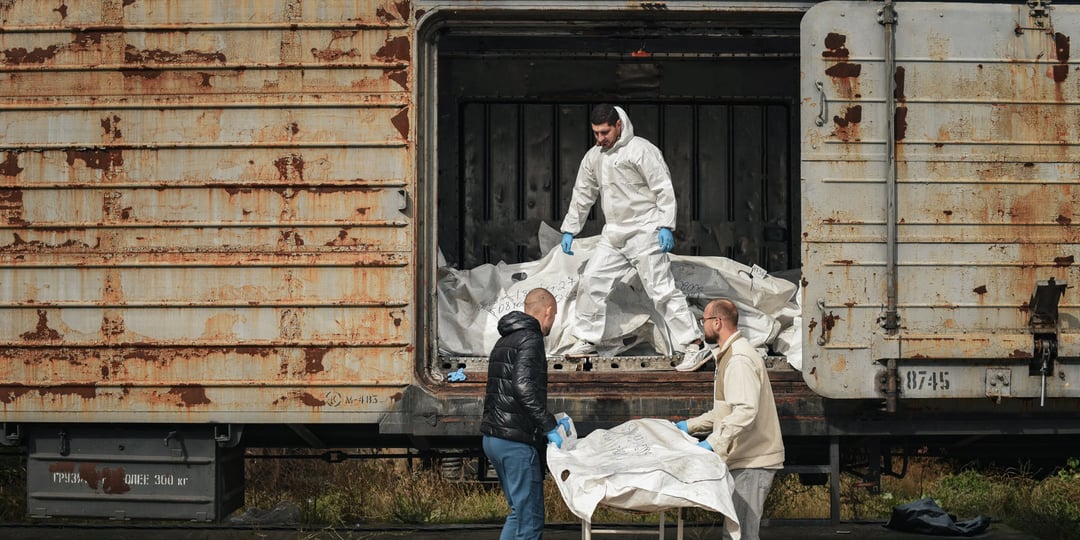
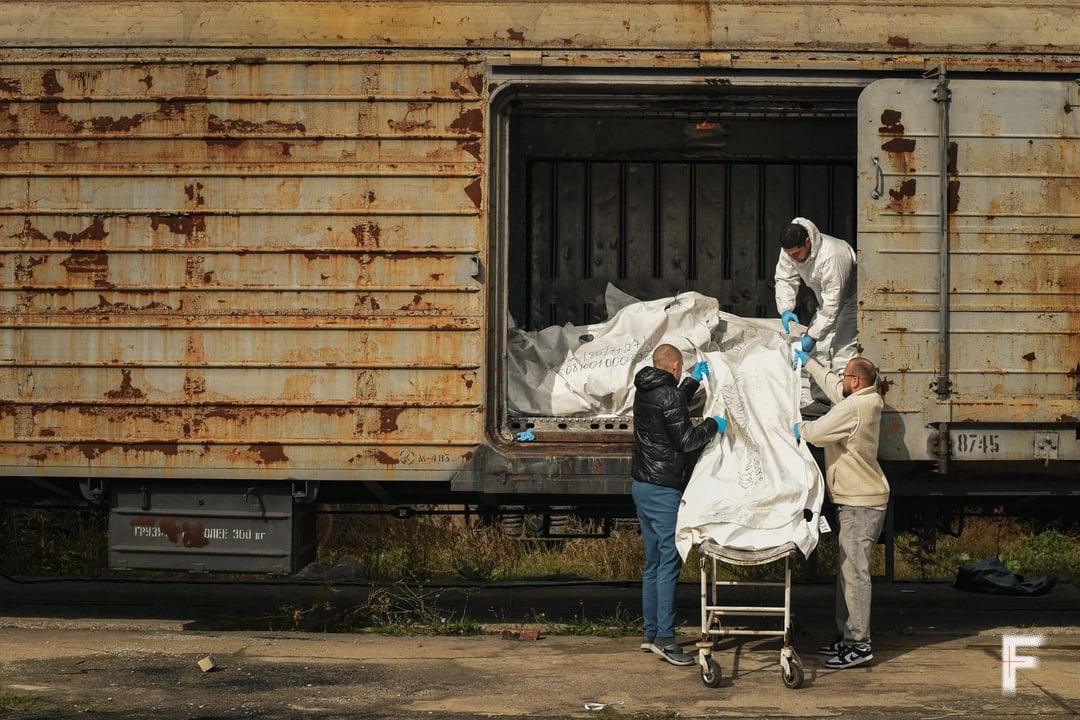
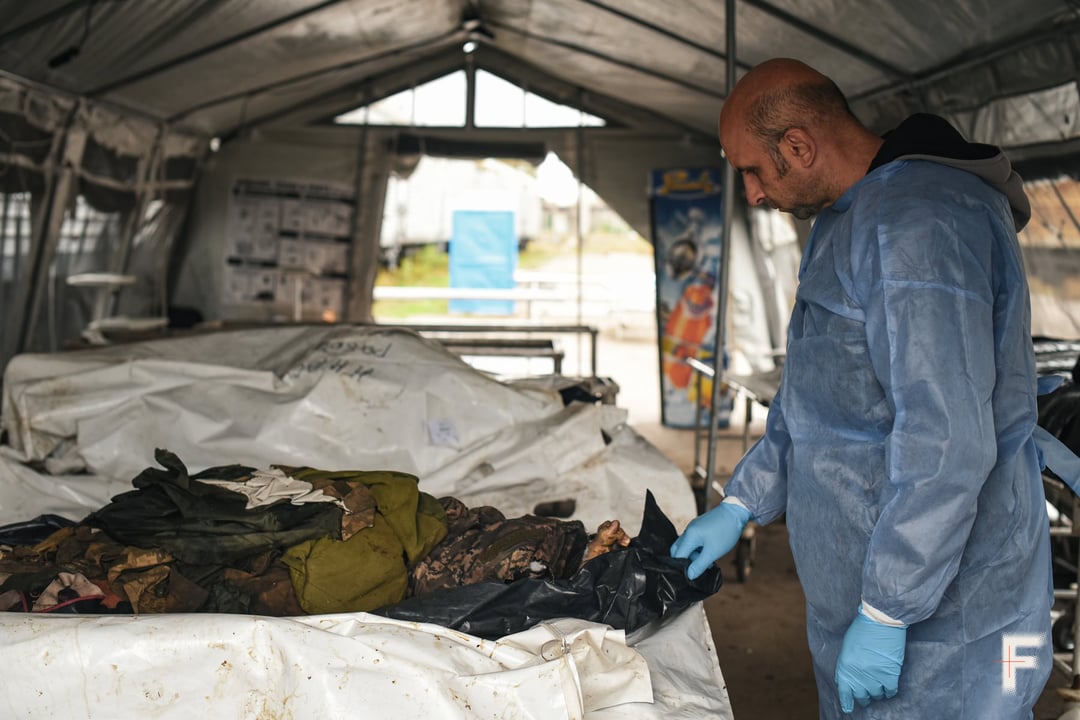
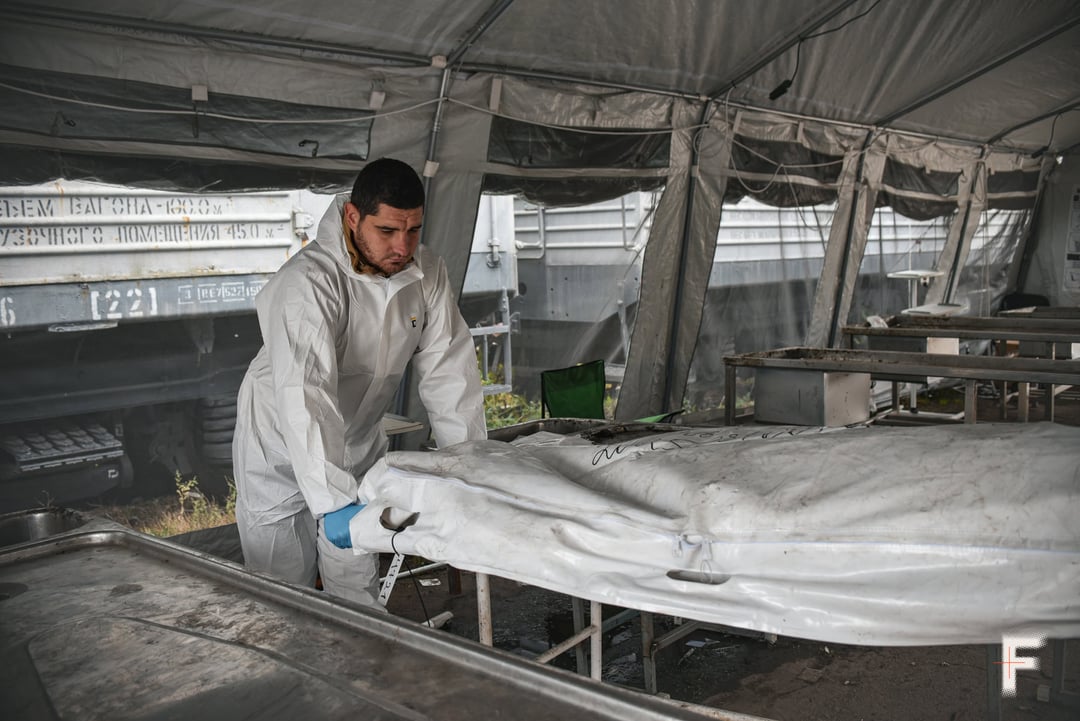
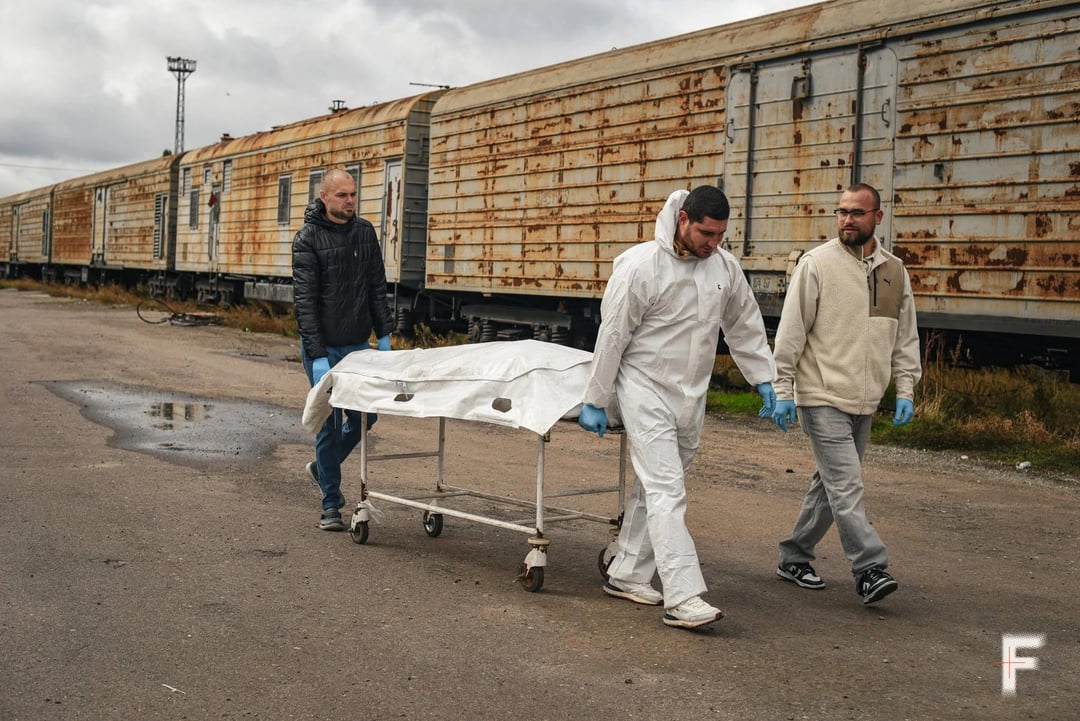
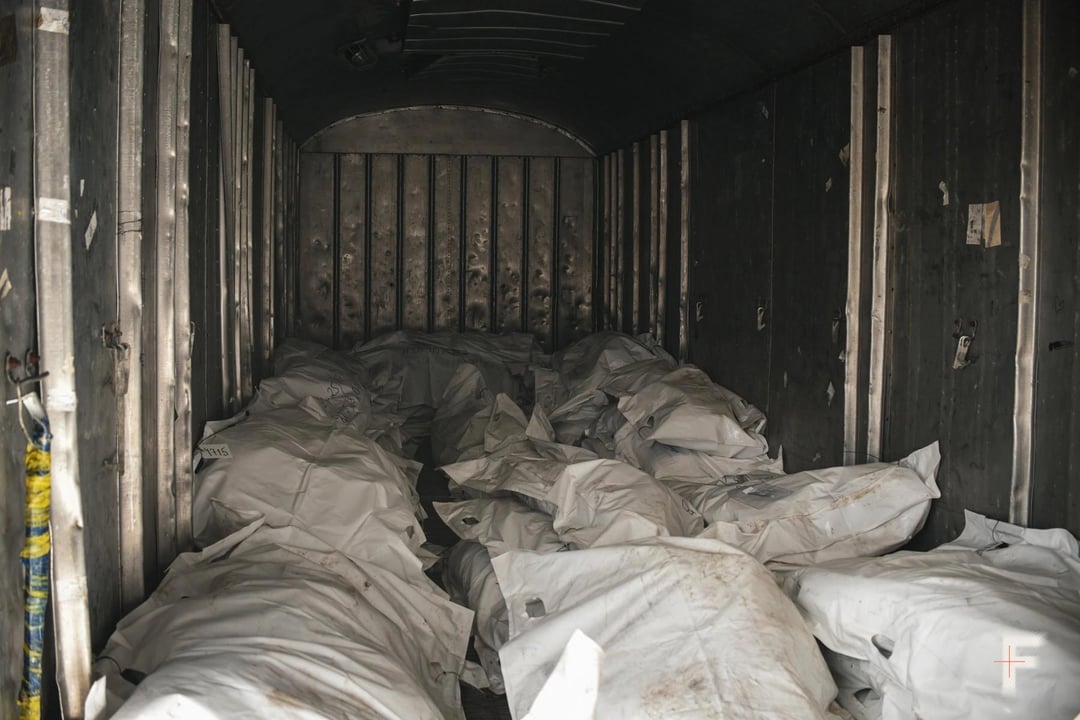
The field morgue, organized this spring to improve logistics, is located right next to the refrigerated train cars where bodies are stored. The arrival of each repatriation marks the moment work begins. People in protective suits unload the train cars and carry the white body bags to tables inside a large tent. Anything could be inside each bag.
The body of a fallen soldier is loaded into a refrigerator for storage, field morgue, Odesa, Ukraine, October 11, 2025. Tetiana Kreker / Frontliner
The body of a fallen soldier is loaded into a refrigerator for storage, field morgue, Odesa, Ukraine, October 11, 2025. Tetiana Kreker / Frontliner
>“*We never know what exactly is in the package,”* says Tetiana Papizh, head of the Odesa Regional Bureau of Forensic Medical Examination. “*It might be a body, or it might be fragments, for example four feet belonging to different people.*”
The bodies are distributed on autopsy tables. Each body goes through the same procedure: photographing, noting identifying features, searching for documents or belongings, and, if possible, taking fingerprints. A forensic pathologist determines the cause of death while an investigator records everything in the official report.
Every body receives a unique 17-digit identification number, encoding everything – the date of arrival, the facility that received the body, and sequence number. It becomes their new name until the real one is restored.
>*”We are the first in Ukraine to organize such a process.*” says Tetiana Papizh.
Decomposition, charring, mummification – some bodies had lain for a year and a half, two years, or even longer. In such conditions, visual identification is nearly impossible. Yet investigators meticulously document every detail, from shoelaces to tattoos, even when they are partially destroyed. Sometimes a piece of fabric, a set of keys, a wedding ring, or a military tag becomes the clue that helps narrow the search. If such items are found, they are photographed, described, packed separately, and returned to the bag with the body. Personal belongings of the fallen, if preserved, are important but not decisive. They cannot replace genetic analysis, yet sometimes they bring closer the moment when an anonymous entry in an official report turns into a name.
The workload is immense: in the summer alone, Odesa received 1,600 bodies. In total, since early May 2024, eleven repatriations have taken place – more than 2,800 bodies.
These are the bodies of Ukrainian soldiers returned from Russia through prisoner exchanges. Since the beginning of the full-scale war, the largest repatriation brought in 6,000 bodies, with Odesa receiving nearly a third.
The bodies are stored in refrigerated train cars, where the temperature remains stable at -10 degrees Celsius. This is a temporary storage site while identification is underway. If a person’s identity cannot be determined within a year, and all laboratory tests are complete, the [body is buried with full honors](https://frontliner.ua/en/national-memorial-cemetery-fallen-defenders-kyiv/) in a specially designated area. It will remain there until a match is found with relatives in the DNA database.
***Author: Tetiana Kreker***
[https://frontliner.ua/en/identify-the-bodies-of-the-fallen/](https://frontliner.ua/en/identify-the-bodies-of-the-fallen/)
Sad but true, We will remember all the crimes
That’s a hard as hell job, but so necessary. May ruzzians rot in hell.
Just you wait Putin, you’ll be burning in hell for all the evil you have done.
Not mentioned in the article is that some bodies are returning booby trapped.