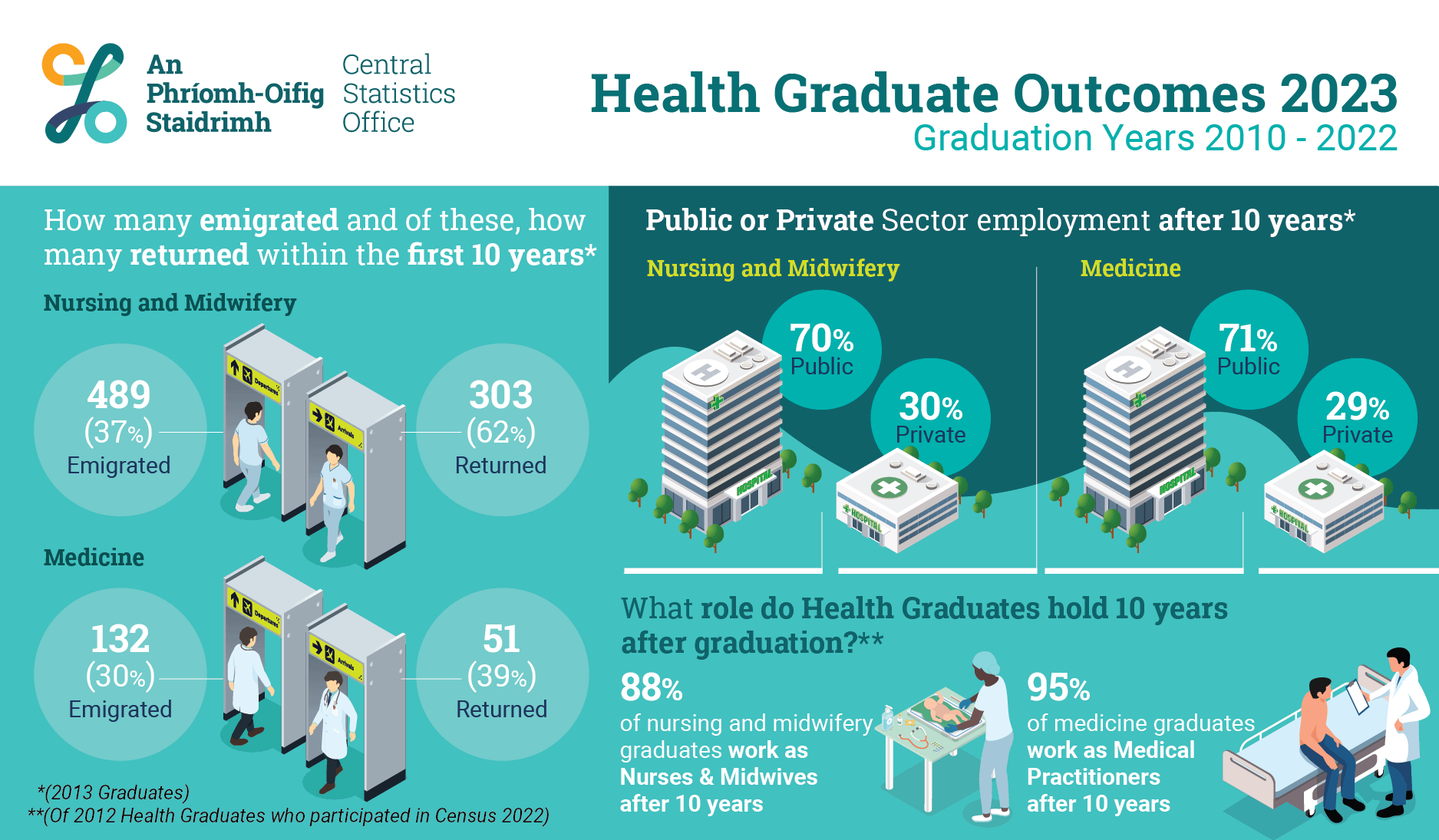
Dieci anni dopo la laurea, l’88% dei laureati in infermieristica e ostetrica irlandesi ha lavorato come infermieri e ostetriche nel sistema sanitario irlandese
https://i.redd.it/wdrlqbwhf71g1.png
di NanorH

Dieci anni dopo la laurea, l’88% dei laureati in infermieristica e ostetrica irlandesi ha lavorato come infermieri e ostetriche nel sistema sanitario irlandese
https://i.redd.it/wdrlqbwhf71g1.png
di NanorH
3 commenti
**Key Findings**
* Ten years after graduation 88% of Irish nursing and midwifery graduates from 2012 who participated in Census 2022 worked in the Irish healthcare system as Nurses & Midwives. Some 95% of Irish medicine graduates from 2012 who participated in Census 2022 worked as Medical Practitioners 10 years after graduation.
* Of all Irish nursing and midwifery graduates who graduated in 2013, 37% were ‘not captured’ in Irish administrative records for at least one year in the 10 years since they graduated, indicating they may have emigrated. Of these, 62% returned within the same period.
* Of all 2013 Irish medicine graduates, 30% were ‘not captured’ for at least one year in the 10 years since they graduated. Of these, 39% returned within the same period.
* Approximately 70% of Irish medicine graduates and Irish nursing and midwifery graduates who graduated in 2013 worked in the public sector as their main employment 10 years after graduation.
* Male Irish nursing and midwifery graduates who graduated in 2013 earned €30 per week more than female graduates one year after graduation. After 10 years this difference increased to €219 per week.
* Male Irish medicine graduates who graduated in 2013 earned €26 per week more than female graduates one year after graduation. After 10 years this difference increased to €790 per week.
https://www.cso.ie/en/releasesandpublications/ep/p-heo/highereducationoutcomeshealthgraduates2023/keyfindings/
Great news.
So what’s the issue with the children’s hospital then? How do we not have enough nurses?