
L’efficacia “chirurgica” degli aerei Mirage 2000 e il paradosso della difesa aerea ucraina (Foto/Video). Perché un tasso di intercettazione del 98% non è sufficiente a scoraggiare la Russia.
https://m.defenseromania.ro/eficienta-chirurgicala-a-avioanelor-mirage-2000-si-paradoxul-apararii-aeriene-ucrainene-de-ce-o-rata-de-interceptare-de-98prc-nu-este-suficienta-pentru-a-descuraja-rusiei_638549.html
di UpgradedSiera6666
6 commenti
By Cristian Soare
In a war of attrition where logistics have become as crucial as ballistic weapons systems, recent testimony from a Ukrainian pilot flying French Mirage 2000-5 aircraft offers a rare glimpse into the integration of Western technologies into Ukraine’s defense infrastructure. The 98% interception rate claimed by this pilot against Russian air threats is impressive from a statistical point of view, but it masks a structural vulnerability that Ukraine is desperately trying to conceal: its inability to project its force over long distances.
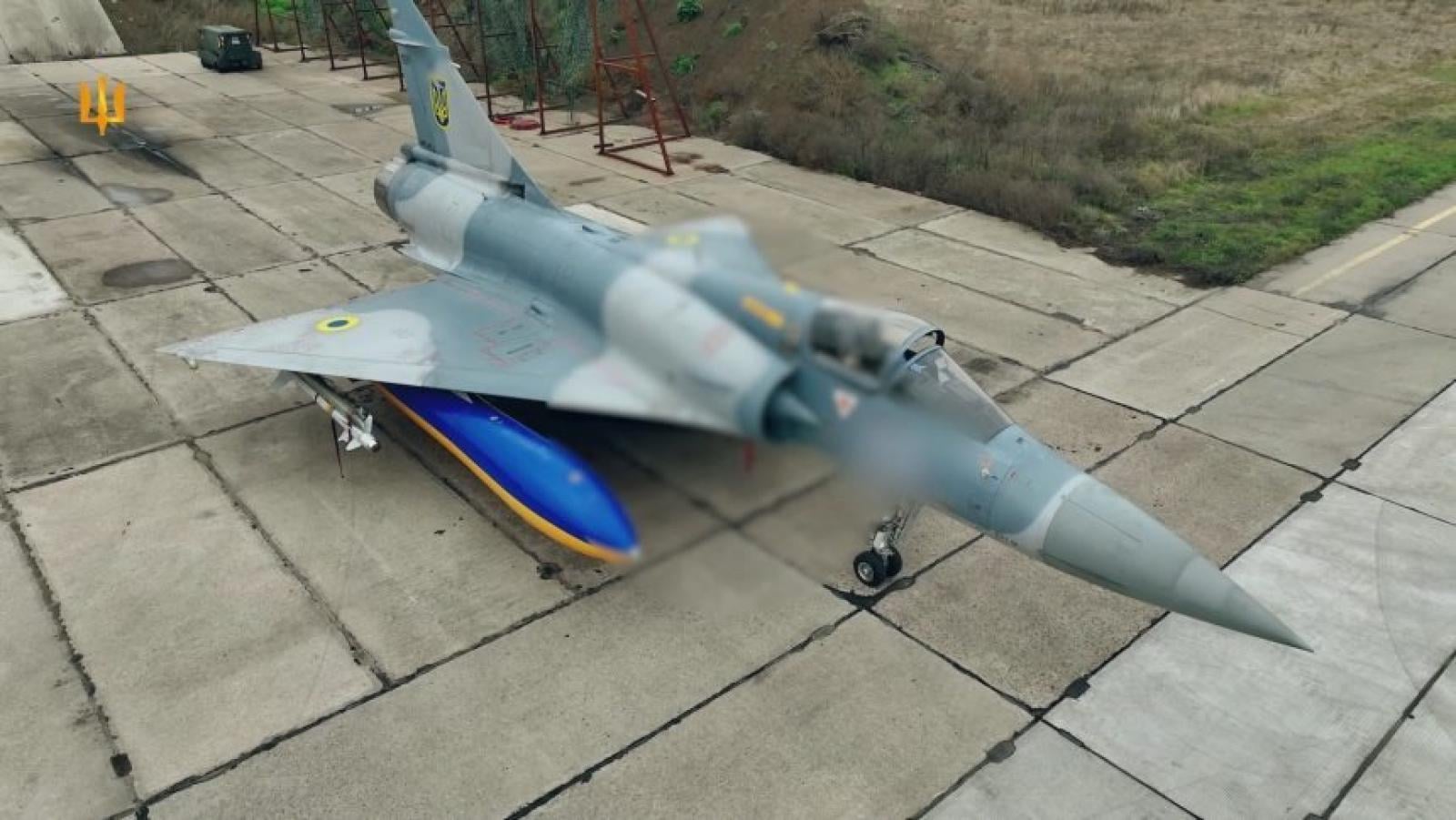
The images released by the Ukrainian Air Force, filmed at an operational airfield whose location remains classified, demonstrate the tactical success achieved by the Magic 2 missiles, but also the difficulties encountered by the Ukrainian Air Force in surviving under Russian siege.
The fact that the aircraft were moved three times in a single week to avoid Russian attacks demonstrates the intensity of the Kremlin’s “hunt” for this Western military equipment.
The Mirage 2000 has become the symbol of Ukraine’s rapid transition from Soviet doctrine to NATO standards, a transition carried out under heavy fire.
The proven effectiveness of French systems against Shahed drones and Kh-101 cruise missiles justifies Paris’s decision to deliver these platforms, even though they are considered by many Western chancelleries to be at the end of their operational life.
The “surgical” effectiveness of Mirage 2000 aircraft
The Ukrainian pilot confirms that the Magic 2 short-range missile has a “near-total destruction probability of 100%,” transforming the Mirage aircraft into an “extremely effective shield” for the defense of critical areas in Ukraine.
The six successful interception marks on the aircraft fuselage and the pilot’s statement that the actual number of interceptions is at least double that indicate that these aircraft are not being grounded, but are being sent to the front lines of the effort to protect Ukrainian cities from Russian missile and drone attacks.
However, this statistical enthusiasm must be tempered by an analysis of technical limitations. The Mirage 2000, in the configuration delivered to Ukraine, remains an eminently defensive solution. The pilot interviewed lucidly pointed out that “this aircraft has no long-range weapons,” a shortcoming that allows the Russian air force to launch attacks beyond the range of Ukrainian defenses.
This, in essence, is the asymmetry that defines the current phase of the air war: Ukraine excels at intercepting Russian “arrows,” but does not yet have the tools necessary to strike the “archer.”
The Ukrainian pilot’s request to find a solution “between efficiency and cost” demonstrates a deep understanding of the economics of war: using expensive interceptor missiles to shoot down cheap drones is not sustainable in the long term and requires a reallocation of resources.
Beyond the technical aspects, the pilot’s statements and the political context suggest that the Mirage 2000 is only an intermediate step, a “bridge” to much more powerful combat aircraft platforms.
The explicit mention of Dassault Rafale aircraft and Meteor missiles, capable of striking at much greater distances, is no coincidence, but is part of the letter of intent recently signed between Kiev and Paris concerning the possible delivery by France of around 100 Rafale aircraft over the next decade.
This shows that military planners in Kiev and their Western partners are not only thinking in terms of the current counteroffensive, but are working on a long-term security architecture designed to deter Russia’s future imperial ambitions.
Until then, the reality on the battlefield remains one of improvisation and extreme mobility. The testimony of a Ukrainian technician describing his operations under bombardment and the evacuation of equipment while enemy drones flew over the base is testament to the resilience, but also the fragility, of the supply chain.
Without a dense air defense network and aircraft capable of enforcing a true no-fly zone, Ukrainian pilots are condemned to a perpetual game of cat and mouse, in which the slightest positioning error can be fatal.
In conclusion, the tactical success of the Mirage aircraft is undeniable and vital for Ukraine’s morale and protection, but it does not fundamentally change the strategic calculus of the war.
As long as the West provides the means to stop Russian missiles but hesitates to provide the capabilities to destroy launch platforms, Moscow will continue to dictate the pace of attacks.
The 98% figure represents a victory for Ukrainian defense, but military history teaches us that wars are won not only by parrying blows, but by exerting unsustainable pressure on the enemy’s combat capability.
Is there some kind of independent 3rd party which can confirm 98% interception rate?
And it intercepts cheap drones with expensive missiles
The original aticle uses “efficiency” (which shooting cheap targets with expensive missiles clearly is not) and the redacted title in the post uses “effectiveness” (a more appropriate word)
the title also uses “interception rate” (the ratio of enemy charges not reaching intended targets) but means “success rate” instead (the ratio of own shots landing on the target)
Among the downed missiles, it appears there were some KH-101s. These missiles have an estimated cost of $13 million. I haven’t been able to find the cost of the Magic 2. Its successor (Mica) costs €600,000.
Interestingly, the KH-101 entered service in 2010, while the Magic 2 entered service in 1986.
You won’t deter Putin, by wearing rose colored glasses, and traveling down the primrose path, as Putin WANTS BADLY for his LEGACY, to have regained ALL the land mass that Russia lost while it was the OLD USSR. And he won’t stop till he DIES. He considers that his manifest destiny.