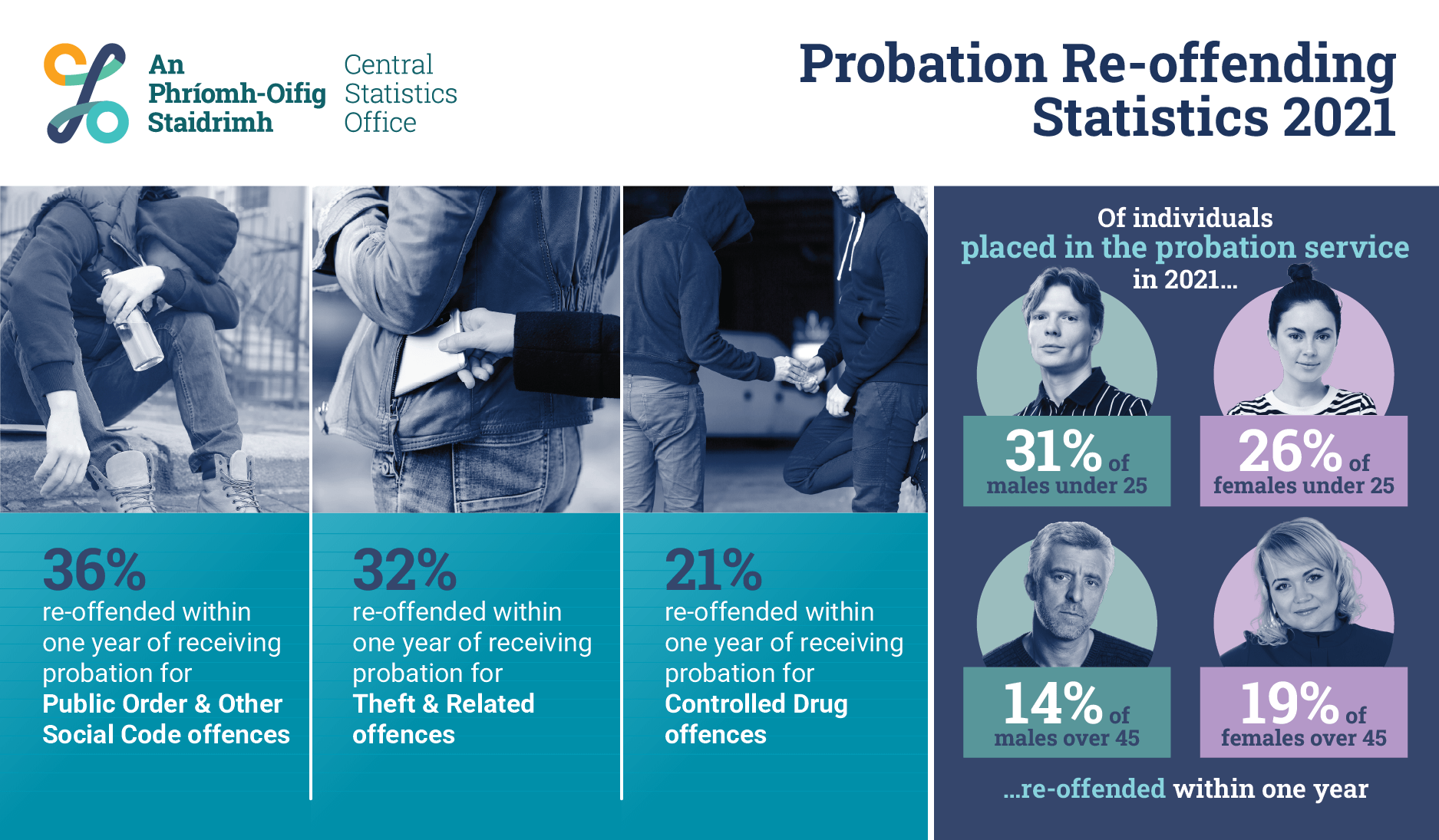
Quasi un quarto dei delinquenti che hanno ricevuto un ordine di libertà vigilata nel 2021 hanno commesso nuovamente delitti entro un anno
https://i.redd.it/x451es5nj8kg1.png
di NanorH

Quasi un quarto dei delinquenti che hanno ricevuto un ordine di libertà vigilata nel 2021 hanno commesso nuovamente delitti entro un anno
https://i.redd.it/x451es5nj8kg1.png
di NanorH
11 commenti
**Key Findings**
* Just under one-quarter (24%) of offenders who received a probation order in 2021 re-offended within a year, a fall of three percentage points when compared with the equivalent rate for 2020 (27%).
* Less than one-third (31%) of adult males aged under 25 years who received probation orders in 2021 re-offended within a year of receiving probation. In comparison, just over one-quarter (26%) of young adult females re-offended during the same period.
* There were increases between 2020 and 2021 in the re-offending rate of people serving probation for offences related to Dangerous and Negligent Acts (+50%), Public Order (+9%), and Burglary related offences (+7%).
* Regionally, the highest level of re-offending (28%) involved probationers from the South-West (Cork and Kerry) region. In the Dublin region, where the highest number of probationers lived (1,387 of 4,198), almost one-quarter (24%) of probationers re-offended within a year.
* The highest number of probation orders were issued in 2021 to people who committed offences related to Controlled Drug offences (831 of 4,198). Just over one-fifth (21%) of these people were convicted of a re-offence within a year of receiving their probation.
* Nearly two-thirds (64%) of the re-offending by people who received a probation order in 2021 took place in just three offence categories: Public Order (30%), Controlled Drug (18%), and Theft (16%).
* Looking at longer term trends, of those who received a probation order in 2019, almost half (49%) had committed at least one offence within three years for which they received a conviction.
https://www.cso.ie/en/releasesandpublications/ep/p-prs/probationre-offendingstatistics2021/keyfindings/
Is that what a judge would describe as a low risk of reoffending?
Am i being too positive in thinking that over three quarters not re-offending is a good thing? Are there international stats to suggest what a good % is?
Is it possible to see the split between Male vs Female, Irish citizen vs non Irish citizen (please not I said Irish citizen, not looking for race argument here), county comparisons?
I thought it would be much higher than a quarter
>Of those who received a probation order in 2019, almost half (49%) had committed at least one offence within three years for which they received a conviction.
If over 50% of people who get a probabtion order go _at least_ three years without committing an offence, that’s pretty positive for a relatively low impact intervention.
Harder punishments needed for re-offenders
Is it just me or does that lady look really good for over 45
So about 75-80% didn’t reoffend, but that shouldn’t be a good headline.
Ireland’s probation re-offending rate is relatively low especially compared to other countries in the world and Europe. Could always be better of course
BUILD A MEGA PRISON NOW
Do you think those are real people who’s photos have been used as the example of people who have re-offended within a year? Pure harsh if they are.
I wonder what drives the flip in male vs. female re-offending rates over the age of 45!?