
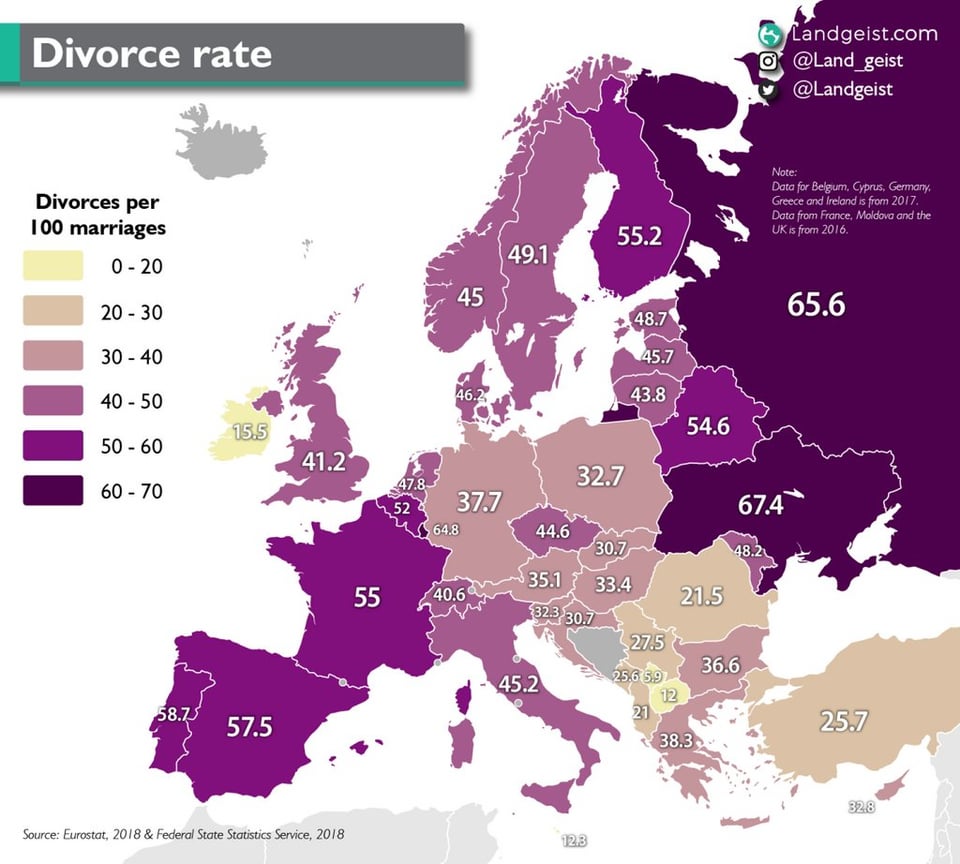
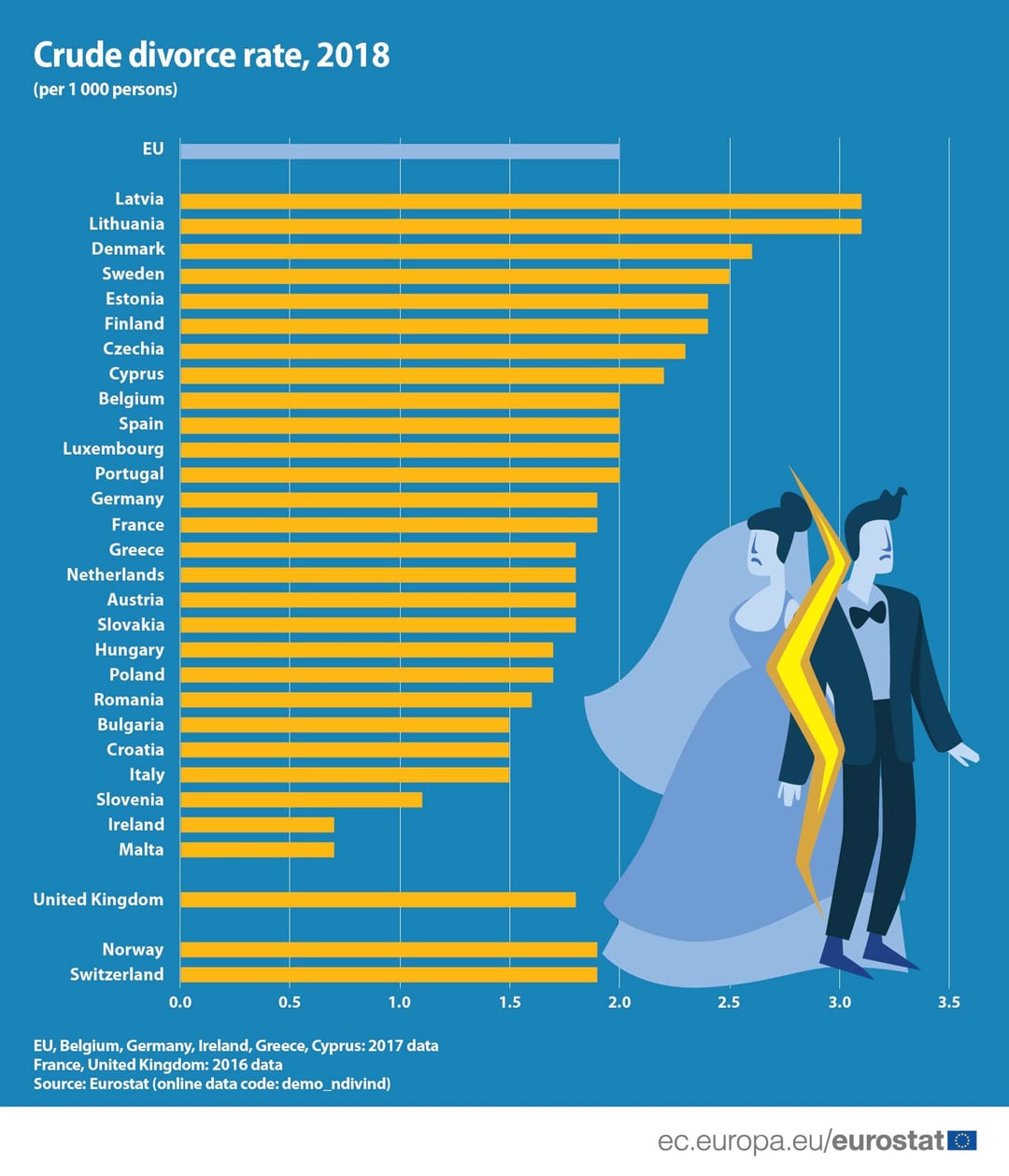
Il set di dati del 2024 proviene da Eurostat.
La Norvegia è ancora in fondo tra i paesi comparabili per divorzio.
Per la mappa è stato utilizzato il 2018 perché non vengono campionati tutti i paesi ogni anno, ma la Norvegia è anche l’ultimo paese in Scandinavia (e in Europa) a divorziare negli anni tra il 2018 e il 2024.
https://ec.europa.eu/eurostat/databrowser/view/tps00216/default/table?lang=en
Altre statistiche di Eurostat quest’anno:
In 6 paesi dell’UE (Bulgaria, Francia, Portogallo, Svezia, Slovenia ed Estonia), le nascite al di fuori del matrimonio hanno superato quelle all’interno del matrimonio nel 2024.
Anche la Norvegia si trova nella metà inferiore del tasso di divorzio. Nel 2024, i tassi grezzi di divorzio più alti all’interno dell’UE sono stati segnalati in Lettonia (2,8 divorzi ogni 1.000 persone), Lituania (2,5) ed Estonia, Finlandia e Svezia (2,1 ciascuno).
Si stima che nel 2024 nell’UE abbiano avuto luogo 1,7 milioni di matrimoni e 0,7 milioni di divorzi. Queste cifre possono essere espresse come 3,9 matrimoni ogni 1 000 persone (in altre parole la tasso di matrimonio grezzo) e 1,6 divorzi ogni 1 000 persone (in altre parole il tasso di divorzio grezzo).
Dal 1964 (il primo anno per il quale sono disponibili dati), il tasso grezzo di matrimonio nell’UE è diminuito di oltre il 50% in termini relativi (da 8,0 per 1.000 persone nel 1964 a 3,9 nel 2024). La tendenza al ribasso è stata interrotta da alcuni picchi intermedi nel 1989 (6,4 per 1.000 persone), 2000 (5,2), 2007 (5,0) e 2018 (4,5). Il sostanziale calo osservato tra il 2019 (4,3 per 1.000 persone) e il 2020 (3,2) nel tasso grezzo di matrimonio potrebbe essere interpretato come un effetto della pandemia di Covid-19, rappresentando un calo di quasi il 25%. Da allora, si può osservare un leggero aumento nel tasso approssimativo dei matrimoni, stimato a 3,9 nel 2024. Nello stesso periodo esteso, il tasso approssimativo dei divorzi è sostanzialmente raddoppiato, passando da 0,8 per 1.000 persone nel 1964 a 1,6 nel 2024. Il tasso di divorzi ha raggiunto il picco nel 2006 (2,1 per 1.000 persone) e da allora è leggermente diminuito.
Parte di questo aumento potrebbe essere dovuto al fatto che il divorzio è stato legalizzato in diversi paesi dell’UE durante questo periodo (ad esempio, in Italia, Spagna, Irlanda e Malta). L’inizio della pandemia di COVID-19 sembra aver avuto un impatto anche sul tasso di divorzi, come dimostra il leggero calo registrato tra il 2019 e il 2020. Tuttavia, la diminuzione del tasso grezzo di divorzi è stata molto meno pronunciata (circa il 10%) rispetto a quella osservata per il tasso grezzo di matrimonio. Da allora quel valore è rimasto pressoché invariato.
https://www.reddit.com/gallery/1syquc0
di Emergency-Sea5201
10 commenti
Does this factor in couples not getting married in the first place? It is quite common in Norway for couples to move in together and raise a family and just not bother getting married, at least not for several years.
While there are some downsides with inheritance in case one of them die, people tend to not plan for that.
Ireland wtf share some with the rest of us
Can’t get divorced when you’re not married #smart_eddie_murphy_meme
Norway is at 45% and Denmark is at 46. Highly editorialised title to make Norway look better!
Housing is so expensive people stay in messed up marriages just to avoid having to sacrifice lifestyle.
45 out of 100? one of the parents in my daughters class does that on her own…
Try living together for 2 months before you get married snd have another child Anne!
People can’t afford to divorce & live alone so they stay in their marriage way to long.. I’m not joking..
I can guess the marriage rate is pretty low too.
Gjett hva, det er ingen som skal gifte seg i utgangspunktet heller 😂
The average age to get married is slightly higher in Norway than in Sweden and Denmark. In Sweden and Denmark people tend to get married at 34, in Norway the average is closer to 38. Considering we all have the same average age (31) when having children, Norwegians have older families than Swedes and Danes by the time they get married. Norwegians may be past the first hurdles of parenting, when Sweden and Denmark are in the middle of first toddler parenting. Divorce risk is higher when the couples are under stress.